Every nonprofit donation thank-you letter you send is either building a relationship or ending one. See, your donor just chose you (they didn't have to), and now they're watching to see what kind of org you are.
A thoughtful nonprofit donation thank you letter acknowledges a gift and answers that question. It tells them: "you belong here, you made the right call, and we're not going to forget you the second your check clears."
That's the whole job.
Why Donor Thank You Cards (and Letters) Are Worth More Than You Think
I've been on the donor side of this. More than once.
I've gotten the thank-you phone call (missed it, naturally). The follow-up email that came after was friendly, clearly a template with my name dropped in at the top.
I've gotten the email receipt that pulled double duty as a thank-you. I've gotten the handwritten card that went a little deeper but was hard to read (more on that later).
None of them were super compelling. And more than anything else (which I thought was interesting), those orgs went dark after. No update on what my gift did and no follow-up when they hit a milestone.
Most thank-yous are really just receipts with warmer language. They confirm the transaction, but don't continue the relationship.
And I keep thinking... what if it went differently? What if an org sent a well-designed, well-branded thank you card that made me feel something, and then followed up with their annual report a few months later?
Something that showed me the mission was moving, that my gift was part of it, that they wanted me in the story, not just on the list.
That's the version that keeps donors, and that's the version that makes giving feel like belonging.
What a Nonprofit Donation Thank You Letter Should Include (and What People Get Wrong)
Let's get the legal stuff out of the way first. For gifts over $250, written acknowledgment isn't optional; donors need it to claim a tax deduction.
That's the floor. Now here's where people get it wrong.
They treat the legal requirement as a thank-you. Send the receipt, check the box, move on. And in doing that, they miss the whole point.
That silence is a decision, even when it doesn't feel like one.
I believe every donor deserves a thoughtful thank you. Every single one. Not just the major gift donors. Not just the people who've been giving for ten years. The person who gave $10 for the first time because something your org did moved them enough to act deserves one too.
Now, I know what you're thinking. "We're a team of two. We can't write 300 personalized notes." Well, I think you can… but here's how to do it either way.
Start with your CRM. Every donor in there has a giving history, an interest, maybe a conversation someone on your team had with them at an event. Basically, find the one detail that makes each note feel like it wasn't written for everyone. That's your raw material.
-> For first-time donors: acknowledge the specific program their gift supports. "Your contribution is going toward [X], here's what that looks like for a family like the Johnsons."
-> For recurring donors: name the pattern. "You've shown up three years in a row, and we don't take that lightly" is received completely differently than "thank you for your continued support."
-> For donors who gave after a specific event or campaign: reference it. They remember why they gave, so show them you do too.
One specific line is all it takes to go from receipt to relationship. That is what separates a thank-you that gets kept from one that gets recycled.
As you grow, your process will shift. That's fine. But right now, if you're small, you have something big orgs have traded away for efficiency. Use it.
A receipt is compliance, and a thank you is a relationship. Send both, but never confuse one for the other.
The Do's and Don'ts of Nonprofit Thank You Cards and Donation Letters
I mentioned earlier that I made a donation to a nonprofit and received a handwritten card in the mail. Loved the gesture. But a few things made me pause, and I figured if I noticed them as someone who works in this space every day, your donors are noticing them too.
Maybe this helps you before your next snail mail campaign goes out.
❌ Don't make your donors squint
Cursive is charming in theory. In practice? People are tilting their heads, holding the card up to the light, reading it three times over. That's not the experience you want someone to have when you're trying to say thank you.
✅ Find your office's handwriting hero
There is someone on your team whose handwriting everyone else is a little jealous of. That's your person. Or use a clean handwritten-style font printed on the card. Is it as personal as a real note? No. Is it readable? Yes. And legible beats precious every time.
❌ Don't leave the left side blank
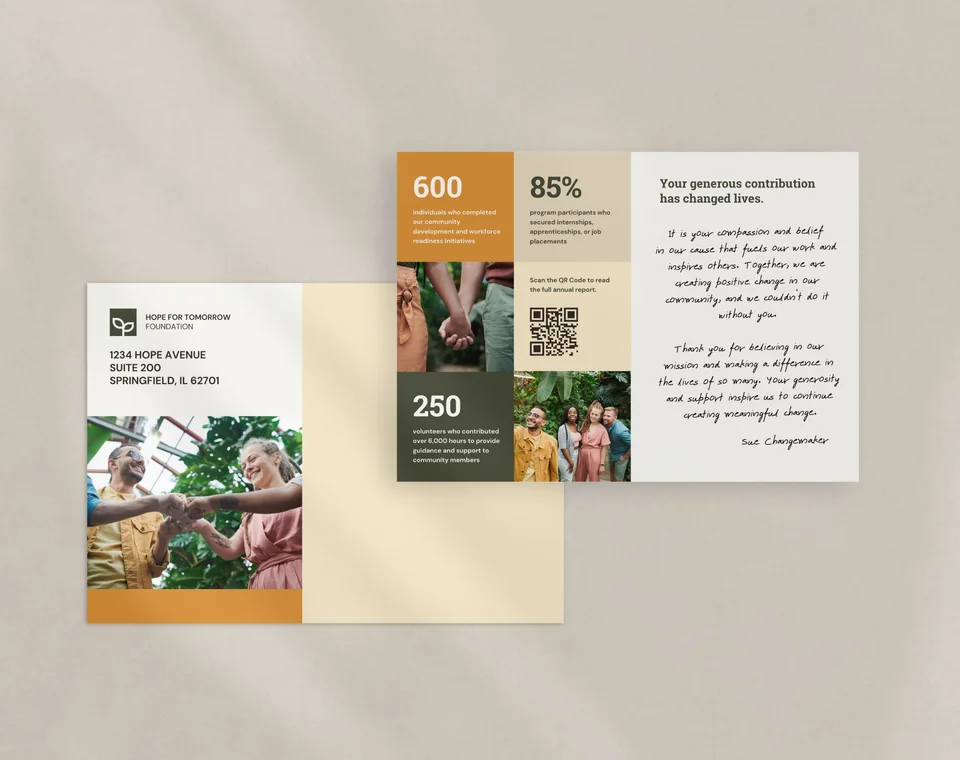
If you're sending a side-folded, portrait card, that open space on the left side is prime real estate, and most orgs just... leave it empty. Meanwhile, your donor is holding something that could tell them exactly what their gift made possible.
✅ Add a visual stat
A small infographic (meals served, families housed, kids enrolled) gives your donor something to feel in three seconds flat. Call out one number and one person with context.
❌ Don't handwrite a URL and call it a next step
If you've written out a long donation link in the same cursive nobody could read in point one, and now you're hoping people will type it in manually? They won't. That ask is going straight to the recycling bin.
✅ Use a QR code
One scan. Straight to your donation page, your impact story, your latest update. Easy for the donor, better for your conversion rate. No squinting required. 🙃
❌ Don't use generic photos with no context
I want to know if the woman and children on that card were served by YOUR org. If they're stock photos, I can feel it. And it undercuts everything else the card is trying to say.
✅ Use real images and tell a real story
If you have them, use them (with consent, of course). A real photo with even one sentence of context, like: "Maria got her first apartment in March,"... does more work than a full page of copy. Keep names anonymous if needed.
Every touchpoint with your donors is a chance to strengthen the relationship and show them what their support is building.
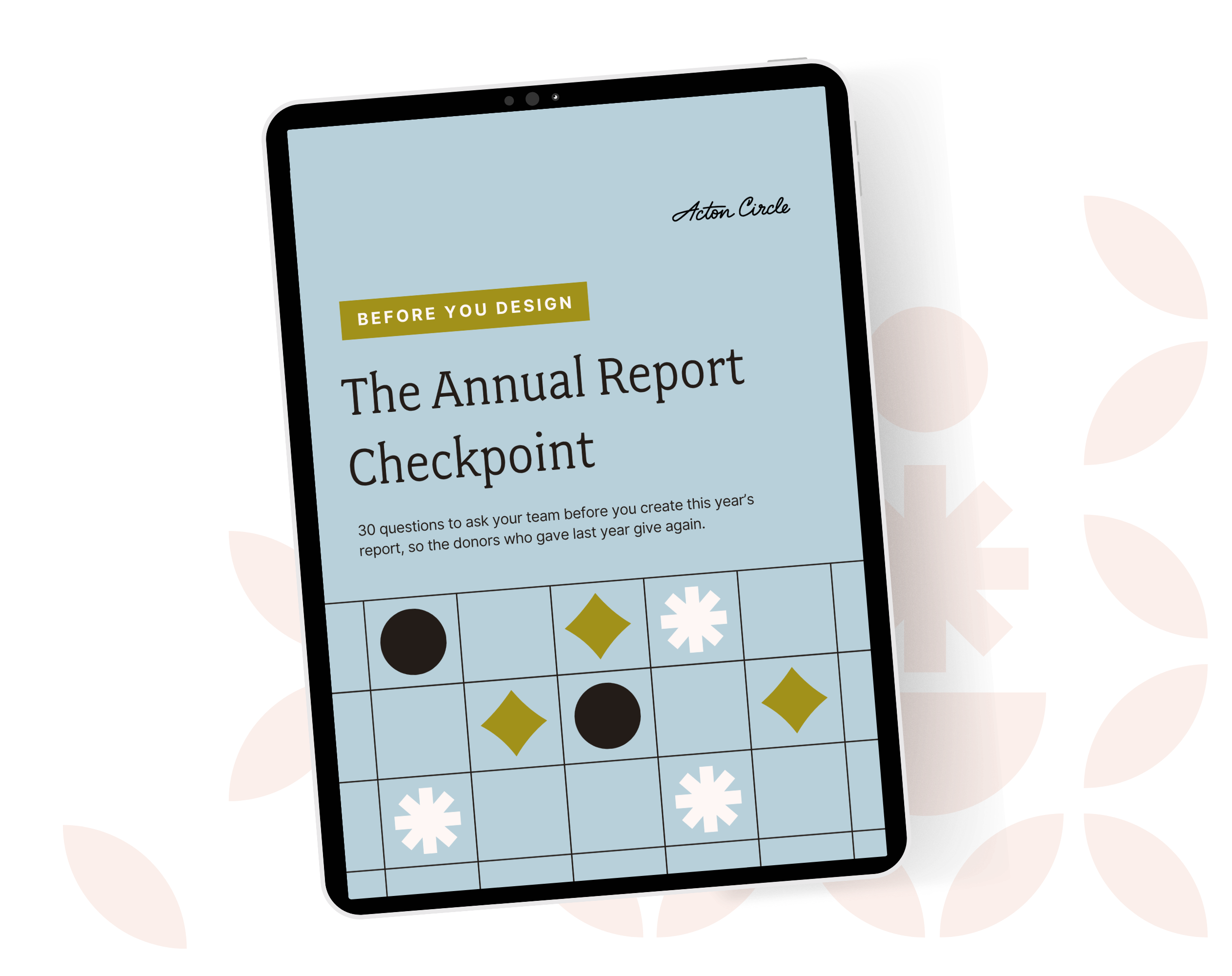
Get The Annual Report Checkpoint
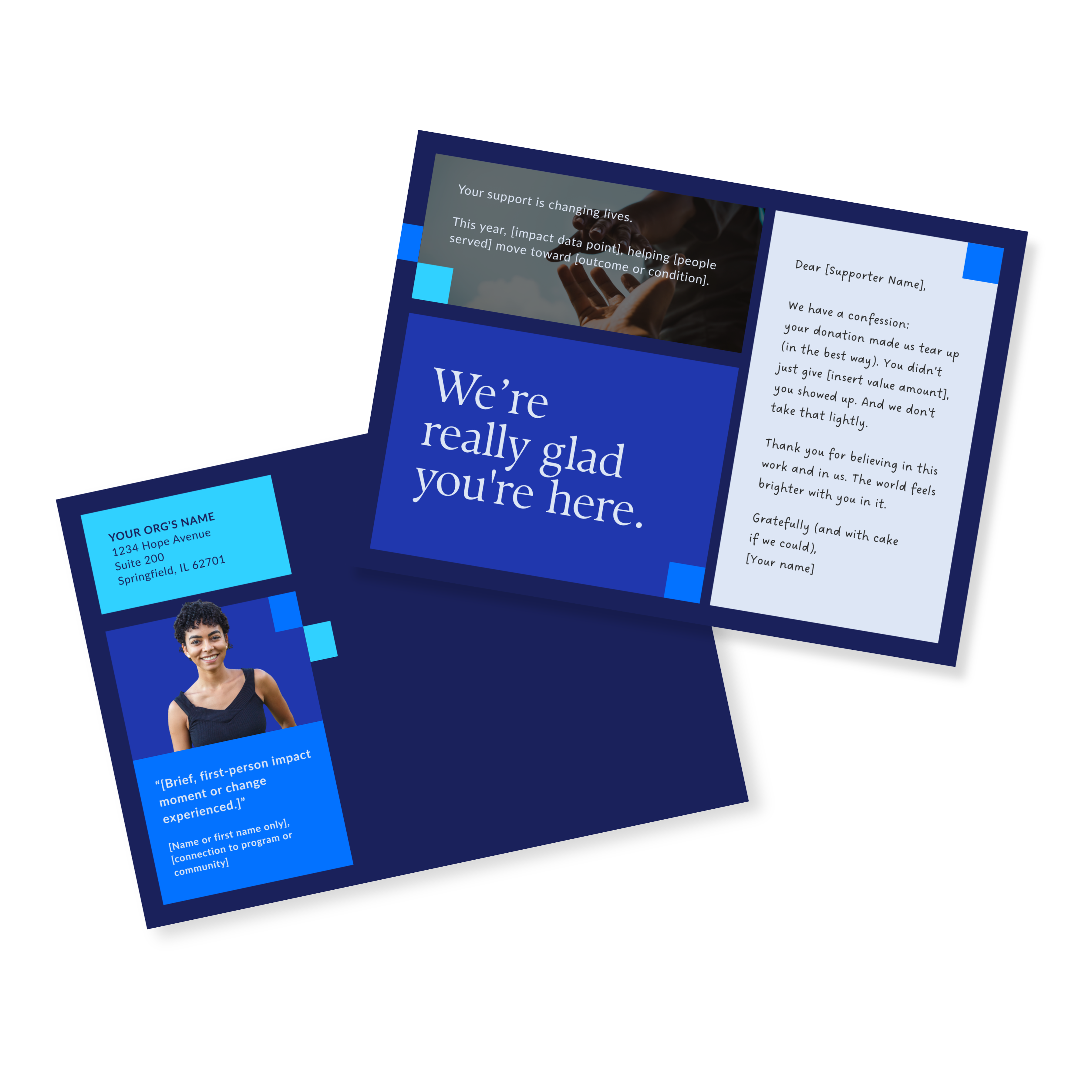
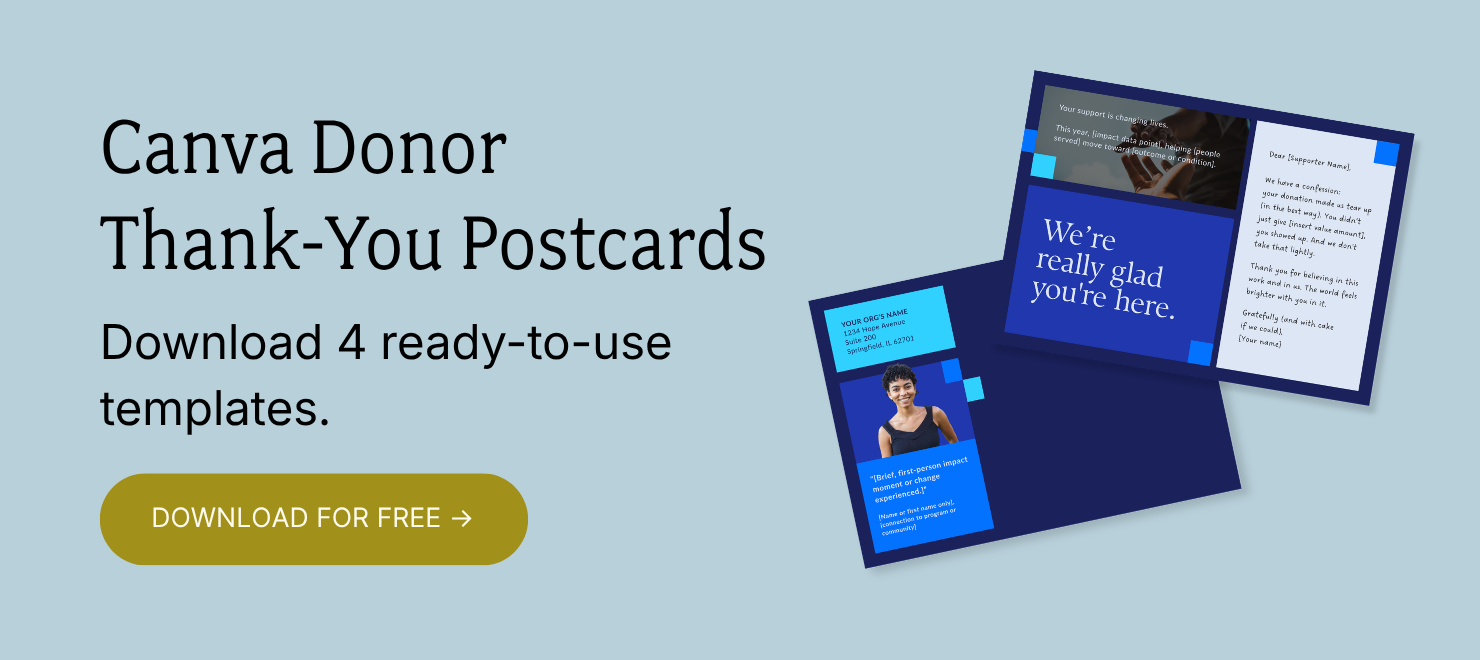
Donor Thank You Postcards Templates
Enter your info and we’ll send the postcards straight to your inbox:
Your Nonprofit Donation Thank You Letter Should Feel Personal (Not Like a Template)
Just because you sent it to the donor doesn't mean it's automatically for them.
If your card only talks about how great the mission is, how hard the team works, how much more is needed… then that card was made with just your org in mind. The donor's name is at the top, but the rest of it reads like a newsletter addressed to the wrong person.
The cards that build real loyalty flip the script. They center the donor as the one who made something happen. Not "we did this" but "because of you, this is real." There's a difference in that sentence that donors don't forget.
So get specific. Mention what likely moved them to give. Reference the conversation you had at the gala. Name the project they care about most. Show them you understand who they are and why they chose you.
When to Send Your Nonprofit Donation Thank-You Letter
Timing matters more than you think.
The most meaningful nonprofit donation thank-you letter arrives while the warm feeling of giving is still fresh, ideally within the first week.
But it's not just about speed.
Follow up when you hit a milestone they helped make possible. Reach out when the project they funded starts making waves. Keep them in the story they helped create.
A donor who hears from you three times a year (and each time it's meaningful) is more valuable than a donor who gets twelve generic emails and a year-end ask.
The strongest thank-you strategies use both formats:
- A timely email acknowledgment (same day, if possible)
- A mailed card within the following week
The email says, "We got you." The card says, "We meant it."
What a Good Donor Thank-You Card or Letter Looks Like
Short doesn't mean boring. Here are four examples that work:
The quick but real thank you
Hi [Donor Name],
You did a beautiful thing. THANK YOU. Your gift is already out in the world doing good by [insert specific project you're working on] (and making us do a happy dance, not gonna lie).
Big thanks,
[Your name]
The impact-driven thank you
Dear [Donor Name],
Because of you, [insert impact—ex: “a family of four received a week's worth of meals'”]. That’s the kind of generosity gives us goosebumps. Your support is part of this story, and we are grateful to walk this work forward with you. Thank you for showing up and standing alongside our community.
With gratitude,
[Your Name]
The warm thank you
Hey [Donor Name],
You didn’t have to give, but you did. And wow, did it make a huge difference. Your kindness just helped [insert impact—“25 kids get school supplies this week”]. We hope this little note feels like a warm hug, because that’s exactly what your gift felt like to us and our community.
With a heart full of thanks,
[Your name]
The we-see-you thank you
Dear [Donor Name],
We have a confession: your donation made us tear up (in the best way). You didn’t just give [insert value amount], you showed up. And we don't take that lightly.
Thank you for believing in this work and in us. The world feels brighter with you in it.
Gratefully (and with cake if we could),
[Your Name]
Tech Tools That Help (Without Replacing the Human Touch)
Use your CRM to track each donor's interests, interactions, and giving history. That's what makes a thank-you feel thoughtful instead of templated.
Email automation, scheduled reminders, and donor segmentation are tools, not shortcuts. They're what give you the bandwidth to do the personal parts well. Let the system handle the timing. You handle the heart.
Pair physical cards with digital versions that donors can revisit or share. And since most people read everything on their phones, make sure your digital nonprofit donation thank-you letter looks good at that size.
The point is not to choose between personal and efficient. It's to let the tools manage the logistics so you can show up fully for the relationship.
How to Know Your Nonprofit Thank-You Cards Are Working
Success here doesn't always look like a metric.
Sometimes it's a donor who calls to make their next gift and mentions how your card stood out to them. Someone who shares your impact update without being asked. A familiar name showing up at events and bringing a friend.
These are the signs that your donor thank-you cards are building trust.
When donors feel genuinely appreciated, they don't just give again. They talk about your work, advocate for your mission, and bring in their buddies.
That's how thank-you cards become one of the highest-ROI things you do all year.
FAQs: Nonprofit Donation Thank-You Letter
How do we write a thank-you letter after receiving a donation?
Start with a genuine thank you and acknowledge the specific gift. Then, share one clear outcome their donation supports. Close it out by reinforcing that they’re part of something meaningful. Always keep it human, readable, and timely.
How do you say thank you for a charitable donation?
Say it simply and sincerely. Thank them, show the impact of their gift, and let them know their support is appreciated. Avoid generic language. And remember, specific gratitude builds trust.
Are nonprofits required to send thank-you letters for donations?
For donations of $250 or more (double-check the IRS website), yes. Written acknowledgment is required for donors to claim a tax deduction. Even when not legally required, thank you letters are a best practice for donor retention.
What is an example of a short donation message?
Short works when it’s specific. A few lines that clearly thank the donor and reference your work can be just as powerful as a longer letter.
Make Every Nonprofit Thank-You Card and Donation Letter Count
If your thank-you process feels rushed, autopilot, or like something you'll get to after the campaign or event on your calendar settles, it might be time to treat it like what it is: a frontline fundraising strategy.
Every donor thank-you card is an opportunity to build trust. Every nonprofit donation thank-you letter is a chance to turn a first gift into a second, and a second into a decade.
Your donors chose you. Make sure they know you noticed.
Download our free Canva donor thank-you postcards and start sending something worth keeping.