You don't need us to tell you that a donor retention strategy isn't optional… you know it's how you build real stability into your fundraising. But like most nonprofit teams, we know you're watching retention rates drop, acquisition costs climb, and the gap between the two getting tighter.
It's a squeeze. We get it.
And here's what we've seen across 65+ nonprofit clients since 2019: the organizations that nail retention almost always share one thing in common.
They've paid attention to how they present their work. The focus of the annual report, the tone of thank-you emails, the design of fundraising materials. These small details are trust signals. And trust is what keeps donors coming back.
In this article, we'll dig into what donor retention means, why it's essential to carrying out your mission, and five practical strategies you can use to strengthen it starting now.
Why Is Donor Retention Important?
At its core, donor retention is about loyalty. It's your ability to build lasting relationships with supporters who choose to invest in your mission year after year. Because they believe in you.
Organizations with strong retention have a predictable base of long-term supporters. Those with weak retention? They're constantly replacing donors or asking larger gifts just to keep the lights on.
One model builds momentum. The other burns energy (eek!).
Put simply, you can calculate your donor retention rate by dividing the number of repeat donors this year by the number who gave last year, then multiplying by 100. If you had 100 donors last year and 63 gave again this year, your retention rate would be 63%.
According to a Q3 2025 report from the Fundraising Effectiveness Project, overall retention rates increased slightly from 31.7% in Q3 2024 to 31.9% in Q3 2025. But here's the thing, retention declined across individual donor segments.
Micro-donors (those giving between $1 and $100) had the lowest retention rate at 21.3%. Most give once and disappear. They're not loyal yet. That's your opportunity.
This is why improving donor retention makes such a difference. Loyal donors often increase their giving over time. They respond to campaigns faster. They advocate for your work without being asked.
While donor acquisition will always be necessary, retention is what creates predictability and margin.
So how do you improve retention in a way that fits your team's reality? Here are five strategies that move the needle:

1. Focus on Securing the Second Gift from New Donors
Only around 1 in 4 of new donors make a second gift. But of those who do, approximately 61% continue giving. That second donation is often called "the golden donation" for a reason. It's where loyalty starts.
If you want to strengthen your retention, start here.
After issuing a tax receipt, follow up with a thoughtful thank-you that clearly shows the impact of their gift. Reach out within 24 hours when possible. That responsiveness says something: we notice you, and we care.
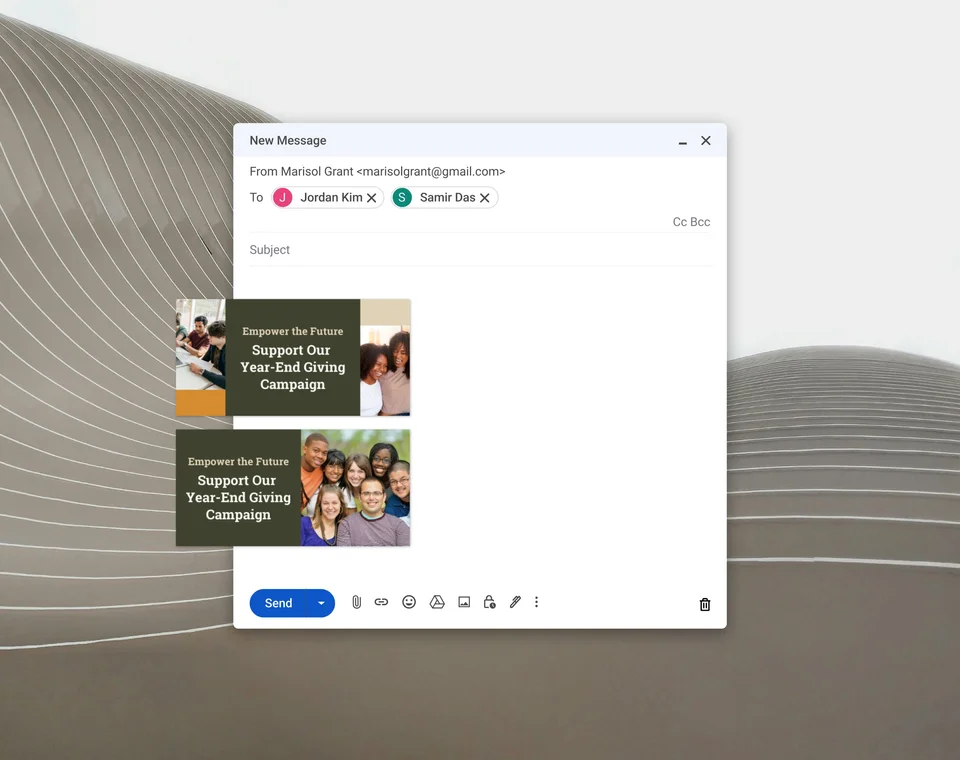
How that thank-you looks matters just as much as what it says. A clean, well-designed email or postcard with strong hierarchy, simple imagery, and one clear takeaway makes it way easier for donors to understand the significance of what they just did.
Consider an automated welcome series that:
- Educates them about your mission
- Shares one or two meaningful impact stories
- Shows where their gift fits into the bigger picture
Consistency in visual branding across this series builds familiarity. Familiarity builds belief. Belief builds trust. That's the chain.
Get The Annual Report Checkpoint

Donor Thank You Postcards Templates
Enter your info and we’ll send the postcards straight to your inbox:
2. Improve Personalization in Current Fundraising Campaigns
Generic messaging disappears. Personalized messaging makes people feel good and gets etched into their memory.
When communication feels tailored, donors are more likely to give again because it tells them you know who they are. And personalization starts with understanding your data.
Segment donors by giving frequency, donation size, or interest areas. Use that information to craft messaging that feels relevant to them, not to everyone.
A/B testing helps you see what resonates most. Also consider communication preferences. Some donors prefer email. Others respond to direct mail. Some want to hear from you monthly. Others think that's too much.
A thoughtful retention plan accounts for these nuances because it says: we built this around you, not the other way around.
3. Ask for Donor Feedback
If retention is about loyalty, feedback is about respect. Asking donors for input shows that their voice counts.
Quick polls via email or social media are a helpful start. But surveys often reveal deeper insight. Before sending one, know your goal. Each survey should focus on a single objective aligned with your mission, not a scattershot list of questions.
Keep the design simple. A clean survey with clear headings reduces friction and signals that you value your donors' time. No one wants to wade through a 20-question form.
One-on-one conversations reveal the emotional side of giving—the motivations, hesitations, and moments that surveys don't always capture. A 15-minute call with a major donor tells you more than 500 survey responses.
Also, timing matters. Ask for feedback shortly after a donation, while the experience is still fresh. This approach strengthens retention because it turns a transaction into a real relationship.
4. Plan Peer-to-Peer Fundraising Campaigns
Peer-to-peer fundraising empowers supporters to raise funds on your behalf. When done right, it strengthens retention because donors feel more involved. They become evangelists, not just givers.
Provide simple tools:
- Personal fundraising pages
- Email templates
- Social media graphics
Make everything easy to use. Clear, uncomplicated designs lower the barrier to participation. If it's hard, they won't do it.
There are four common types of peer-to-peer campaigns:
- Event-based campaigns built around physical or virtual events like 5Ks or cycling challenges
- Time-bound campaigns tied to a specific period, such as Giving Tuesday
- Evergreen campaigns that run year-round
- Tribute campaigns created in someone's memory
The right structure depends on your audience and your organization's strengths.
But when supporters feel equipped and confident sharing your work, engagement deepens. They stop being passive donors, and become active advocates.
5. Offer Recurring Gift Options
Recurring gifts are one of the most effective ways to improve retention. Monthly donors are retained at nearly double the rate of single-gift donors. That's not a coincidence.
Make the recurring option obvious and easy to select.
Thoughtful design helps here… clear comparison boxes, straightforward language, and minimal distractions reduce friction and increase conversions. When someone can see the value in 12 small gifts vs one big one, they choose what makes sense for their situation.
When new donors feel welcomed and long-time supporters feel heard, loyalty isn't something you have to ask for. It grows naturally.
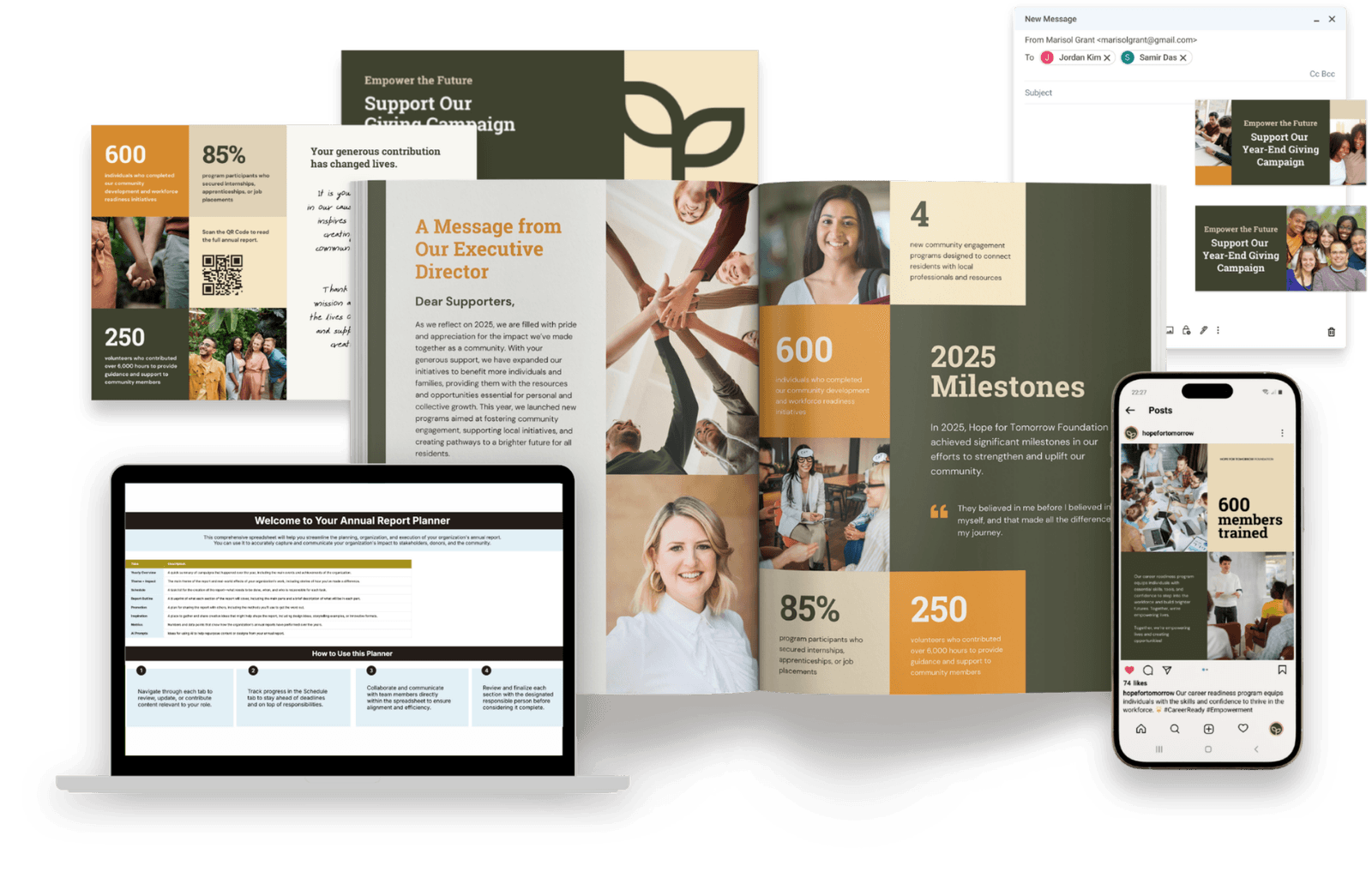
Your Strongest Retention Tool Might Be Your Annual Report
If you're serious about improving donor retention, don't overlook the asset you're already investing in. A clear, well-structured annual report helps supporters understand:
- Who you serve
- What's working
- What their support makes possible
- Why your organization is worth continuing to invest in
But here's the question that matters: is your current report reinforcing trust and long-term belief? Or is it just... existing?
If you want clarity before redesigning or repurposing anything, start with the Annual Report Checkpoint. A free self-assessment that walks you through your current report the way I would: scored across five areas donors are already judging, built on our BELIEF by Design™ framework and 65+ nonprofit partnerships.
You'll walk away with:
✅ An honest read on your report, section by section
✅ A clearer picture of what each gap is costing you in donor response
✅ What to fix first, so you're not guessing