Every time I look at a nonprofit annual report that missed the mark, the problem is almost never that they didn't include enough. It's that they included everything.
Your annual report is not a filing cabinet or a summary of every meeting you had or every program you ran. It's the one piece of communication where you get to make someone believe in your work all over again.
The most effective reports I've worked on don't include more content. They build belief by making the year feel coherent, human, and credible.
So before we get into the 17 things, let's be clear: this checklist is a decision-making tool, not a packing list.
What a Nonprofit Annual Report Is For
An annual report is one of the few pieces of communication that brings together fundraising, programs, leadership, and impact in one place. That's both its power and its curse.
For supporters, it answers the questions they're asking:
- What did the org focus on this year?
- How were my dollars used?
- What changed for the people or communities served?
- Is this still an org I trust?
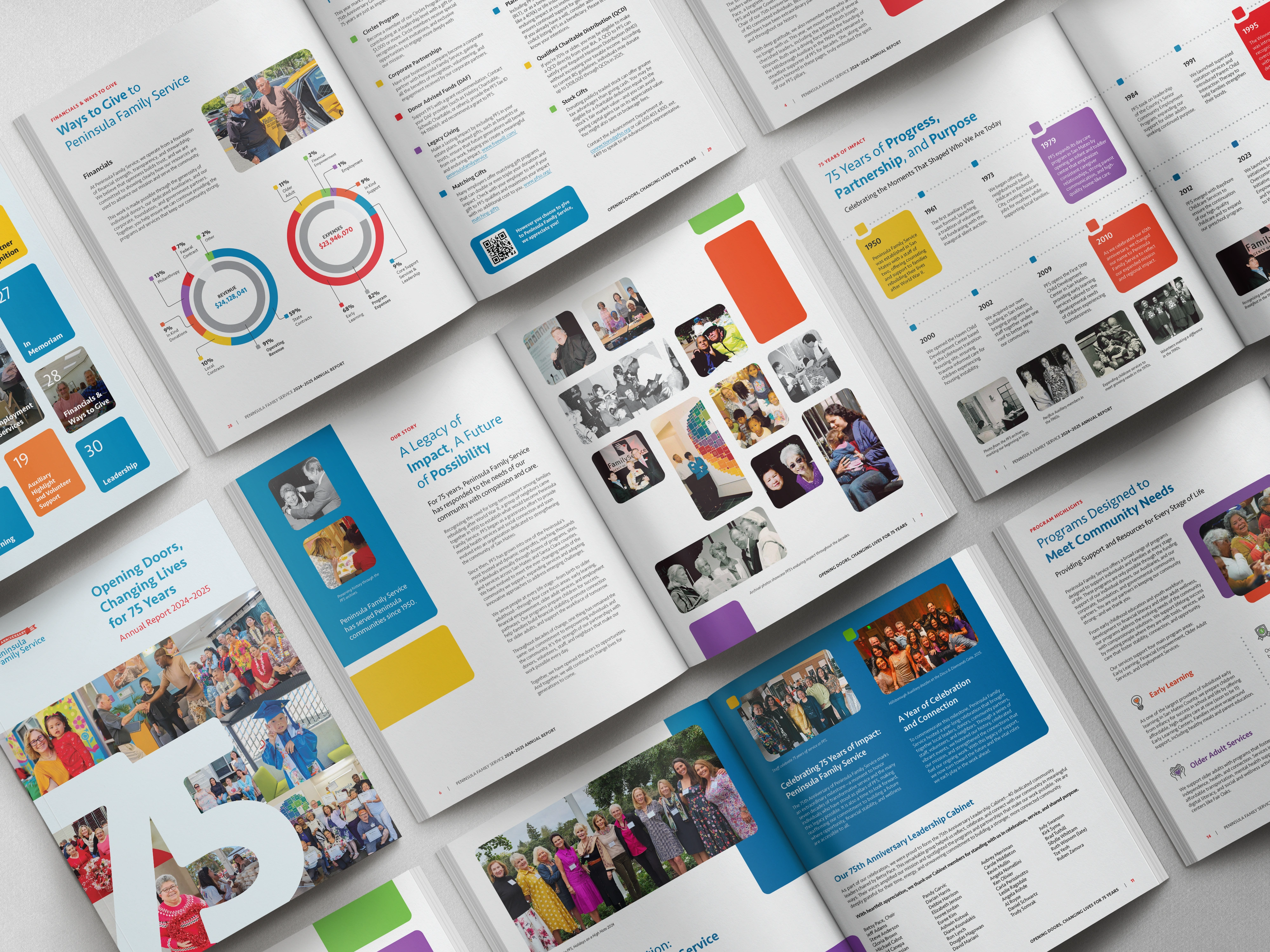
Building your report has a way of surfacing things your team didn't know it needed to say. You see what truly shaped the year, where the story drifted, which programs got the energy, and which ones got lip service.
A strong annual report builds trust not by saying more, but by helping readers understand the year without extra explanation. Design talks first. Every time. No exceptions.
Before You Use This Checklist
When people search for an annual report checklist, they're usually trying to solve one of these very real problems:
- How much financial detail is enough without overwhelming donors?
- Which programs deserve their own section this year and which don't?
- Where do stories live vs. data?
- How do we recognize everyone without turning the report into a directory?
- How long is too long?
A list doesn't answer those questions. Intention does.
Before I touch a single design file on a new project, I ask three questions. I'd encourage you to ask them too:
- What do we want people to believe after reading this? Not know. Not understand. Believe.
- Who is this report for? (Spoiler: "everyone" is not specific enough.)
- What should feel true about us after someone finishes reading?
Those answers shape every decision that follows. Now here's the checklist.
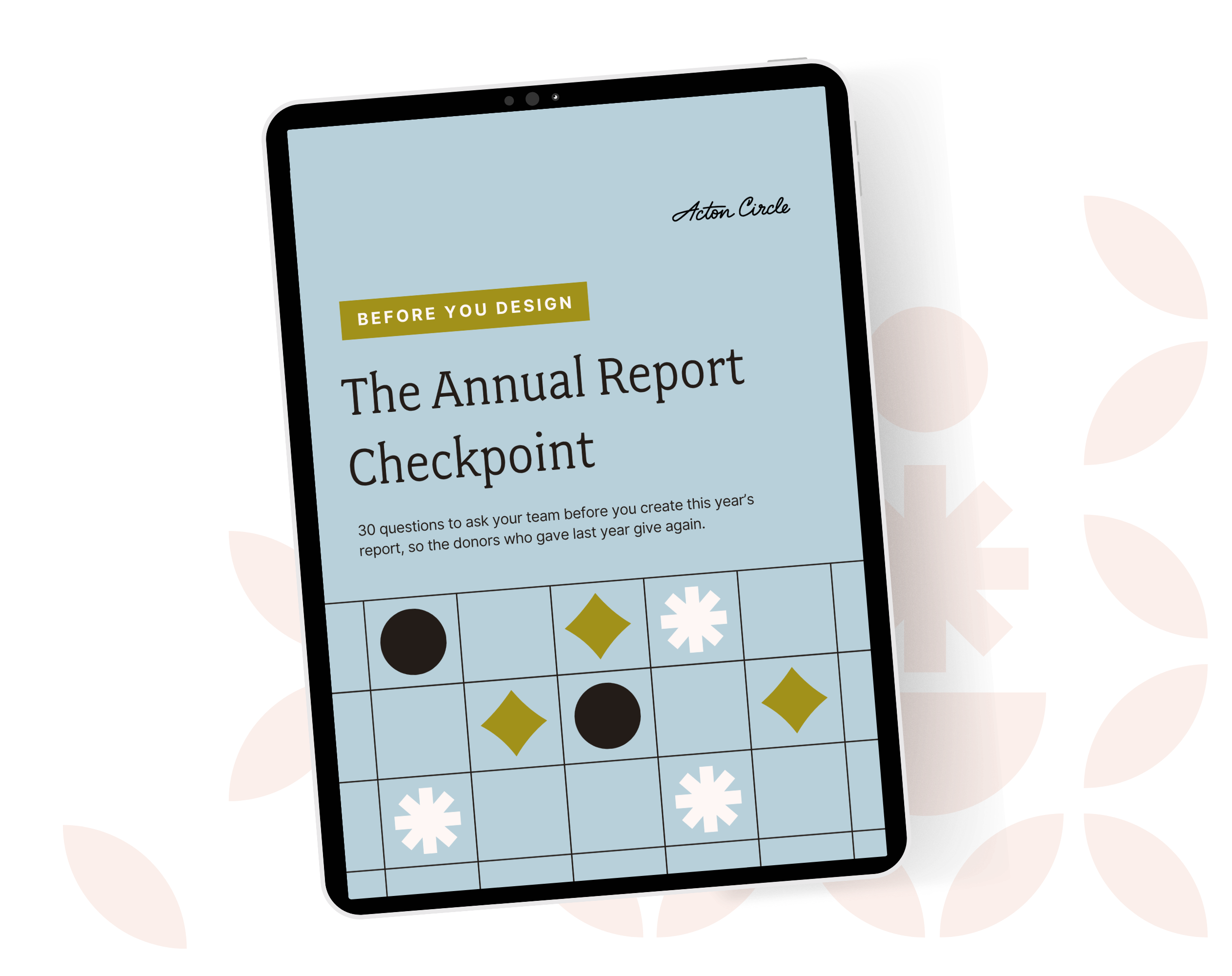
If you're not sure how to answer those three questions yet, the Annual Report Checkpoint walks you through exactly that, before you touch a single section. Get it free here
The Nonprofit Annual Report Checklist: 17 Things to Include
Every item here either builds donor trust, deepens connection, or creates something your team can use beyond report season.
Cover the basics
These five belong in every annual report. No exceptions. If any of them are missing or phoned in, everything else suffers.
1. Annual Theme
A theme gives your report a through line. Without it, you end up with a collection of updates instead of a story. "Renewing Hope," "Strength in Community," "Building What Lasts," it doesn't have to be fancy. It has to be true.
2. Mission Statement
Don't just drop it in and move on. Demonstrate it and show how the year's wins (and challenges) connect back to why you exist. If your mission statement is just dropped on the page without context and your reader loses the thread before they've found it.
3. Financial Snapshot
Transparency is about giving readers context. A pie chart with no narrative is just a pie chart. Show supporters the specific thing that happened because they showed up.
4. Letter from Leadership
The best leadership letters I've read acknowledge something that was hard. Not in a way that undermines confidence, in a way that builds it. Supporters know nothing is ever perfect. Honor that.
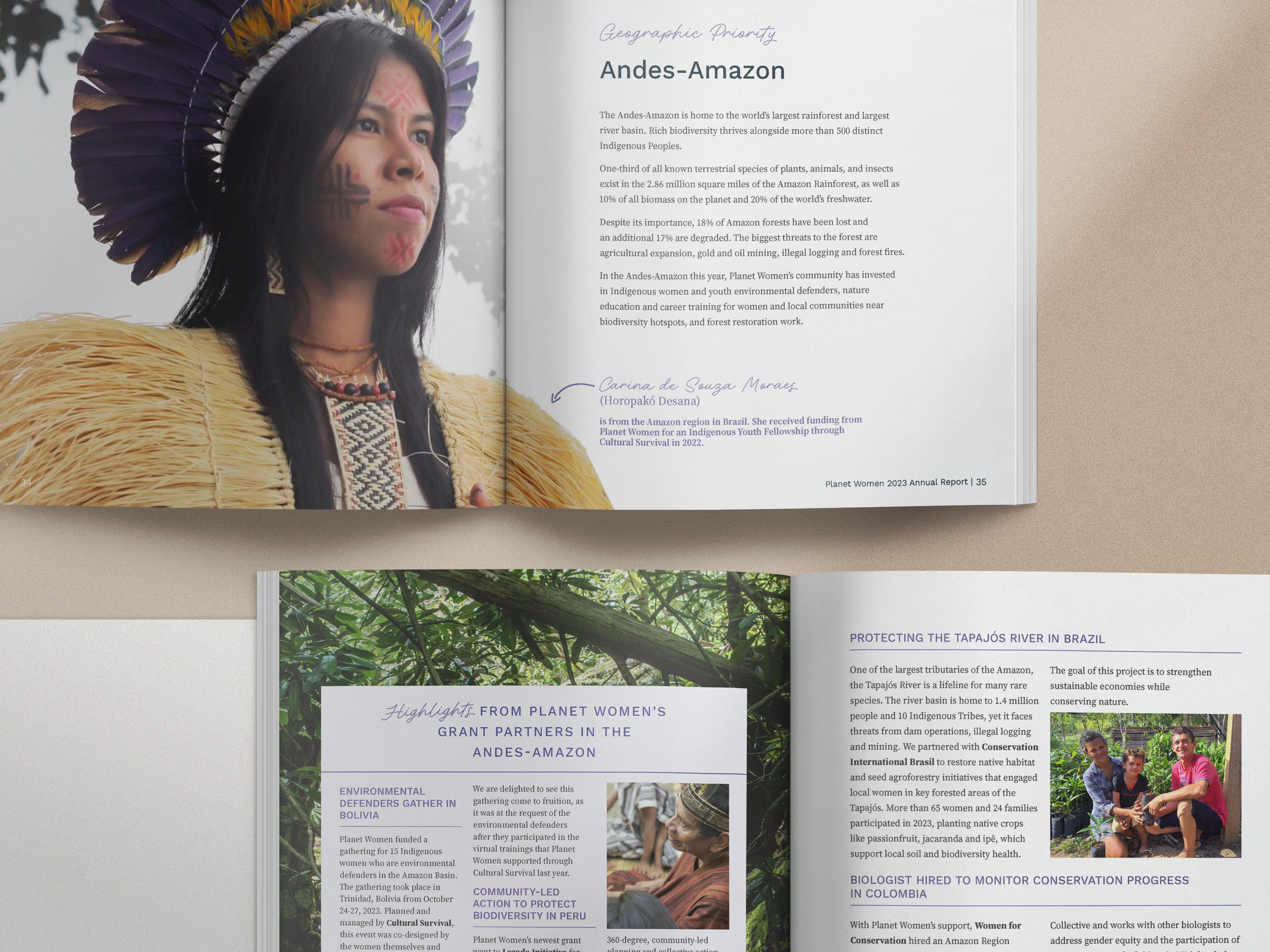
5. Impact Stories
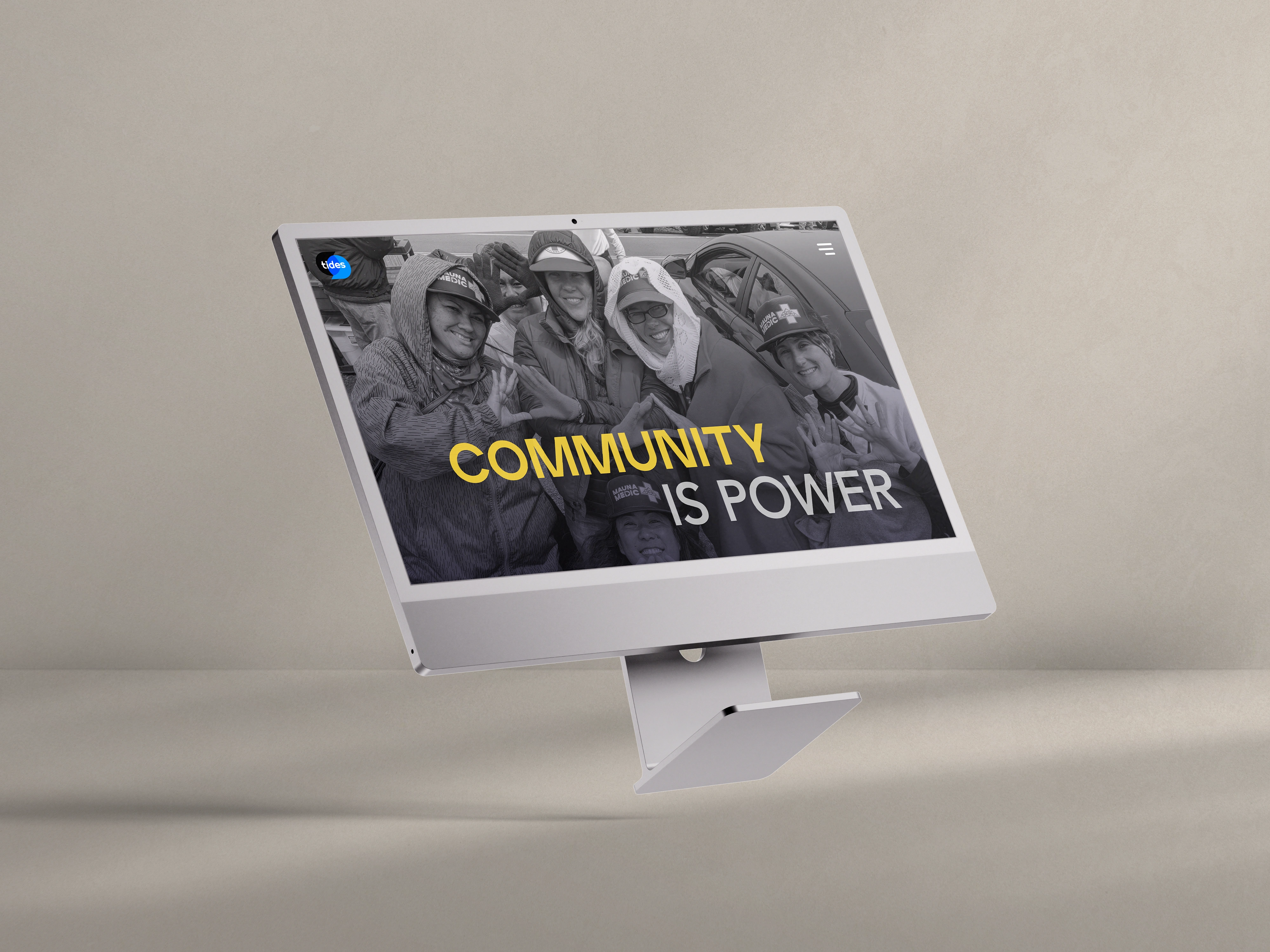
Pair each story with real voices and real people. If the photo you selected could belong to any nonprofit, it's doing your mission a disservice.
6. Thank-You Messages
"Thank you for your support" tells a donor nothing. "Your gift funded three months of after-school programming for 40 kids" tells them everything they needed to hear.
Demonstrate your impact
This is the section most orgs spend the most time on and still somehow get wrong. More data is not more impact. More stories are not more connection. Focus on depth instead.
7. Major Accomplishments
Listing accomplishments is fine. But what resonates more is transformation. Before and after; what existed before your work, and what exists now. Then, give it a narrative.
8. Impact Data
The strongest impact sections I've worked on pair one clear stat with one real story. That combo helps donors understand scale AND meaning without having to work for it. Always add a line of context. "10,000 meals served" means more when you add "in a county where 1 in 4 children face food insecurity."
If your impact section reads like a grant report (but you're primary audience for the report is donors), rewrite it.
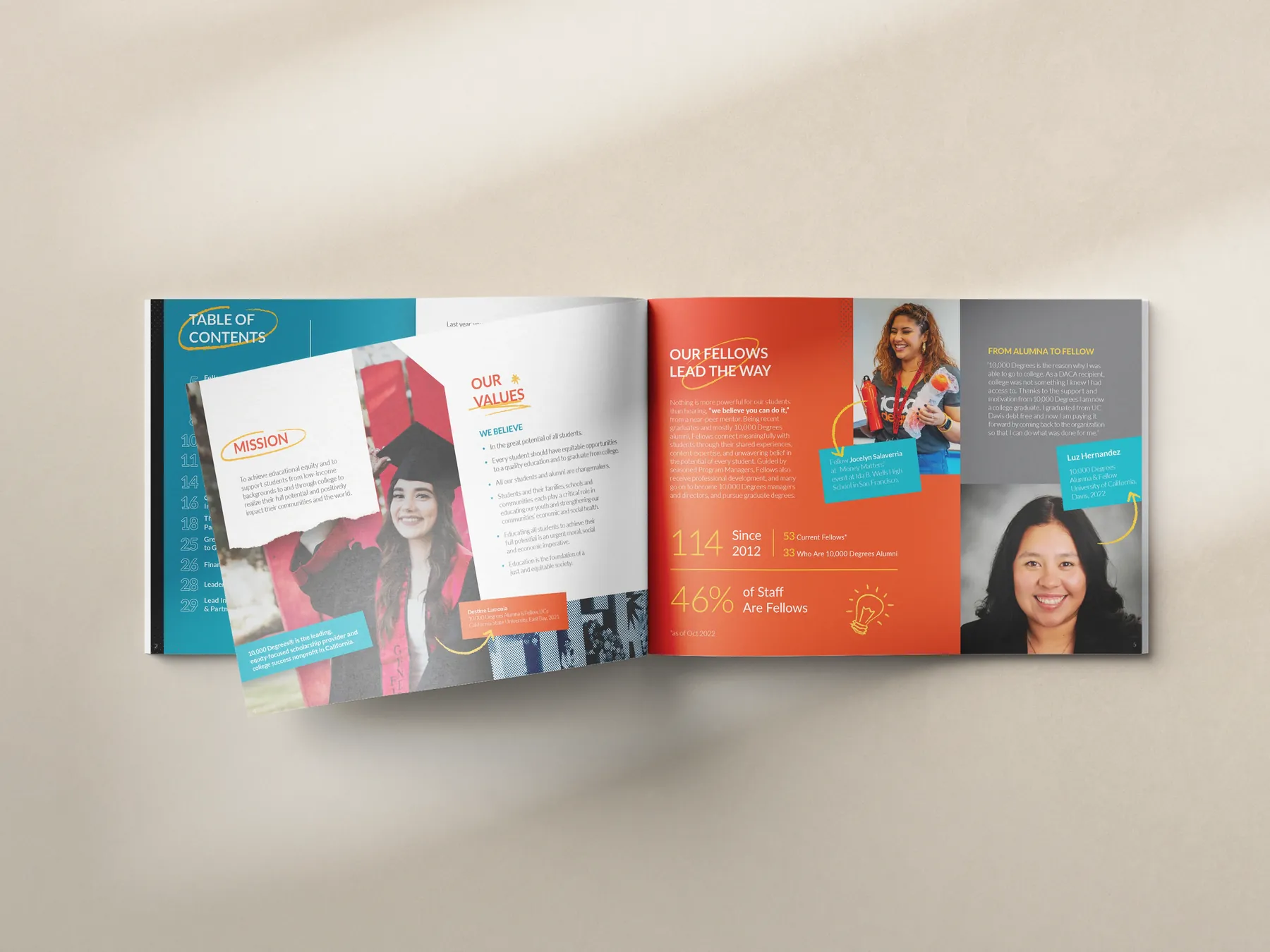
A communications leader at 10,000 Degrees came to us ready to get this right. Their impact section had always been strong on content, they just needed it to register with donors.
"We've heard only praise and accolades for their work — some have said it's the best-designed materials we've had to date."
Showcase supporters
This section is where a lot of orgs go on autopilot. Name lists, tier headers, a boilerplate thank-you. Done. But the orgs whose donors renew year after year? They make people feel like they're part of something, not just listed in it.
9. Inspiring Donor Stories
Why did this donor give? What does your mission mean to them? If you can answer those questions with a real quote or narrative, you've just made every other donor on that list feel seen.
10. Donor List and Tiers
Yes, include the list. But don't let it be the whole story. Donor recognition that just drops names is a missed opportunity.
11. Community Partners
Name them. Tell people what programs they supported. Show that your work doesn't happen in a vacuum. Shared credit is credibility.
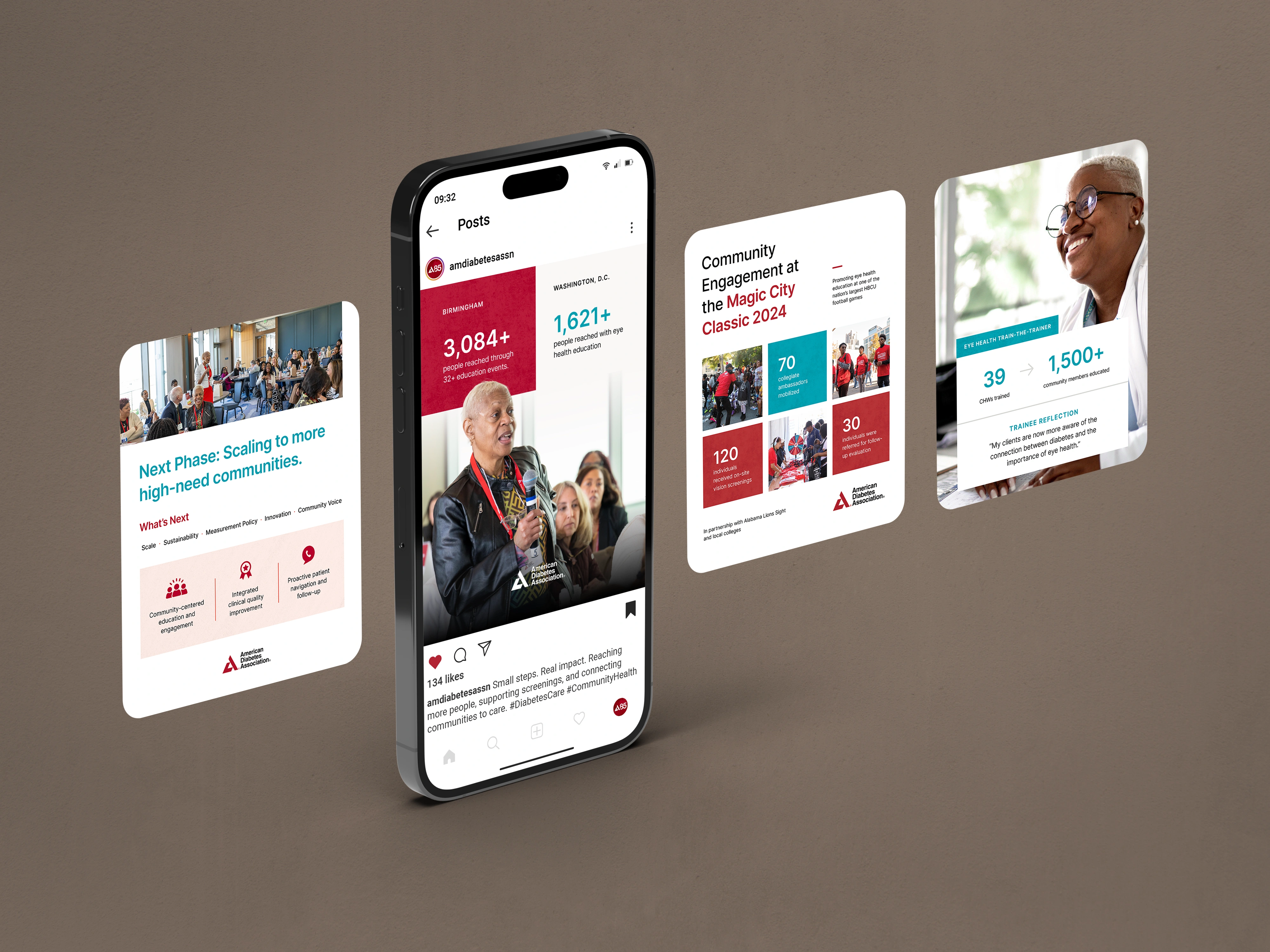
12. Visual Recognition
Photos. Quotes. Short profiles. If you're going digital, video testimonials. A name with a face and a voice is worth ten names on a list.
Look ahead
This is the section most reports shortchange, and it's the one supporters are most interested in. They're not just looking at what you did, but deciding whether to stay.
13. Future Plans
Be concrete. Donors don't invest in hopes. They invest in plans. And the more specific the goal, the easier it is for a donor to picture themselves funding it.
14. Call to Action
Make it easy. A QR code or donation link, and a specific ask. If you want continued support, ask for it clearly. Donors who finish your report already feeling good about your work are ready to give.
Design and distribution
These three don't show up in most checklists. They should. In my experience, this is where a good report becomes one a great one that raises funds.
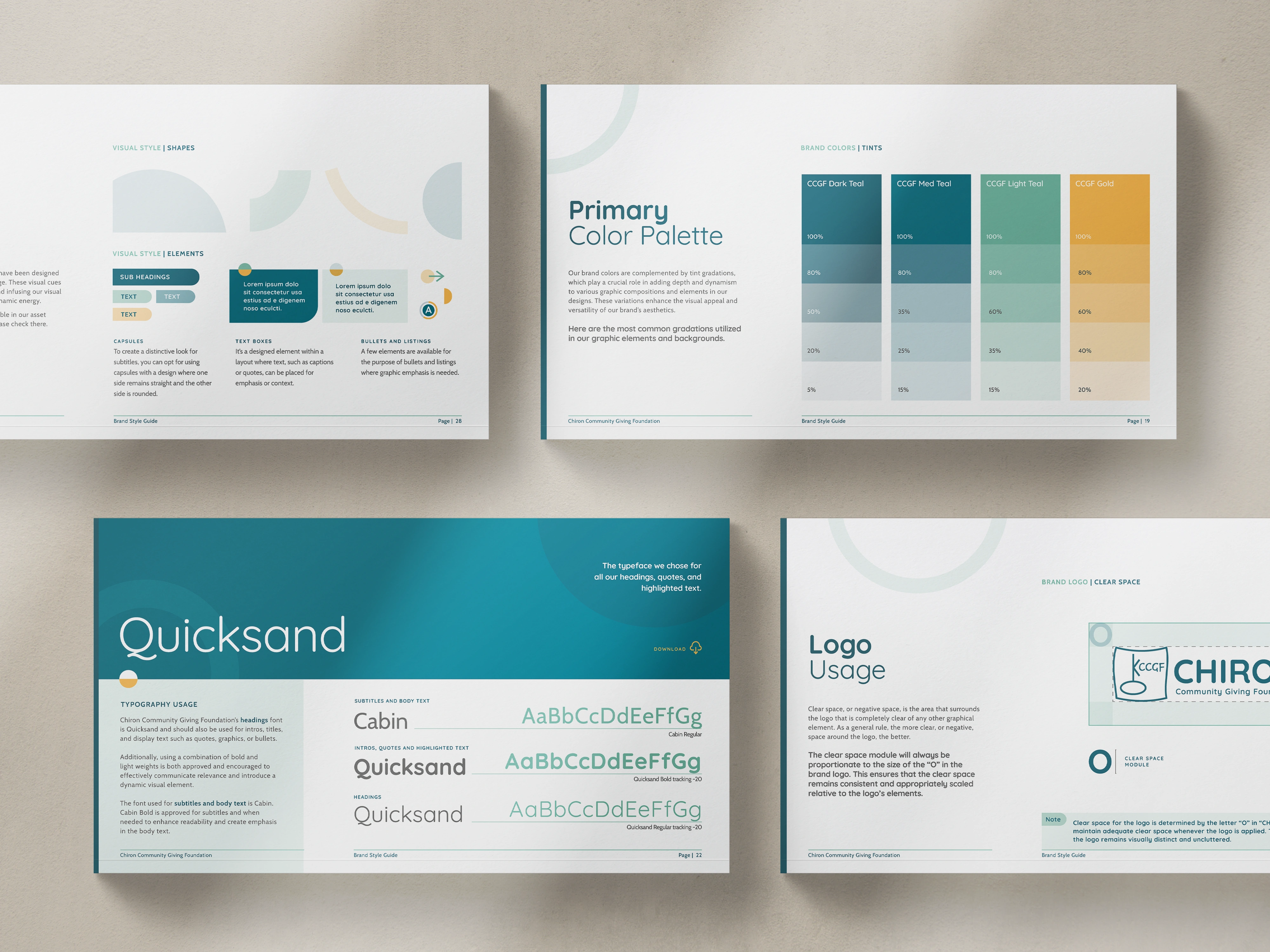
15. A Cohesive Visual System
Design communicates before words do. And a donor forms an impression in seconds, and by the way "professional" is not an impression. It's the absence of one.
The CEO at Chiron Community Giving Foundation came to us with dense mental health research that needed to feel accessible and credible to community partners and policymakers. Design did that work.
"A beautiful job bringing our foundation's report to life. The visualized data and narrative were enhanced by the very professional graphic design services provided by Acton Circle."
16. Accessibility and Readability
If a donor has to work to follow your report, they won't. Good contrast, clear headlines, and readable body copy aren't nice-to-haves, they're best practice.
17. A Repurposing Plan
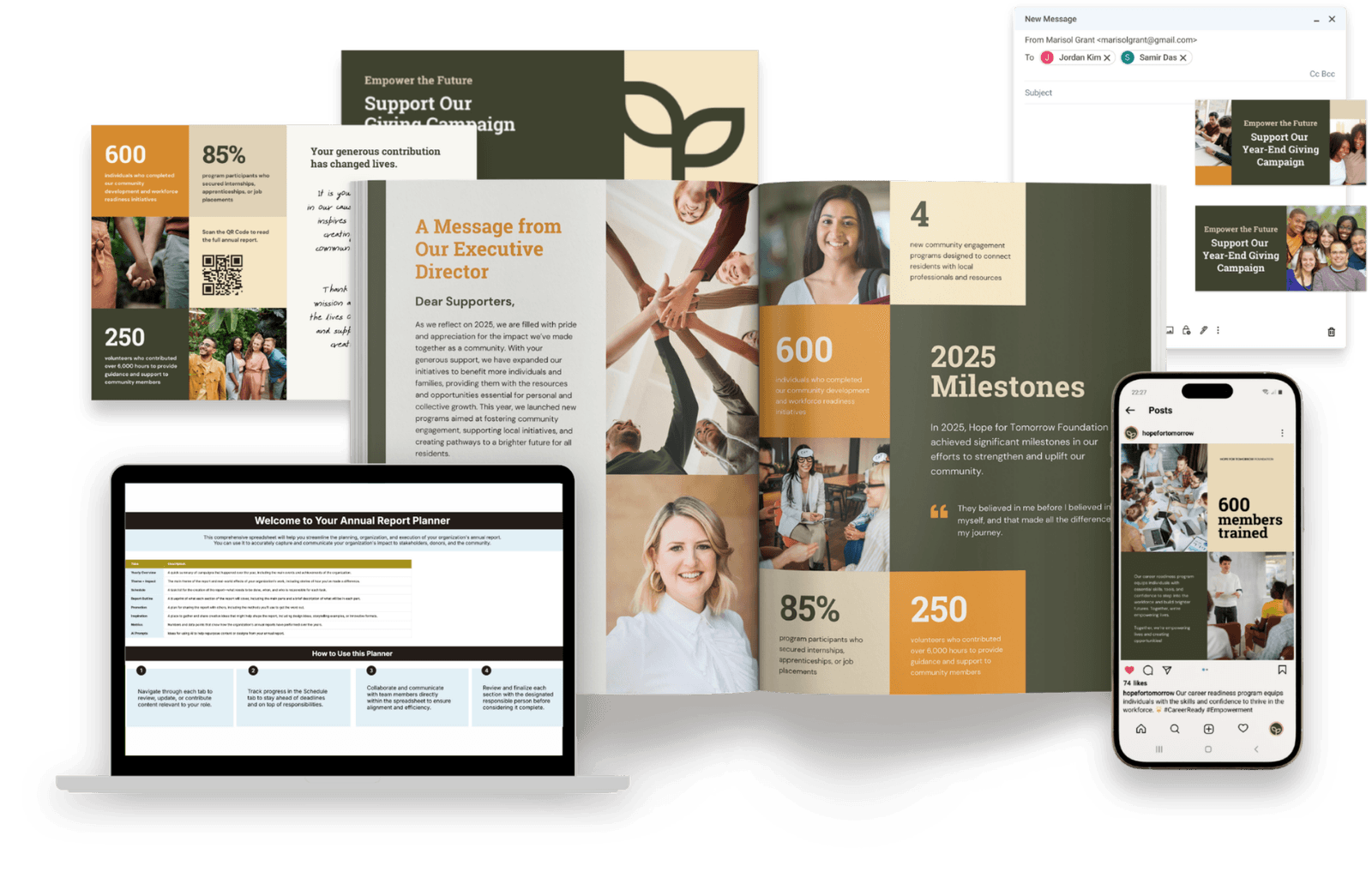
Before you finalize anything, ask: how will this content live beyond this report? Your report can easily become 12 months of social posts, email campaigns, donor decks, and grant narratives. Design with that in mind from day one.
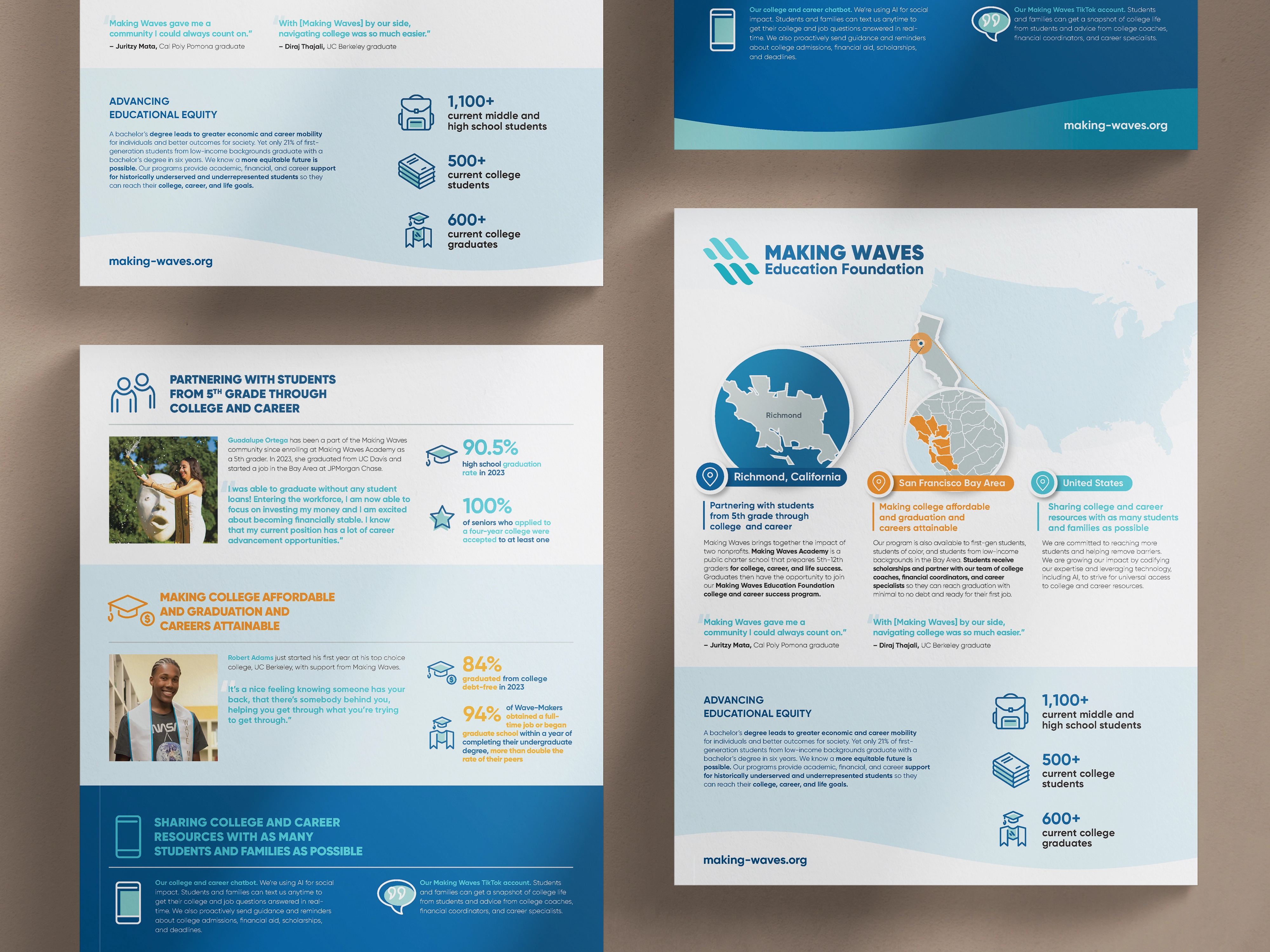
The VP leading marketing and storytelling at Making Waves Education Foundation worked with us across four consecutive annual reports. Each one fed into a year-round storytelling system that kept the mission visible long after the initial launch.
"Olivia takes the time to really understand our nonprofit organization's mission as well as the goal, audience, and style for each project."
How the 17 Elements Map Across Your Report
Use this as a gut check when you're figuring out where to put your energy.
1. Story flow
A reader should be able to answer three questions quickly: What changed this year? Why was it significant? How do the pieces connect? When story flow is missing, reports get longer and readers get lost.
2. Credibility and trust signals
An annual report is a trust document before it's a design document. Clear financials, honest leadership voice, stories that match the data... donors are looking for proof you're the real deal.
3. Human connection
Impact data shows scale and stories show meaning. The most effective reports decide which stories represent the year as a whole and give them enough room to come alive.
4. Community context
No nonprofit works alone, yet many reports present the org as the sole driver of change. Strong reports acknowledge the ecosystem. It builds shared ownership and helps supporters see their role in the bigger picture.
5. Forward progress
Readers are already thinking about next year. Leave them knowing what's happening next, what challenges remain, and where their continued involvement makes a difference.
Get The Annual Report Checkpoint
Donor Thank You Postcards Templates
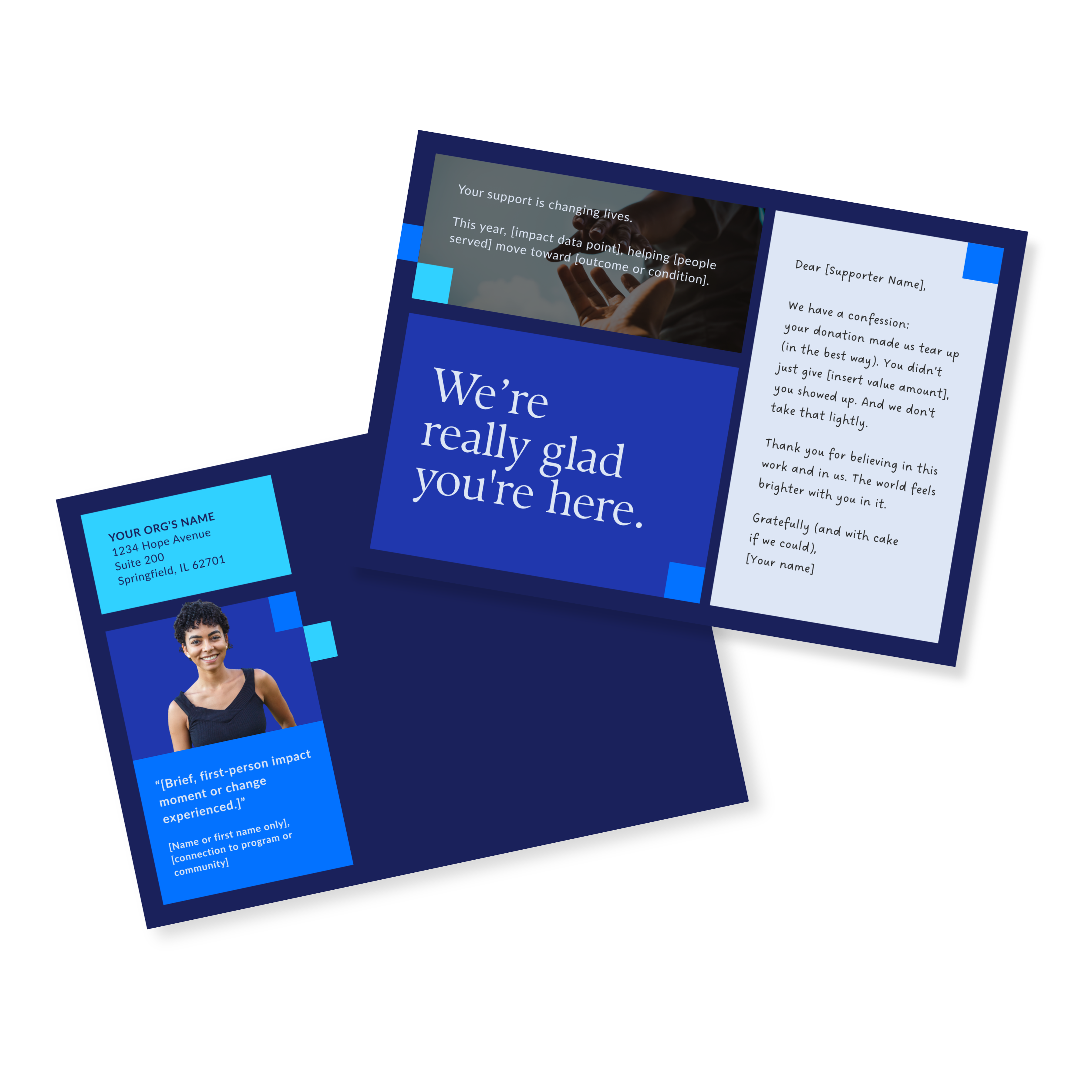
Enter your info and we’ll send the postcards straight to your inbox:
How to Prepare a Nonprofit Annual Report
If you don't know how to create an annual report that champions your mission and reflect your work, start here.
Start with your audience, not your content
What questions are your supporters bringing to this report? What level of detail do they expect? What builds confidence for them specifically? Your audience should guide every content and design decision. If you skip this step, you end up designing for yourself.
Define roles before you start collecting
Annual reports pull in leadership, comms, development, board members, sometimes program staff. Without clear ownership, you end up with 11th-hour additions that water down the whole thing. I've seen it happen on almost every project where scope wasn't defined from the start.
Gather strategically, not comprehensively
Gather content based on the priorities you've already defined. This is where having a checklist like this one saves time by helping you decide what info to leave out.
When orgs come to us for design support, the ones who arrive with a clear content brief or outline get a better result faster. The ones who arrive with everything plus the kitchen sink spend the first week cutting things.
A Note on Annual Report Design
Design is not the last thing you think about. It's doing fundraising work from the second a donor picks up your report or clicks the button to view it.
Strong design supports understanding and helps readers see what's most important without someone standing next to them explaining it. When design and content work together, even complex work feels welcoming.
If you're building in-house, our Annual Report System give you a proven framework to work within. If you want a strategic partner to help you make the decisions this checklist raises, our Annual Report Design Service is where that work happens.
FAQs: Nonprofit Annual Report Design
Are nonprofits required to publish an annual report?
No. While you're required to file financial information with the IRS, a published annual report is a choice. Most orgs do it because it builds transparency and donor confidence. See our complete annual report guide for more on this.
How long should a nonprofit annual report be?
Long enough to tell the story. Short enough that someone reads it. There's no magic page count. I've seen 8-page reports and 32-page reports. A focused report that makes supporters feel three things deeply will always beat a full one that makes them feel not a dang thing.
How can a nonprofit share its annual report effectively?
Most orgs use a combo of printed copies for key supporters and events, a digital PDF on their website, and email and social media promotion. Some create annual report microsites (my fav!) for extended reach.
What makes a good annual report design?
It helps readers understand info quickly, reinforces who you are as an org and shares your unique POV, and creates a cohesive experience across stories, data, and visuals.
Every design decision should serve the story. If it doesn't, it shouldn't be there.
What's the difference between an annual report and an impact report?
An annual report typically covers the full fiscal year including financials, programs, supporters, the whole picture.
An impact report zooms in on outcomes and stories. Some orgs produce both; others combine them.
The right call depends on your audience and what you're trying to accomplish.
Ready to build a report that supporter can't wait to read?
Before you open a design file or assign a single section, run your report through The Annual Report Checkpoint.
It gives you a clear picture of where you stand across the five areas this checklist covers (story, credibility, human connection, community context, and forward progress) so you know exactly what to prioritize before the work begins.