At some point, the annual report conversation shifts from "who's doing this internally" to "do we need outside help?"
And if you've gotten to that point, if you're the one doing the research, building the case, figuring out what kind of partner makes sense, this is for you.
The design boutique vs. nonprofit marketing agency question comes up a lot. And the honest answer is that it depends on less than you'd think.
Here's what most of those comparisons skip.
The Real Difference Isn't Size. It's Who You're Talking To.
With agencies, you'll likely work through layers: account managers, project coordinators, creative leads. The person who pitched you is rarely the person doing the work. That's not a criticism by any means, it's just how scale operates.
With a boutique studio, you're usually talking directly to the people making your report.
That proximity changes the whole dynamic. Your feedback doesn't get filtered through three people before it reaches the designer. The context you've spent time explaining doesn't evaporate between kickoff and delivery.
For a nonprofit annual report, where mission nuance, donor tone, and org voice are so important, that proximity is the difference between done and dang good.
"We Work With Nonprofits" Isn't the Same as Specializing in Annual Reports
A generalist creative agency can do a lot of things. Brand strategy, media buys, social campaigns, event materials, website builds. That breadth is genuinely useful if you need all of it.
But if what you need is an annual report that builds donor belief, one that develops your story the way a donor reads, displays credibility to a foundation program officer reviewing your report alongside five others, and reflects the real depth of your work, generalist design often falls short.
Nonprofit donor communications(specifically the editorial and publication design side) is its own discipline. Full-service agencies can do a lot of things. That's also the problem. When your annual report is one deliverable on a list that includes social, email, campaigns, and events, it gets competent attention, but not deep attention.
After working with 60+ nonprofits on annual reports and donor-facing materials, I can tell you: the teams who end up with reports they're genuinely proud of didn't just find a good designer. They found someone who'd done this specific kind of work enough times to know what the brief should say before it was written.
Timelines and Flexibility
Agencies tend to move on agency timelines. Systemized processes, layered approvals, defined revision rounds. When you're one of 50 clients on a roster, things move at a pace that works for the system.
Boutique studios tend to move faster and bend more. Smaller teams, lighter workflows, fewer handoffs. When something shifts (and in nonprofit life, something always shifts) you're not waiting three days for an answer to travel through a project management chain.
If you've ever been in a position where your Executive Director changed the direction two weeks before the deadline, you know exactly why this matters.
What You're Paying For
Large agencies carry large overhead. You're funding the layers (strategists, coordinators, account leads) not just the design work itself. That's not inherently bad, but it means the invoice is doing a lot of things that don't show up in your final PDF.
Boutique pricing tends to be leaner and more transparent. You're paying for focused expertise and direct execution. Every line item makes sense.
That said, cheap isn't the goal. The goal is value. A report that looks underfunded says something to your donors that no budget savings can offset.
The right question isn't "what's the lowest price?" It's "what does this report need to do, and who is best positioned to make that happen?"
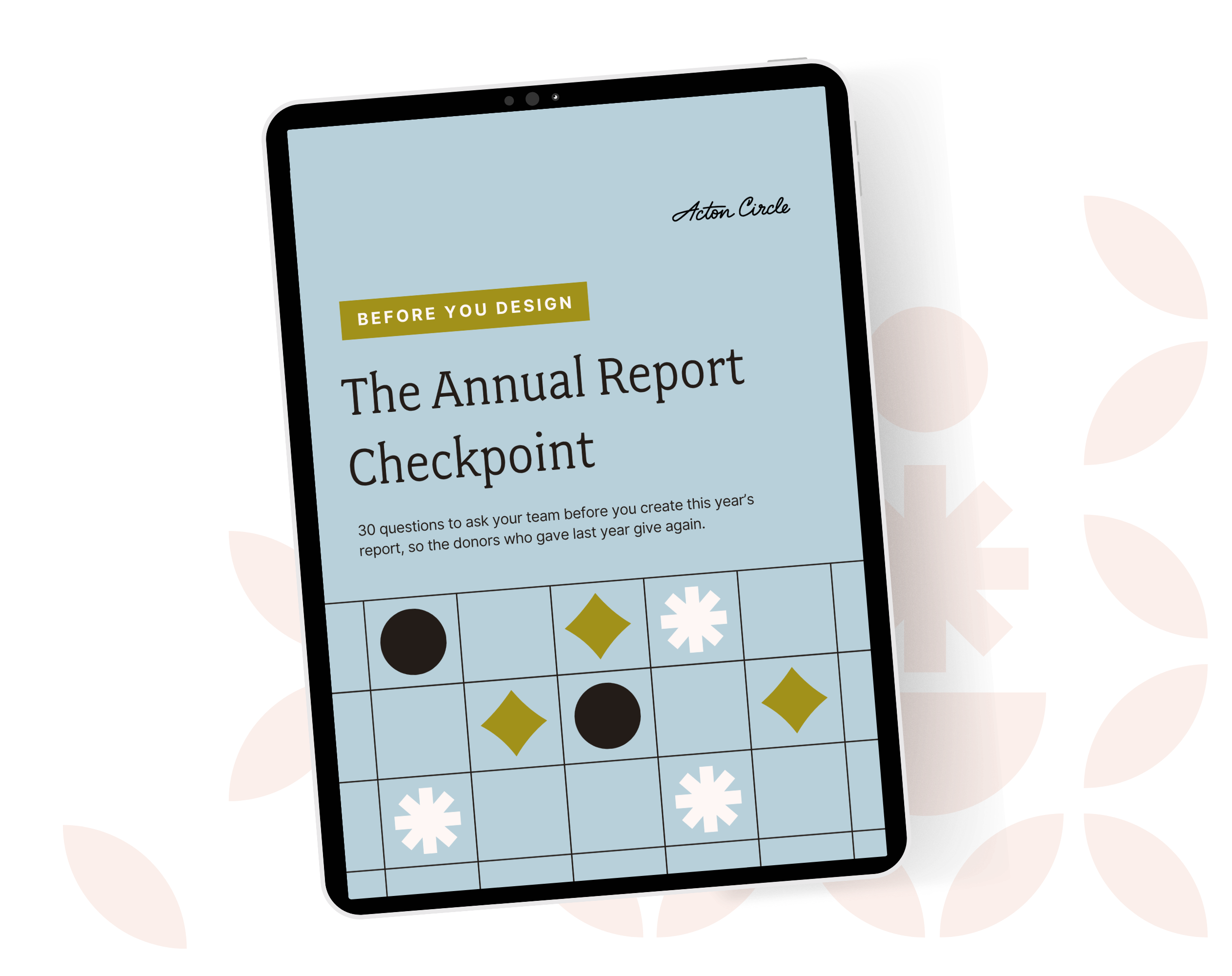
Get The Annual Report Checkpoint
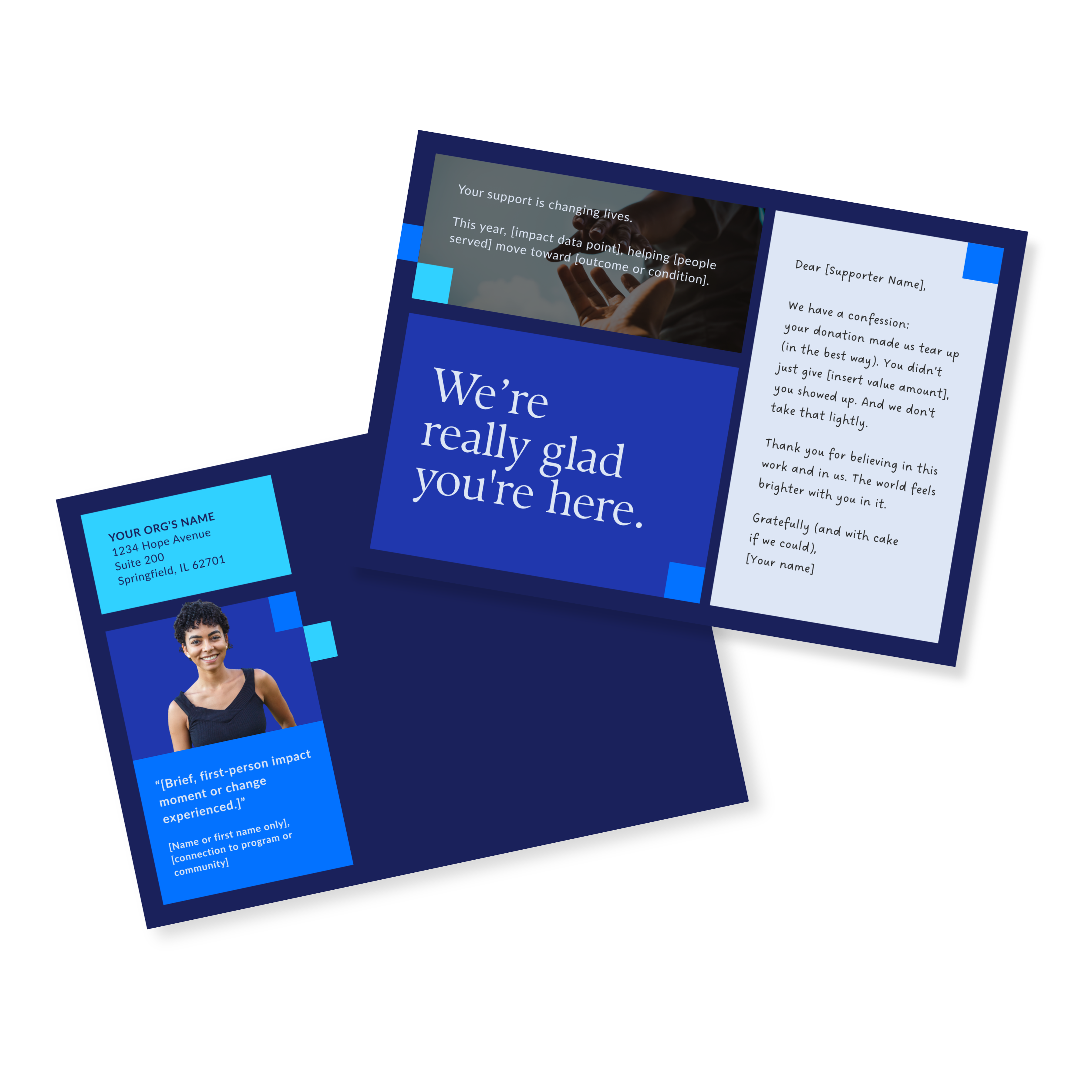
Donor Thank You Postcards Templates
Enter your info and we’ll send the postcards straight to your inbox:
When a Large Agency Makes Sense
If you're doing a full rebrand, need national ad campaign support, or are managing a communications strategy across multiple channels simultaneously, a large agency may genuinely be the right fit.
Big scope, broad needs, significant budget. Agencies are built for that.
When a Boutique Studio Is the Better Call
If what you need is:
→ A partner who already understands nonprofit donor psychology
→ Direct access to the person doing the work
→ A faster, more flexible process
→ Transparent pricing without layers of overhead
→ Focused design that reflects your mission
A boutique studio built specifically for nonprofit communications is worth a serious look.
The best annual reports I've seen from small and mid-sized nonprofits came from teams who chose a partner who understood reporting on a deeper level.
What Working With Acton Circle Looks Like
The Annual Report Design Intensive is built for nonprofit teams who are ready to do this right with a partner who's done this specific kind of work across 60+ orgs and understands what donors need to see before they renew, upgrade, or refer.
It's a fully collaborative process, story strategy, design execution, and a final report that works as hard as the team that made it.
If you're in the research phase and trying to figure out what kind of support fits, that's exactly the right time to talk.