You've had the moment. You want to push for better design at your nonprofit, but you don't. Because you don't want to sound difficult, high-maintenance, out of touch, or whatever other word fits given the very real constraints your org is operating under.
Sometimes it's just easier to let it slide. Budgets are tight. Timelines are compressed. There are a dozen other priorities fighting for attention. And when leadership doesn't immediately see design as essential, it feels risky to bring it up again.
The real issue usually isn't whether design is important. It's that leaders often don't have a clear idea of what the return on design looks like. This makes it tough to have grounded, responsible conversations that match what your organization values.
If you're the brand owner or communications lead, advocating for how your work shows up isn't extra. It's part of the job. The challenge is learning how to make that case without turning it into a conversation about taste, preference, or aesthetics.
Why Leadership Often Misses What You See
Your leadership team has deep context for your org's work. They understand the intent behind programs, the nuance of internal decisions, and the constraints everyone's operating under. That context fills in gaps automatically.
Donors don't have any of that.
They're encountering your organization through annual reports, campaign ads, presentations, and emails. Often with very little background and even less time.
What people see visually shapes what they assume about how organized, thoughtful, or effective the work behind the scenes actually is.
This is where belief-building design comes into play.
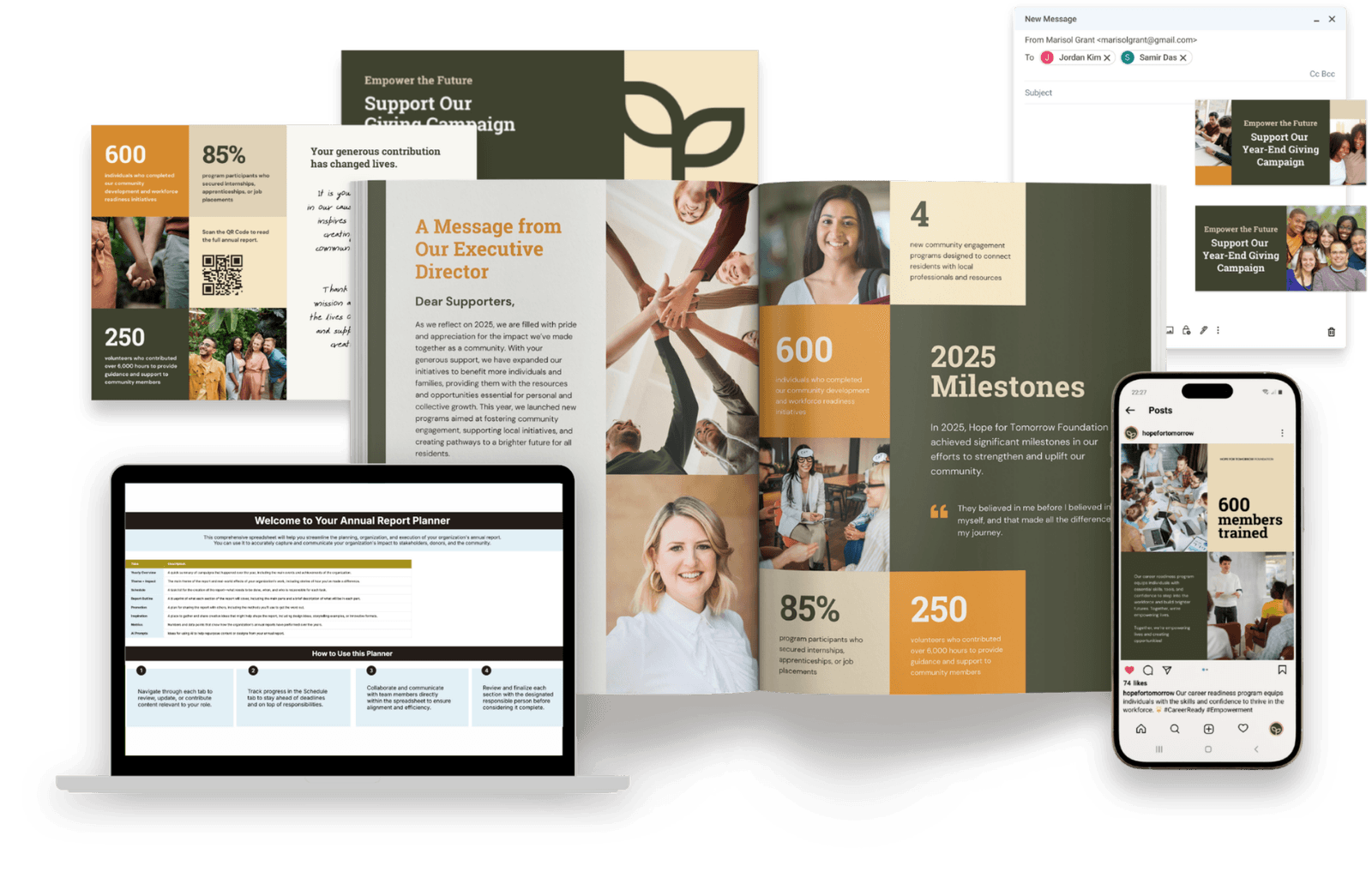
When design creates a clear path from mission → programs → outcomes → next steps, people understand where they fit and what action makes sense.
It builds confidence before a single conversation happens. Especially when orgs are rethinking year-end fundraising or trying to stay top of mind with funders throughout the year.
When design gets reduced to aesthetics or applied inconsistently, the opposite happens. Even strong programs can signal disorganization or uncertainty just because the materials don't have enough context to reflect the quality of the actual work.
How to Help Leadership Understand the Impact of Design
You don't need to convince leadership that design exists. They already know. What usually needs reframing is why design decisions affect the outcomes they care about.
Design directly shapes donor trust, board confidence, fundraising results, and credibility with foundation officers and major donors. Once those connections get made explicit, the conversation shifts from subjective to strategic.
Rather than talking about what looks better, talk about what removes friction. Clear design reduces confusion, shortens explanations, and makes it easier for donors to say yes because the story feels complete and coherent.
This is the shift that allows design to be discussed alongside planning and budgeting, instead of being treated as an afterthought once everything else is locked down.
Why "Cheap" Design Often Costs More Than It Saves
One of the most common objections to investing in design is cost, especially in nonprofit environments where every dollar gets scrutinized. But the real cost of underinvesting in design shows up in less obvious ways.
Rushed or inconsistent design creates more revisions, longer approval cycles, and repeated explanations for the same materials. It leads to internal frustration, misalignment across teams, and donor-facing assets that staff feel hesitant to use.
Over time, that chips away at trust externally and morale internally. The work still gets done, but it takes more energy, more time, and more emotional labor from the people closest to it.
When design gets treated as a credibility tool rather than a visual upgrade, it becomes easier to see how intentional investment protects staff capacity and donor relationships instead of draining them.
Get The Annual Report Checkpoint
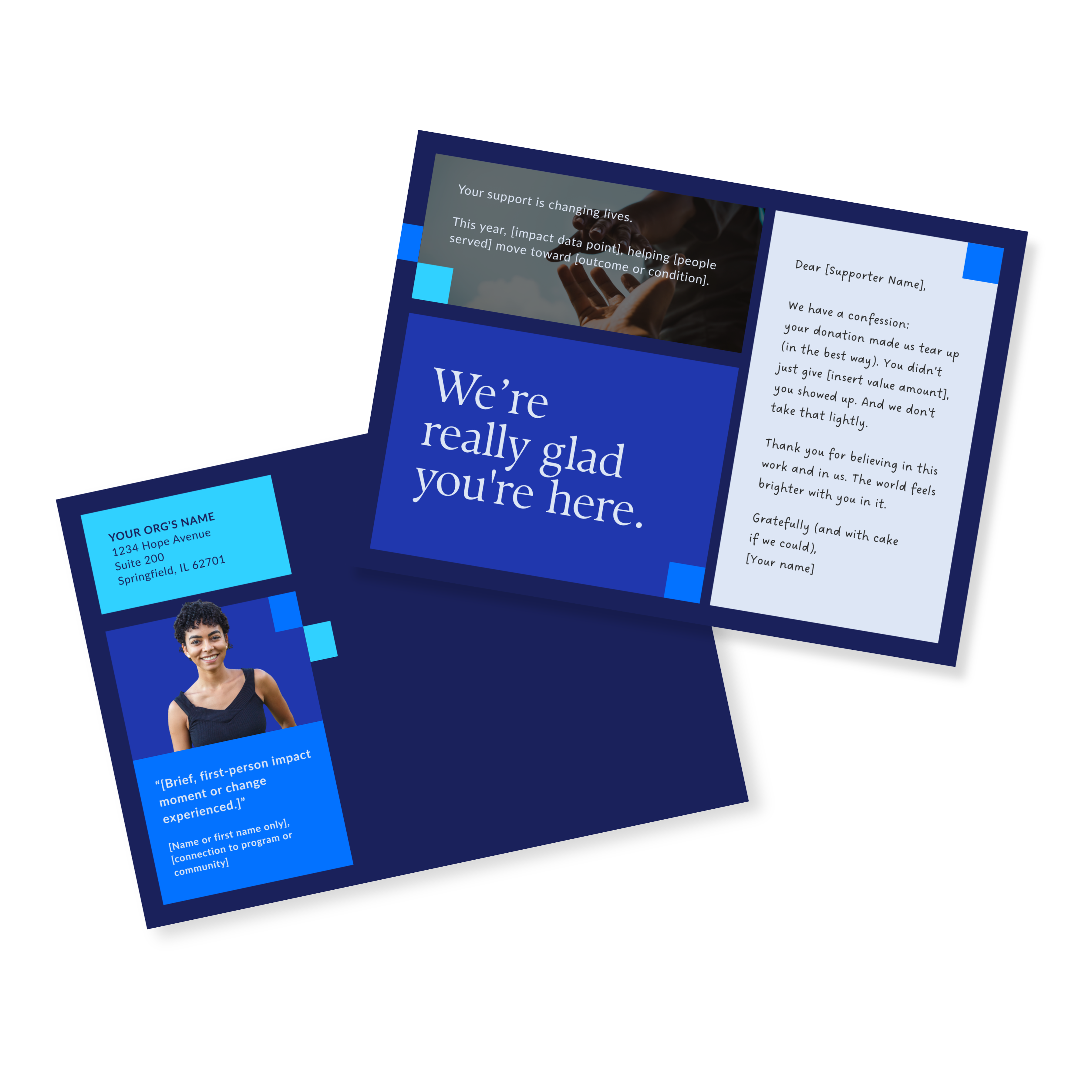
Donor Thank You Postcards Templates
Enter your info and we’ll send the postcards straight to your inbox:
Practical Ways to Advocate for Better Design in Real Conversations
If you don't know how to advocate for a design investment with your ED or board, start with these angles.
Position design as a credibility issue (not a creative preference)
Leadership conversations go further when design is framed around trust, ease of understanding, and reputation instead of visual polish. Boards care far more about protecting the organization and maintaining donor confidence than they do about color palettes.
Start here: Try reframing with language like, "This isn't about making things look nicer. Donors need to trust they're investing in a solid organization."
Connect design decisions to fundraising outcomes
Belief-building design supports a clearer story, which helps donors understand impact faster and feel more confident about giving. This chain of logic aligns closely with how leadership already thinks about growth and sustainability.
Start here: Walk through how a confusing page or deck slows down donor understanding or weakens a fundraising conversation.
Explain the hidden costs of underinvesting
Design that feels "good enough for now" often creates delays, rework, and inconsistent messaging across channels. The cost doesn't disappear. It just gets redistributed into staff time and slowed progress.
Start here: Point out where time is already being spent fixing or explaining materials that could be done right from the start with solid design.
Use tangible examples instead of theory
Abstract arguments rarely change minds. But concrete examples do. Show leadership exactly what a donor sees and where confusion might creep in. Make the issue real instead of theoretical.
Start here: Bring one current piece and walk through it from an outsider's perspective.
A Paragraph You Can Share Directly With Leadership
If you need a simple way to advocate without creating a full presentation, here's some language designed to be copied and shared as-is:
"If we want donors to see us as stable, trustworthy, and ready for larger or continued investment, our materials need to reflect that. Inconsistent design weakens our credibility and directly affects giving."
Ready to hand this off?
The Annual Report Design Intensive is your report, done for you. Narrative strategy first, design second, so the finished piece doesn't just recap your year... it makes people believe in it.
You bring the impact. We'll make it impossible to skim past.