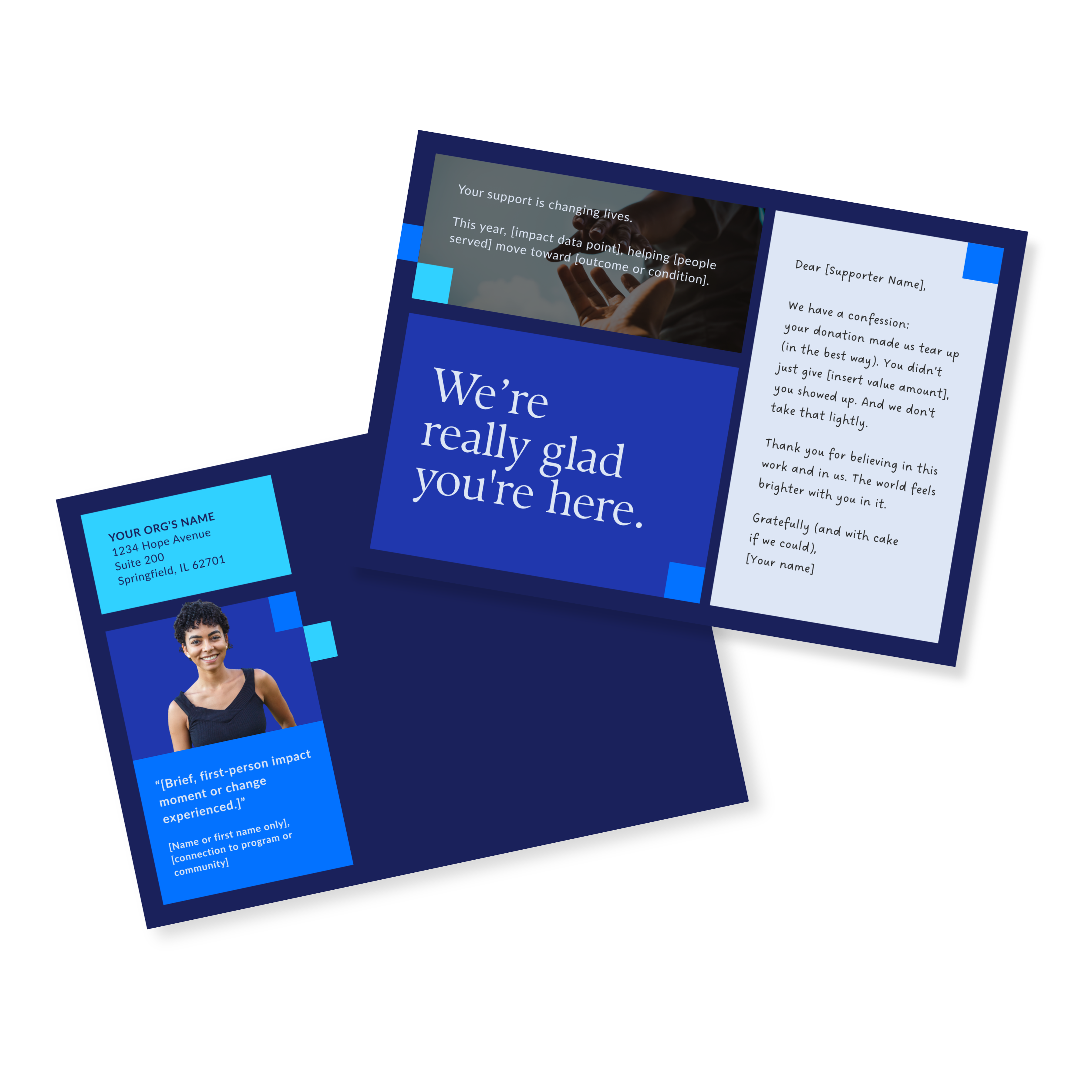
For nonprofits like yours, thoughtful imagery isn't an aesthetic afterthought, but how you show up for the communities you serve.
When your visuals reflect genuine representation, you create deeper engagement and lasting trust.
Keep reading to learn how to select imagery that authentically represents your communities and strengthens your visual storytelling.
What Is Inclusive Imagery?
Think of inclusive imagery as your visual mission statement, the part of your communications that shows, not just tells, what your org stands for.
Representing a diverse range of people is about making sincere visual choices that honor the real complexity of the humans you work with, different races, ethnicities, gender identities, ages, body types, and abilities.
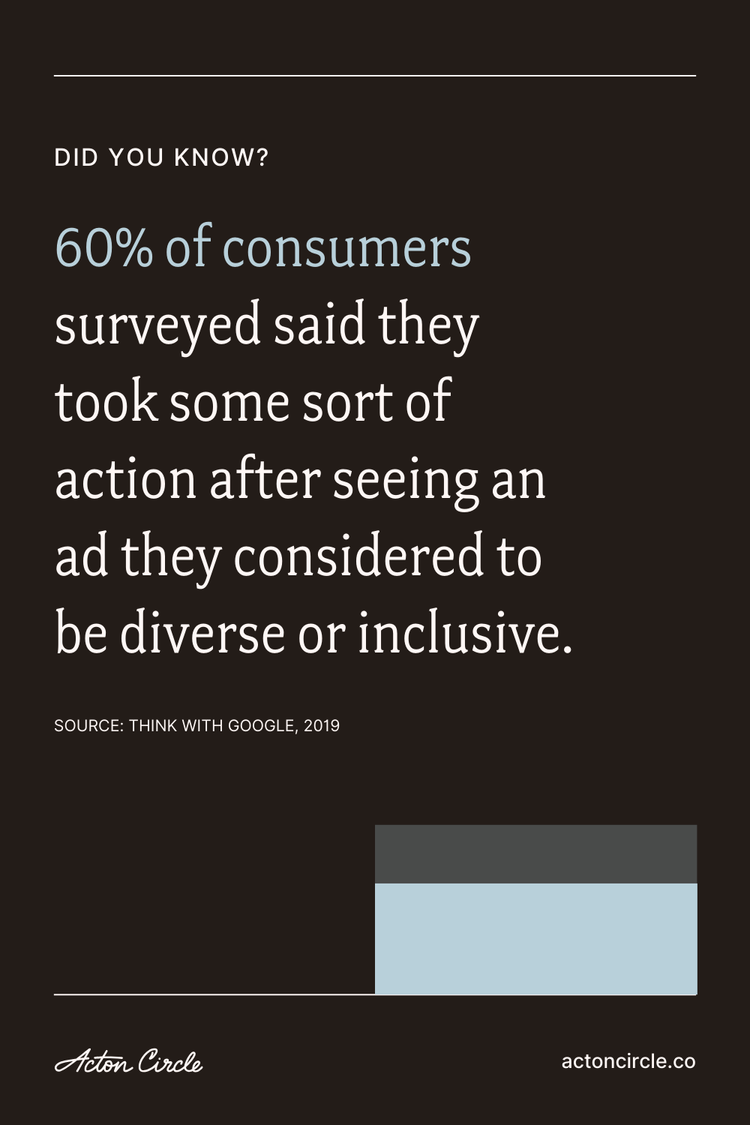
When people see themselves in your imagery, they feel like they belong in your story. That's not just good intention. It's good strategy.
Why Your Visual Choices Are So Important
The wrong visuals don't just look off, they push away the communities you're trying to reach.
Inclusive imagery creates a richer, more authentic story. That means showing mental health struggles and neurodivergent experiences as part of full lives, not just conditions to manage. It means making sure your alt text is doing real work so your story reaches everyone, not only those who experience content visually.
Your visuals are doing something whether you're paying attention or not. The question is whether that work supports your mission or undercuts it.
The Elements That Make a Difference
When evaluating your imagery, here's what to look for:
Race and ethnicity: Your visuals should reflect the true diversity of your communities. Show the full spectrum, not a sanitized version of it.
Gender and age: Showcase women leading, older adults engaging with technology, nonbinary individuals living authentically. The full range, not the comfortable middle.
Abilities: Feature individuals with visible and non-visible disabilities as full participants in everyday life. Not as subjects of charity. AS PEOPLE.
Cultural context: Thoughtful representation means understanding the communities you're depicting. Honor diverse lived experiences with real care, not surface-level nods.
Where to Find Imagery That Serves Your Mission
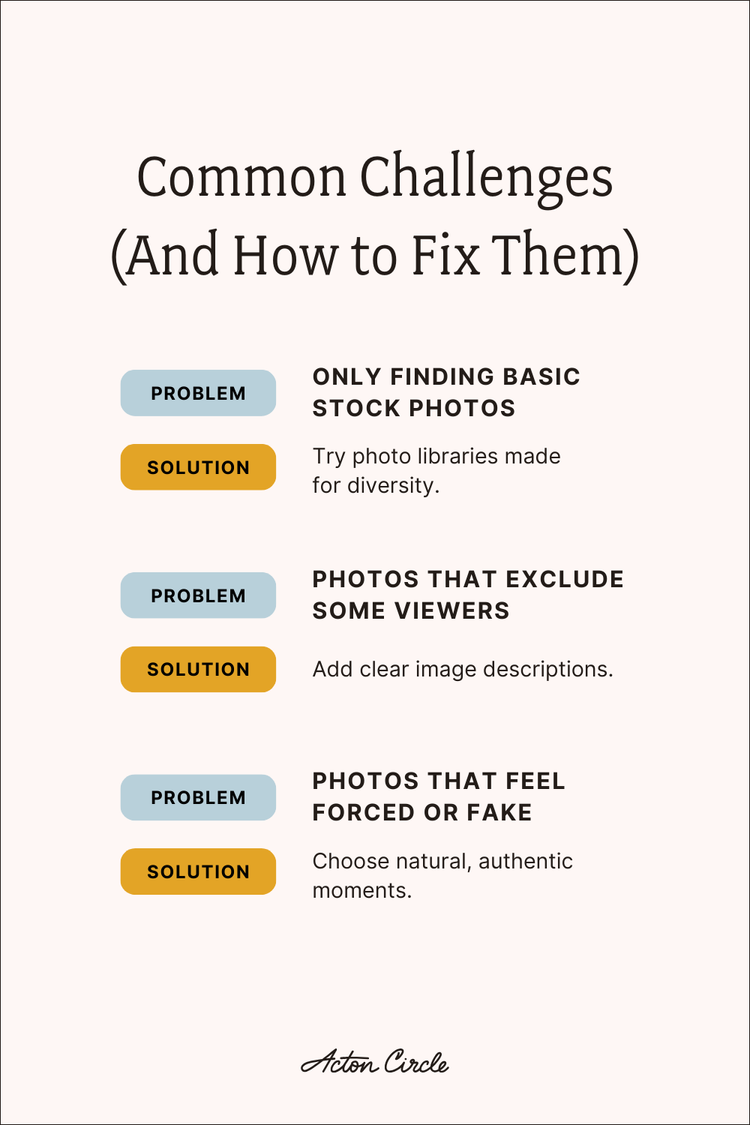
Traditional stock sites often fall short here. A few specialized libraries worth knowing:
Nappy — diverse stock photography centered on Black and brown people
TONL — culturally diverse lifestyle photography
Disability:IN — imagery featuring people with disabilities
Black Illustrations — illustrated visuals centered on Black representation
If budget allows, partnering with a local photographer who knows your community well is worth every dollar. Genuine moments don't come from a stock library.
A Quick Checklist for Your Visual Guidelines
Before finalizing any imagery for your communications, run it through these:
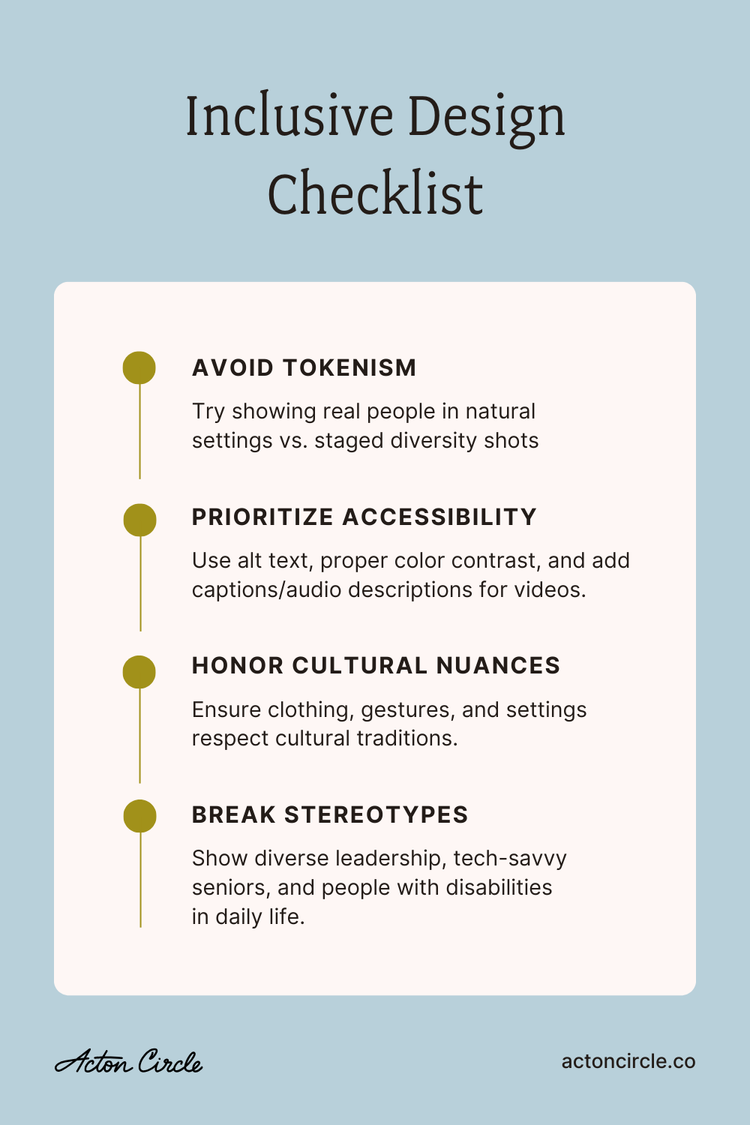
→ Does it avoid tokenism, one person representing an entire community?
→ Is accessibility built in, alt text, contrast, readability?
→ Does it reflect cultural context with real understanding?
→ Does it move beyond limiting stereotypes?
Every Image Is a Choice
And every choice either deepens trust with your community or distances you from it.
Your org's visuals should be as intentional as your mission. If inclusive imagery has felt like a nice-to-have rather than a priority, this is your reminder that it's both, and that getting it right is more doable than it sounds.
Want to work with a design team that takes representation seriously?
Get The Annual Report Checkpoint