You’re in the nonprofit space because you care deeply about a cause. Your team knows that. Your board knows that. And you probably feel it every day you show up to the work.
But here’s the harder question: does your audience feel it, too?
Between emails, social posts, newsletters, meetings, and constant updates, most people are skimming—if they’re paying attention at all. Your story isn’t competing with other nonprofits. It’s competing with everything.
That’s why nonprofit storytelling helps people quickly understand what changed, who it affected, and why your work deserves continued trust.
What is nonprofit storytelling?
At its core, nonprofit storytelling is how you help people understand your mission, your work, and your impact without needing extra explanation.
It’s how donors, partners, and community members answer practical questions:
- Who are you serving?
- What did you actually do?
- What changed because of it?
Storytelling can show up in many forms—written narratives, quotes, data summaries, and thoughtful design choices. Sometimes that includes visuals, sometimes it doesn’t. The format itself isn’t the goal. Helping people understand is.
When stories require too much effort to follow, people disengage. When they’re grounded, specific, and centered on real human experiences, people stay connected.
Telling Real Community Stories (Without Crossing the Line)
Strong nonprofit storytelling makes work feel human without turning people into symbols.
Seeing a student succeed, a family stabilize, or a community come together can help supporters understand the work, but only if those stories are shared with care and purpose.
There’s a real difference between helping someone feel connected to your work and pushing emotion too far. We’ve written before about the difference between emotional engagement and manipulation in nonprofit storytelling, and that line often shows up when stories lose context.
Storytelling that builds trust tends to:
- Show people with dignity, not as props for impact
- Include enough context to avoid oversimplifying complex work
- Acknowledge both progress and challenge
- Stay grounded in real places and real experiences
For example, Planet Women’s annual report doesn’t rely on abstract language or overly polished moments. It uses real stories and environments to show where the work happens and who it’s for—helping readers understand impact without exaggeration.

Nonprofit Storytelling Examples From Community-Focused Campaigns
Storytelling works best when it’s tied to a clear purpose: helping people understand an issue, see their role in it, or know what action to take next.
Here are a few nonprofit storytelling examples that do that well:
Oxfam – Behind the Barcodes
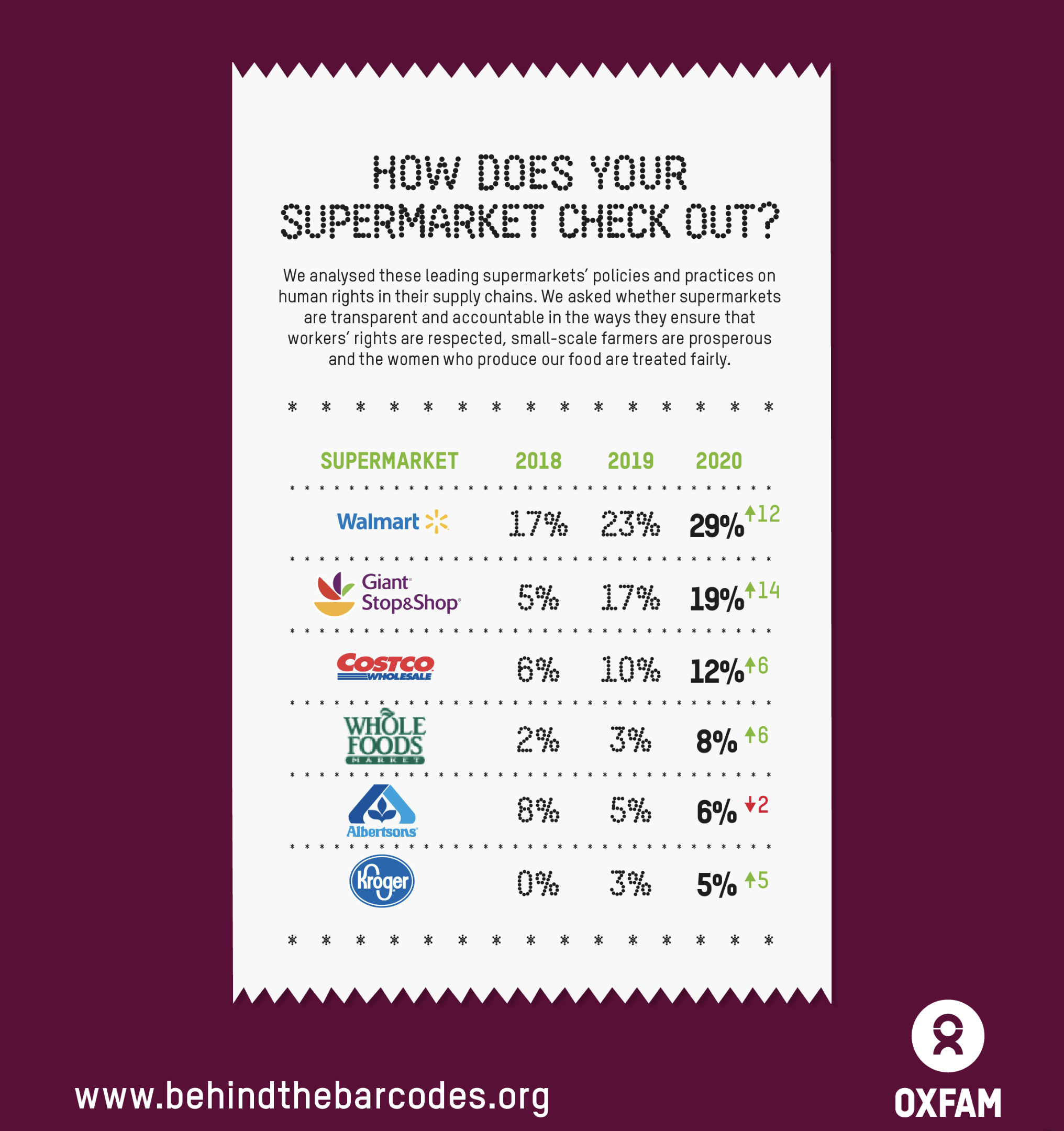
This campaign helped audiences understand labor conditions in global food supply chains by connecting everyday consumer choices to real people. The storytelling relied on data over time and relevance, guiding viewers toward a specific takeaway and action.
No More Secrets, MBS – Power a Period
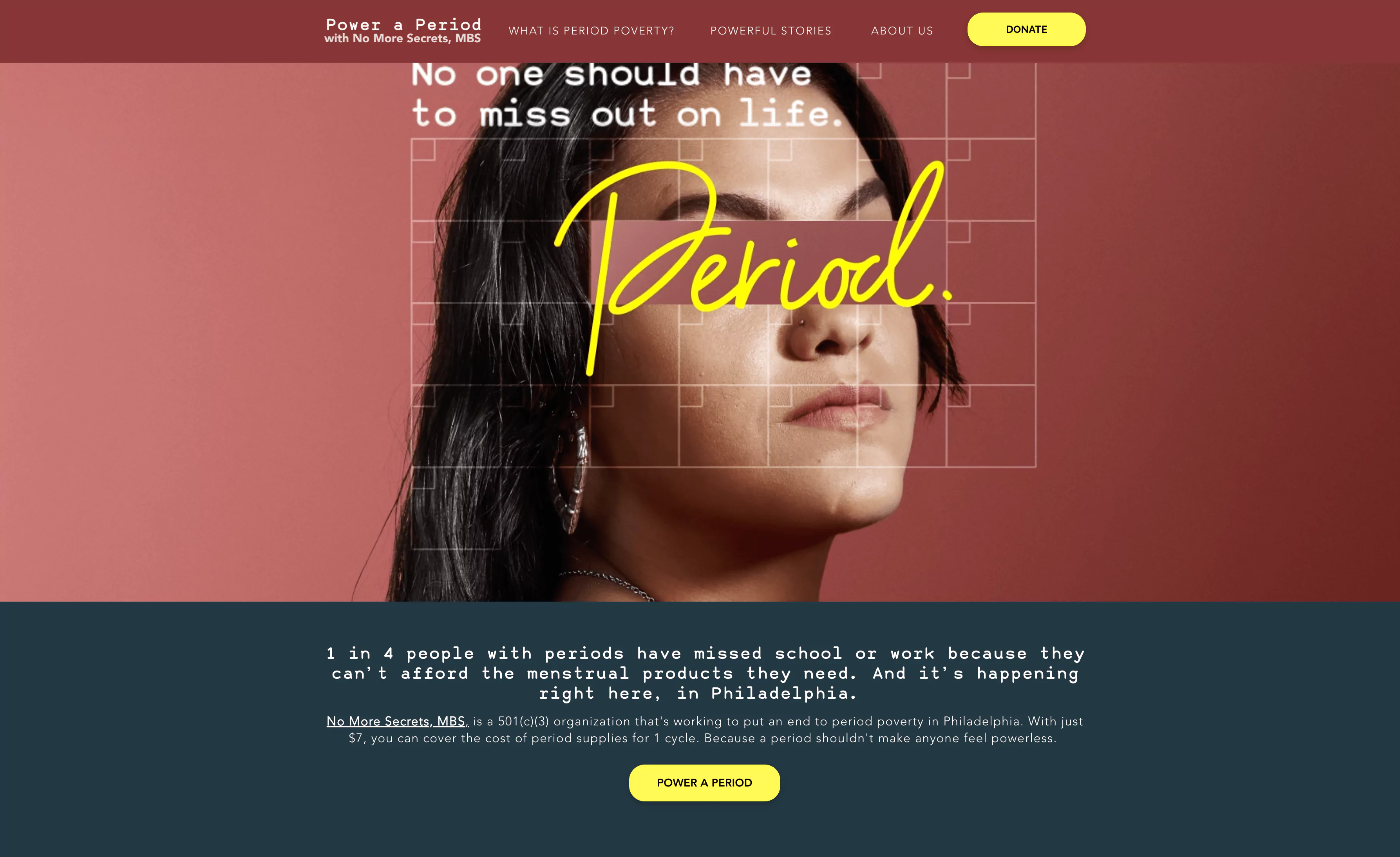
This campaign addressed period poverty by combining real voices with accessible explanations. The storytelling made a complex, often overlooked issue easier to understand, without stripping it of seriousness or dignity.
Making Waves Academy – Enrollment Campaign (Created by Acton Circle)
Making Waves focused its storytelling on what the college access journey actually looks like for students and families—from applying, to navigating priorities, to understanding long-term support. By using clear, student-centered examples and plain language, the messaging helped families see how the program works, what steps to expect, and how it supports them beyond enrollment.
Start With the Story, Not the Deliverable
One thing that’s often missed: strong nonprofit storytelling starts by getting clear on what you want someone to understand—not by jumping straight into writing or design.
Before writing, designing, or publishing anything, ask:
- What shifted or emerged during this period?
- Who felt that change most directly?
- What do we want people to understand or carry with them afterward?
When those answers are clear, it’s easier to choose what to include, what to leave out, and how to talk about the work in a way that stays consistent from start to finish.
Where Nonprofit Stories Show Up
Strong storytelling shows up across your communications, not just in one place.
- Emails and newsletters help supporters follow progress over time
- Web pages orient new audiences quickly
- Reports and presentations help donors and boards understand impact without fatigue
- Campaign updates reinforce trust and transparency
The same core story should adapt to each channel without needing to be reinvented every time.
Ethics, Consent, and Dignity Still Matter
However your story is shared, respect has to come first.
Ethical nonprofit storytelling means:
- Getting consent and explaining how stories will be used
- Avoiding narratives that exploit hardship for attention
- Letting people represent themselves whenever possible
- Centering dignity over drama
Make Your Mission Easy to Understand—and Remember
If your annual report feels scattered, or you’re unsure which stories actually belong in it, you’re not alone. This is where many nonprofit teams get stuck—trying to include everything, without a clear sense of what supporters need to understand first.
The Belief-Building Annual Report Playbook starts with the hard part most teams skip: deciding what the year was really about. It helps you pinpoint the shifts that made a big difference, identify the students, families, or community members who make those shifts tangible, and decide where data supports the story instead of competing with it. The result is an annual report that’s structured on purpose (not assembled at the last minute) and is easier for supporters to follow from the first page to the last.
.avif)
Get The Annual Report Checkpoint
The Belief-Building Annual Report Playbook
Enter your info and we’ll send the postcards straight to your inbox:
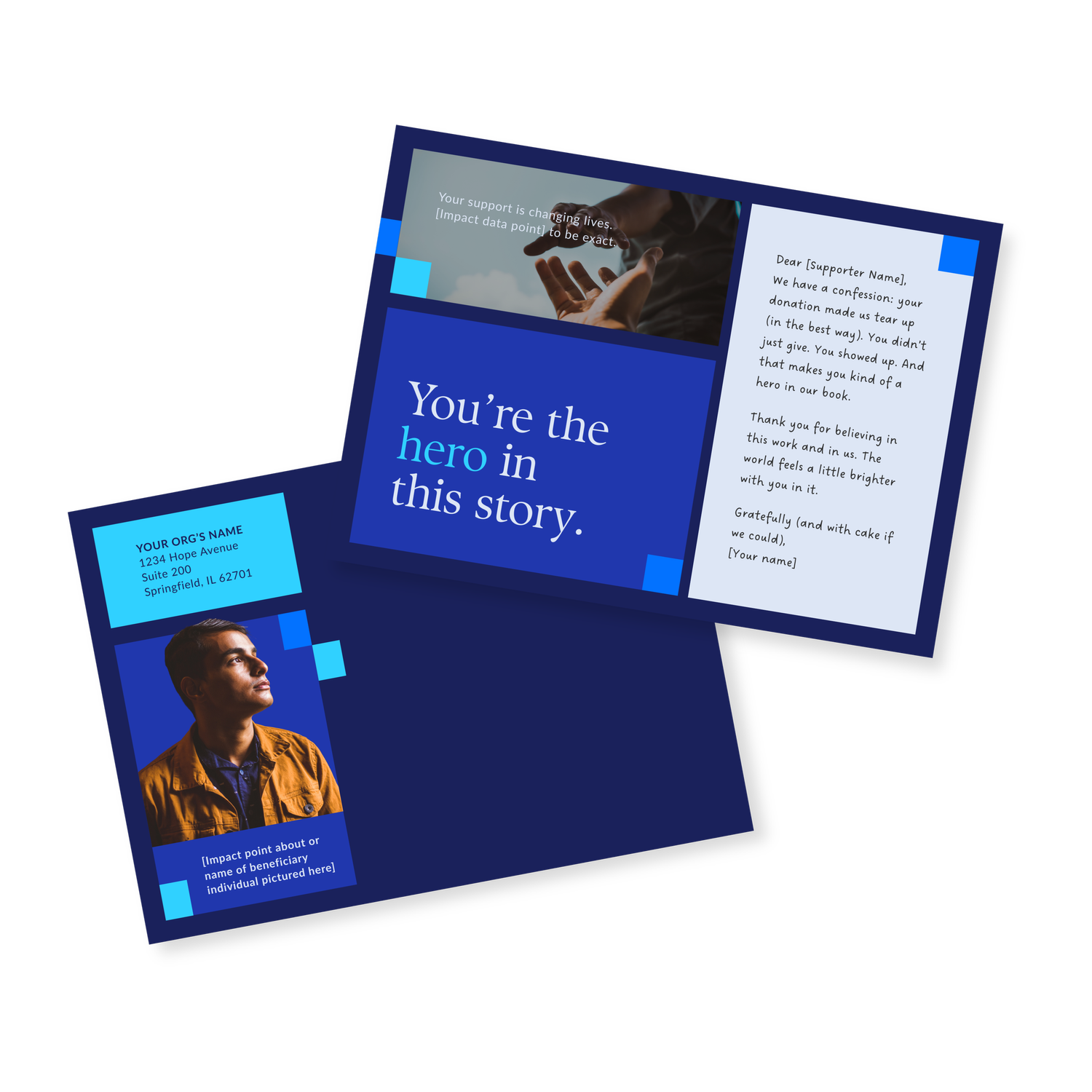
Donor Thank You Postcards Templates
Enter your info and we’ll send the postcards straight to your inbox:
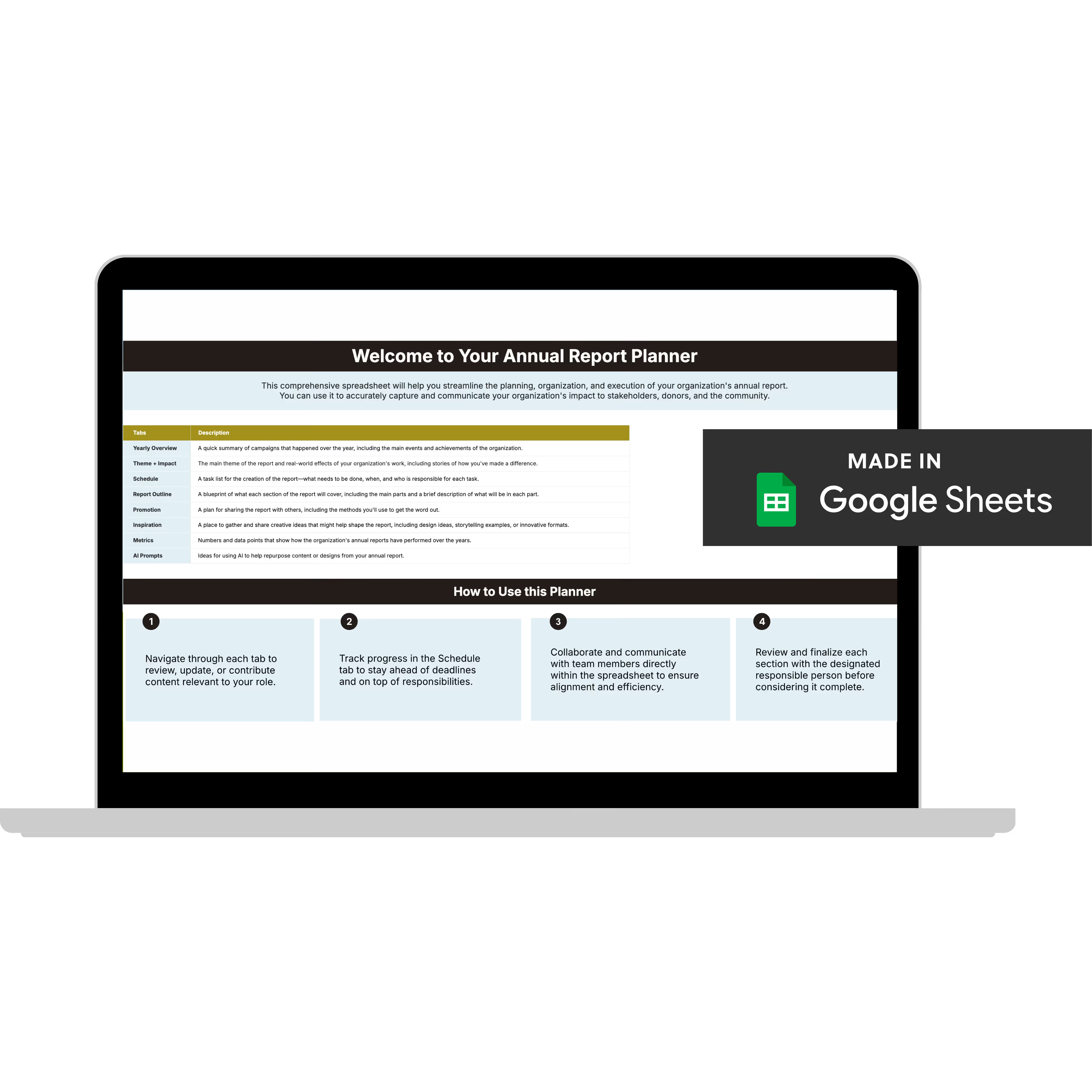
Annual Report Planner
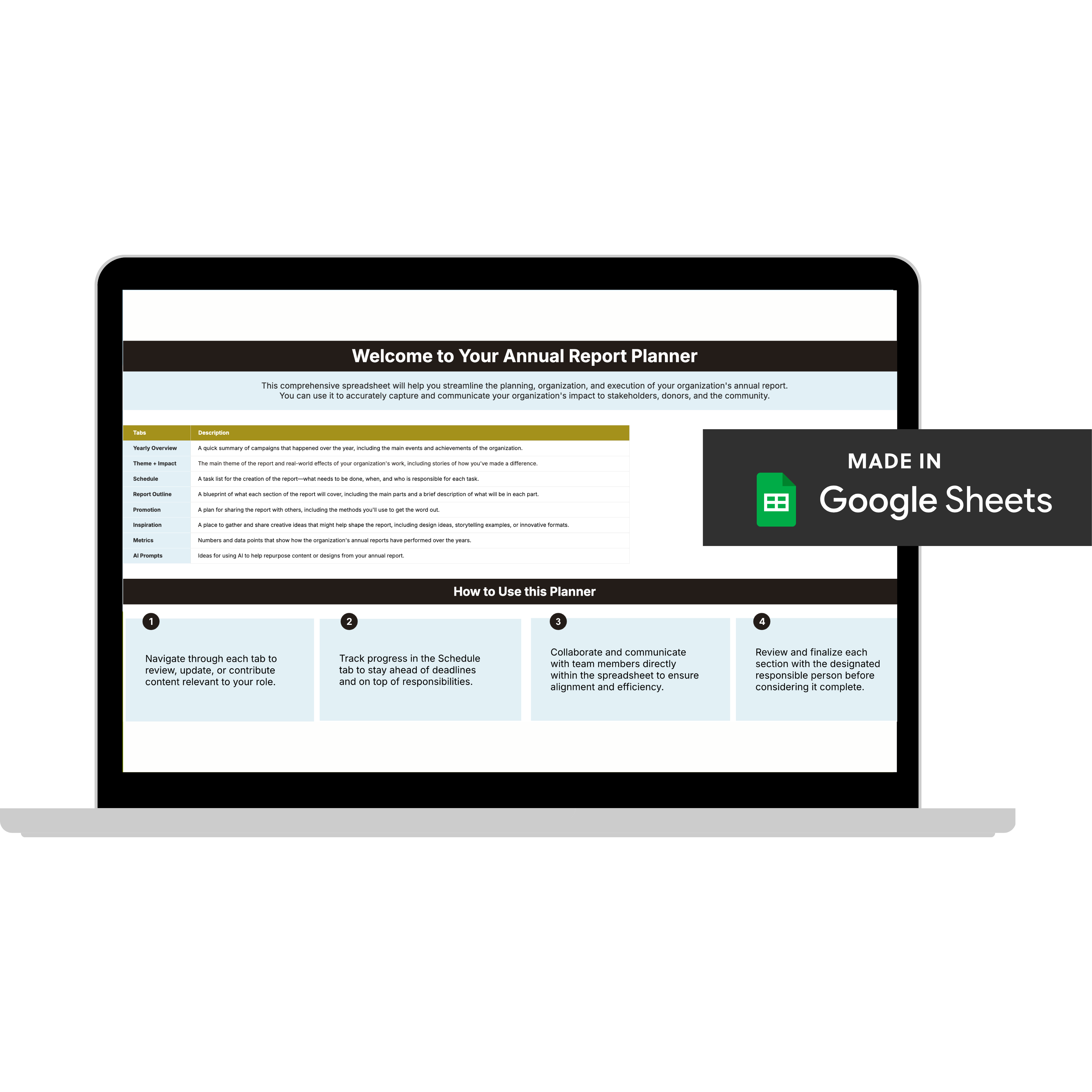
Get a clear content roadmap so your annual report builds belief, earns trust, and actually gets used after launch—plus the same planning approach we use with our 1:1 clients, built in.