A nonprofit annual report is one of the few pieces of communication that brings fundraising, programs, leadership, and impact into a single story.
When it’s done well, it builds belief... belief that your org is credible, thoughtful, and worthy of continued investment.
In this article, we’ll walk through what a nonprofit annual report is, what should be included (and what can be left out), how to combine an annual report with an impact annual report, and practical annual report ideas that don’t require reinventing the wheel.
What is an annual report for a nonprofit?
A nonprofit annual report is a yearly reflection of your org's work, not just what you did, but what shaped the year and what changed because of it.
Traditionally, annual reports focused heavily on financials and internal milestones. Today, the strongest reports do something more meaningful: they translate complex work into a story supporters can feel and understand.
At its best, an annual report helps donors and partners answer a few essential questions:
- What did this org focus on this year?
- How were resources used?
- What shifted for the people or communities served?
- Is this an org I trust moving forward?
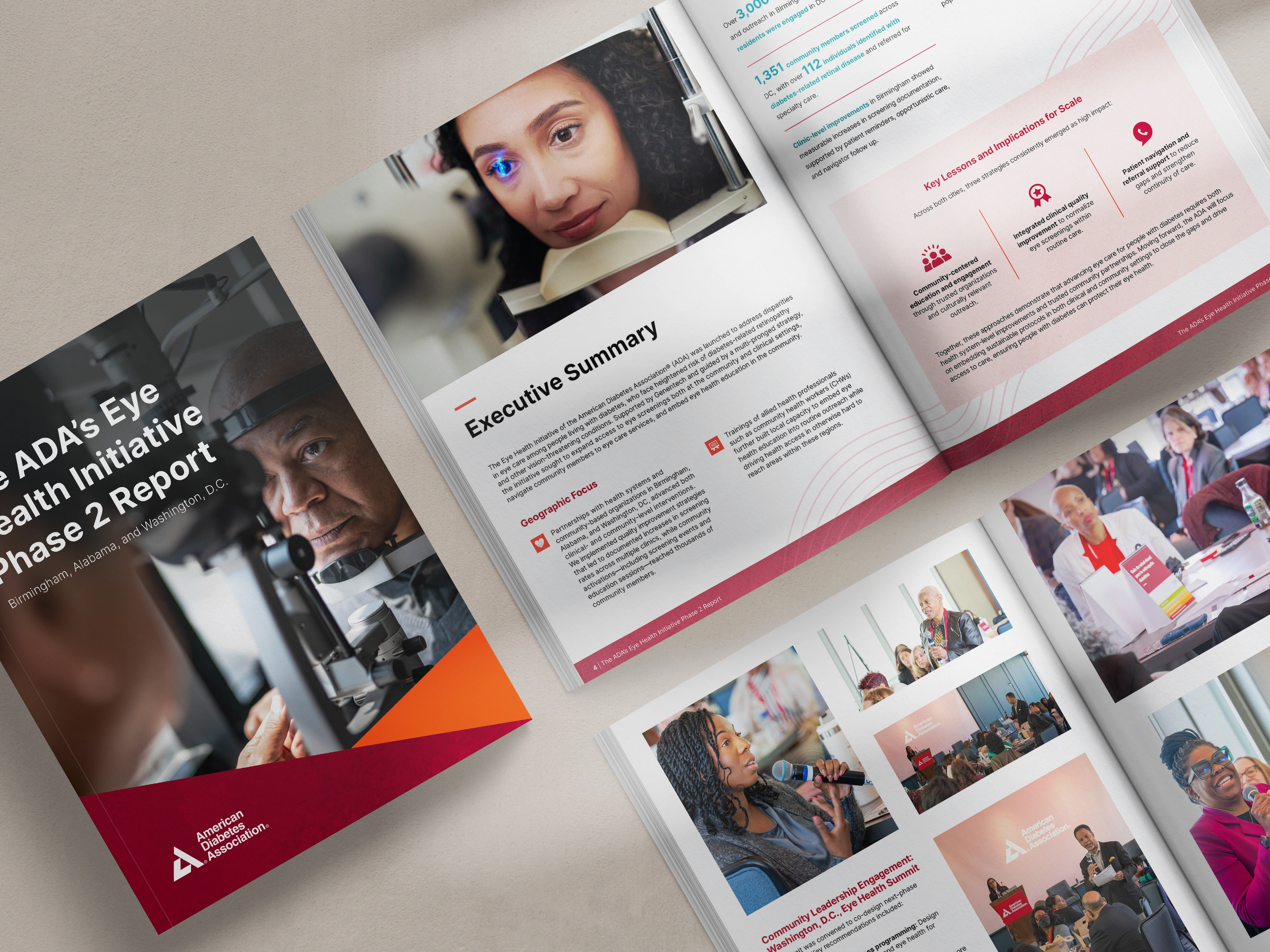
An annual report is a place of shared understanding between your org and the people who support it. When my team and I start a new project, one of the first things I ask is: what do you most want a supporter to feel after reading this?
The answer is almost always some version of "professional."
So I push. "What does professional mean to you?"
And when teams think on that question, what comes out is something closer to: safe. Competent. Credible. Like the money was used well. Like the mission is real. Like giving again is worth it and not risky.
That's what they want donors to feel. "Professional" was just the shorthand.
And that's a much more interesting design brief. Because now we're not talking about fonts and colors, we're talking about trust. And trust is built through content decisions just as much as design ones.
What an Annual Report Should Include
A strong annual report focuses on what supporters need to understand your year without extra explanation.
Here’s what that usually looks like.
1. A clear orientation to the year
Start by orienting the reader. What defined this year for your org? A major shift, challenge, or area of focus? This sets the tone for everything that follows.
2. Mission and context
Revisiting your mission gives readers context. It helps them understand who you serve, what problem you exist to address, and how the work they’re about to see fits into that bigger picture.
3. Program highlights
Rather than listing a description of every program or initiative, highlight the work that best shows what changed this year. Focus on outcomes and progress, not just what was delivered.
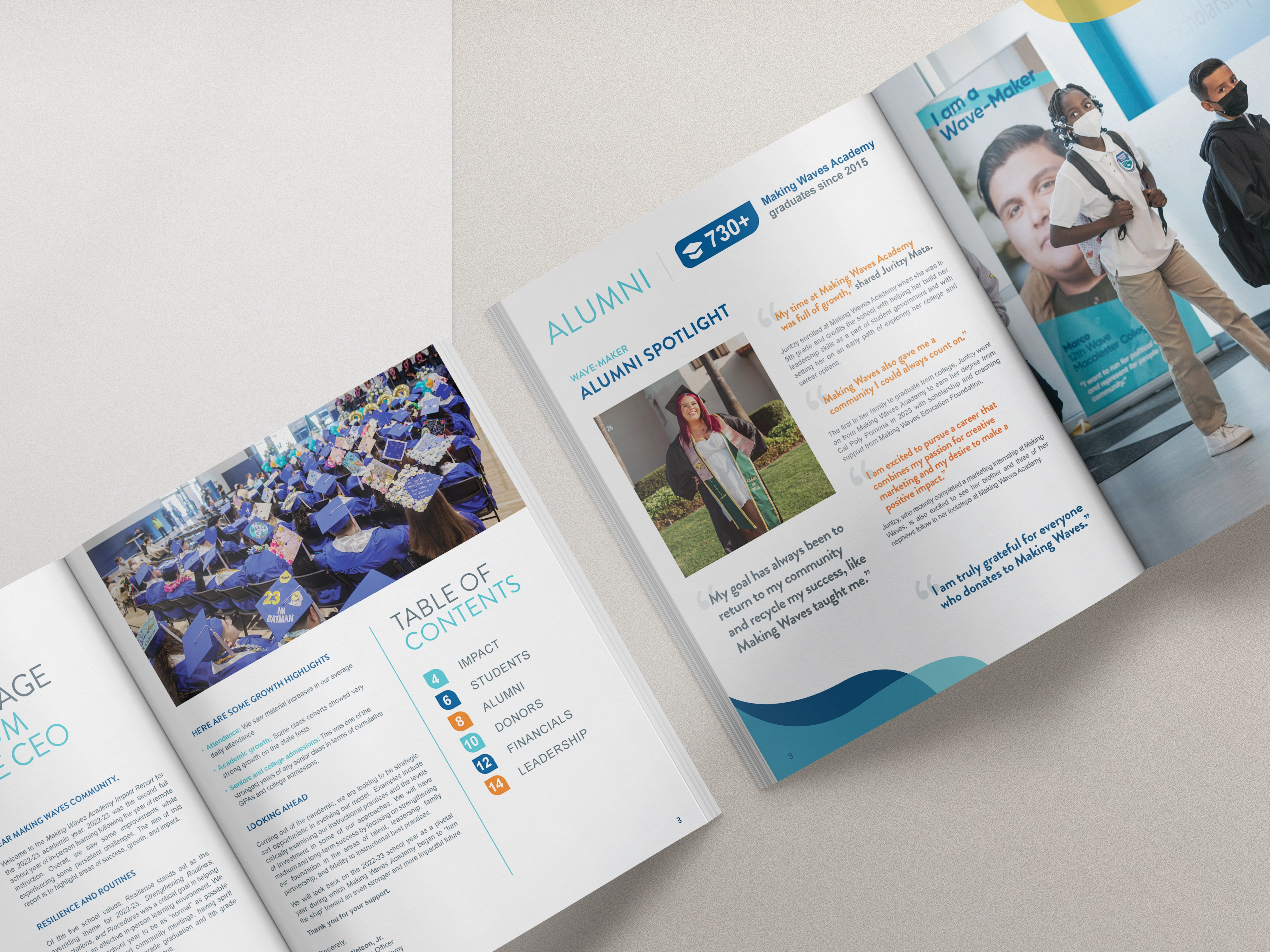
4. Impact stories
Use real examples from the people or communities you serve. Show what life looked like before the work, what changed, and where things stand now.
This is one of the most underdeveloped sections in reports we review. Teams often have powerful stories sitting in program notes or staff emails that never make it into the report.
5. Key metrics and outcomes
Include the numbers that help readers understand scale or progress at a glance. How many people were reached? What moved up or down? Skip the internal metrics that don’t add meaning for an outside reader.
6. Financial snapshot
Share a simple overview of where money came from and how it was used. Pair the numbers with short explanations so donors don’t have to guess what they’re looking at.
7. Gratitude and recognition
Call out the donors, partners, and collaborators who made the work possible. This is where you show that the impact was a collective effort, not something the organization did alone.
8. Future plans
End by naming what you’re focused on next year. Give supporters a sense of direction so they understand how this year’s work leads into what’s coming.
Done consistently, this kind of intentional reporting compounds over time.
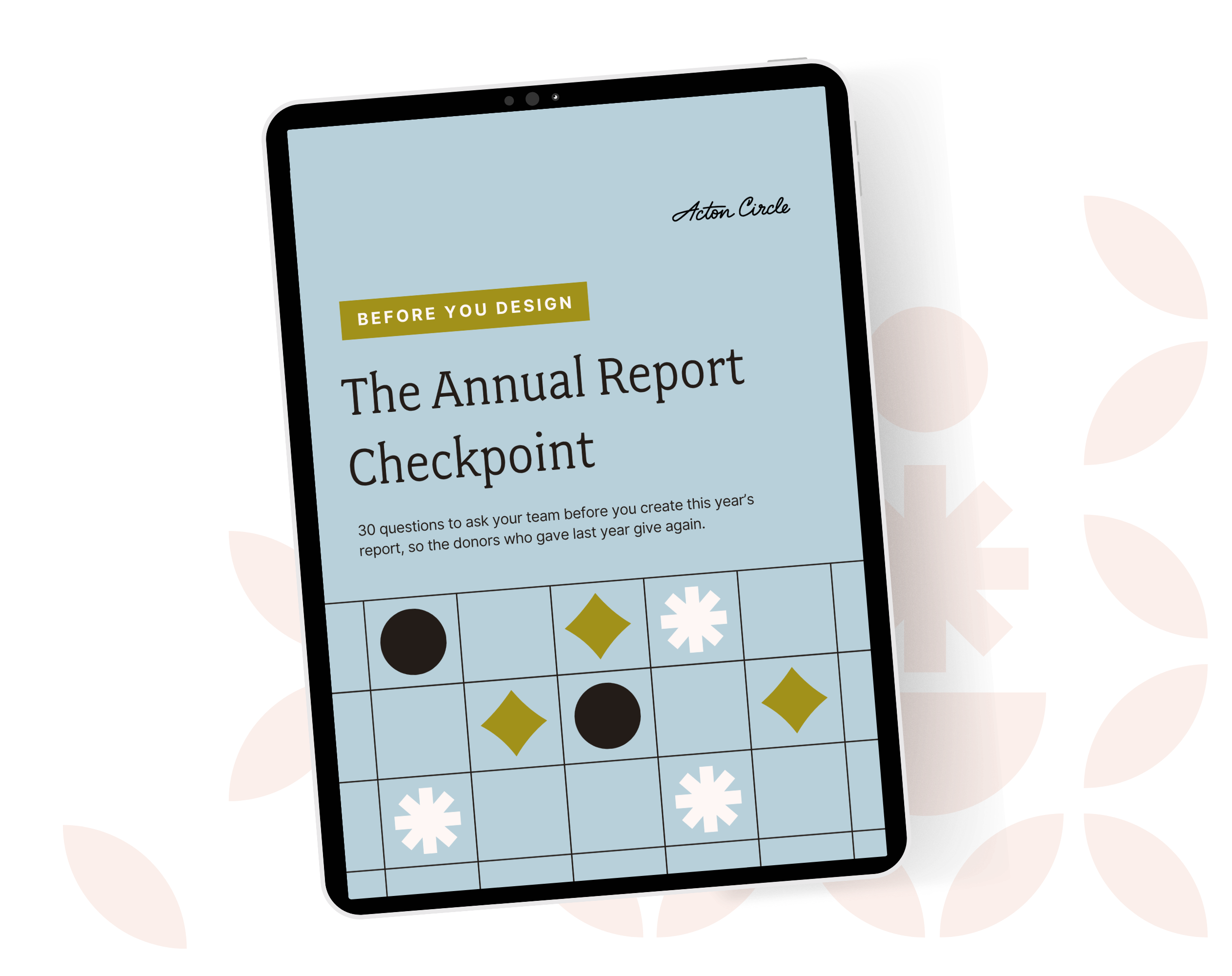
Get The Annual Report Checkpoint
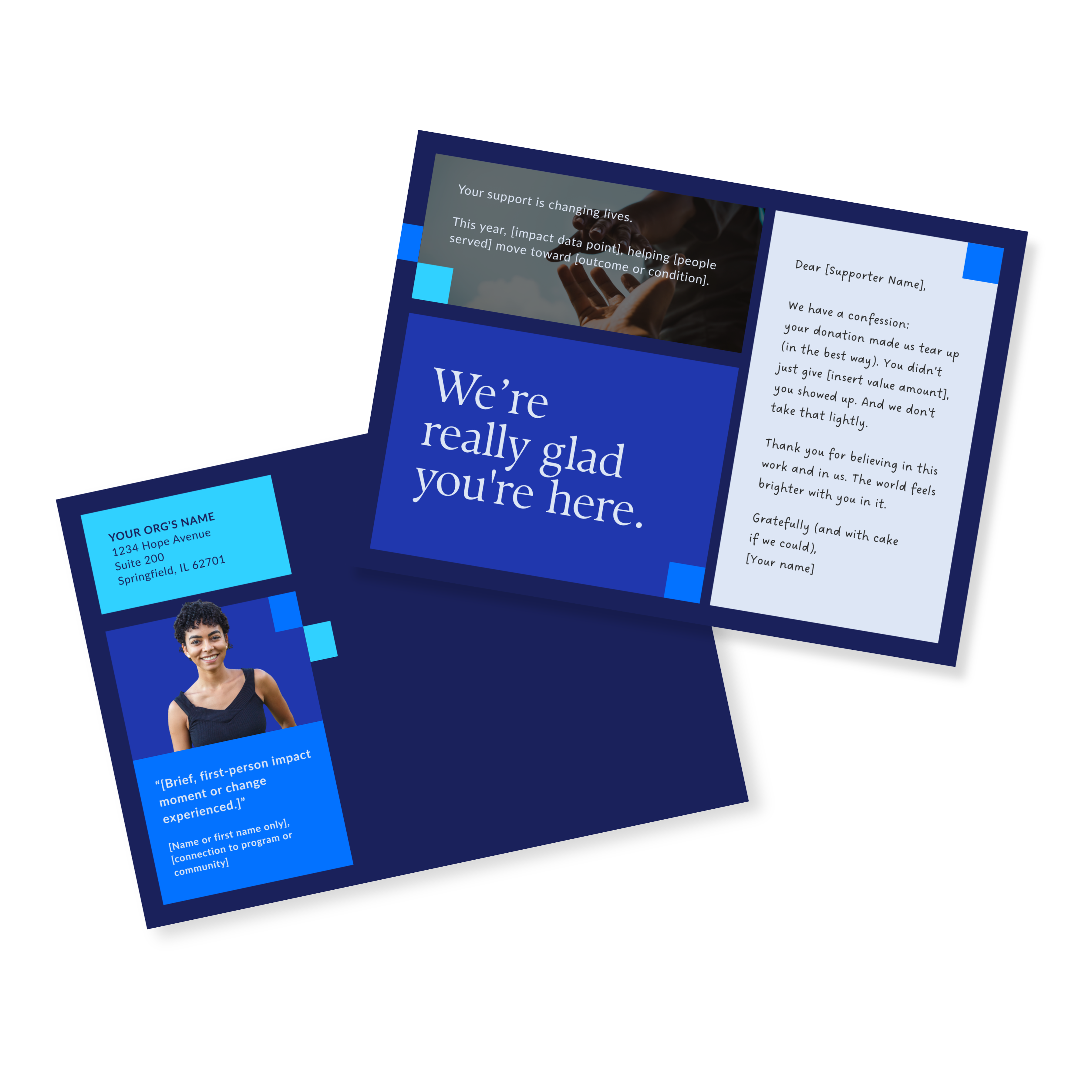
Donor Thank You Postcards Templates
Enter your info and we’ll send the postcards straight to your inbox:
How to Combine Annual & Impact Reporting
Many orgs feel stuck choosing between an annual report and an impact report. In reality, they don’t need to be separate.
An annual impact report brings the two together: the accountability of an annual report and the meaning and outcomes emphasized in an impact report.
Instead of publishing multiple overlapping docs, a combined approach allows you to tell one cohesive story:
- What happened this year
- How resources were stewarded
- What changed because of the work
This approach reduces duplicated content across your website, creates a clearer story for your community, supports SEO by consolidating related topics, and makes the report easier to reuse throughout the year.
If your report helps readers understand the work and feel its significance, you’re already doing impact reporting.
15 Annual Report Ideas
Annual reports don’t need to be long, glossy, or complicated to be effective. Some of the strongest reports today are simple, flexible, and designed for how people engage with content.

Here are a few annual report ideas nonprofits are using successfully:
- One-page infographic: Pick your five biggest wins and five strongest stats. Drop them into a clean, eye-catching visual.
- PDF impact snapshot: Intro, three highlight sections, and a wrap-up (kept around four pages.)
- Interactive web landing page: Create a page on your site with clickable sections for stories, impact, and financials.
- Short video report: 90 seconds of visuals, captions, and short clips summarizing your year.
- Social media series: Turn your best moments into a 6–7 post highlight reel.
- Slideshow presentation: 10–12 slides with large visuals and minimal text is perfect for donor or board meetings.
- Hybrid report: A short printed version for handouts + a longer online version for deep dives.
- Postcard report: One strong image, a short summary, and a QR code linking to your full report.
- Photo essay report: 10–15 images with captions that let visuals bring the story to life.
- Timeline report: A visual timeline of milestones, from launch to year-end.
- Storybook report: Group three or four personal stories into “chapters” with supporting stats.
- Data-only report: A clean, no-frills set of charts and tables for metrics-focused audiences.
- Podcast-style audio report: A 5–10 minute spoken summary you can share online.
- Email-embedded report: A scrollable, visual email with no attachments.
- Community wall report: A large-format poster displayed at your office or events.
Not sure if your report is hitting the mark?
A report can have all the right pieces and still not do the thing it was built to do.The sections are there. The data is there. But something between the content and the donor isn't connecting.
The Annual Report Checkpoint helps you catch it before it's too late. It's a free self-assessment across five key areas, from how your report looks to what it's trying to say.
Each section gives you direction on what to strengthen before you invest time and budget into production.