How to Make Your Nonprofit Stand Out: 5 Ways to Get More Donors

Written by

the Acton Circle Team

/

Updated

May 4, 2026

There are almost 2 million nonprofits in the US... without the right visibility, even the most powerful missions can be overlooked. This means that your org's impact relies on strong connections with donors, communities, and supporters who share your vision.

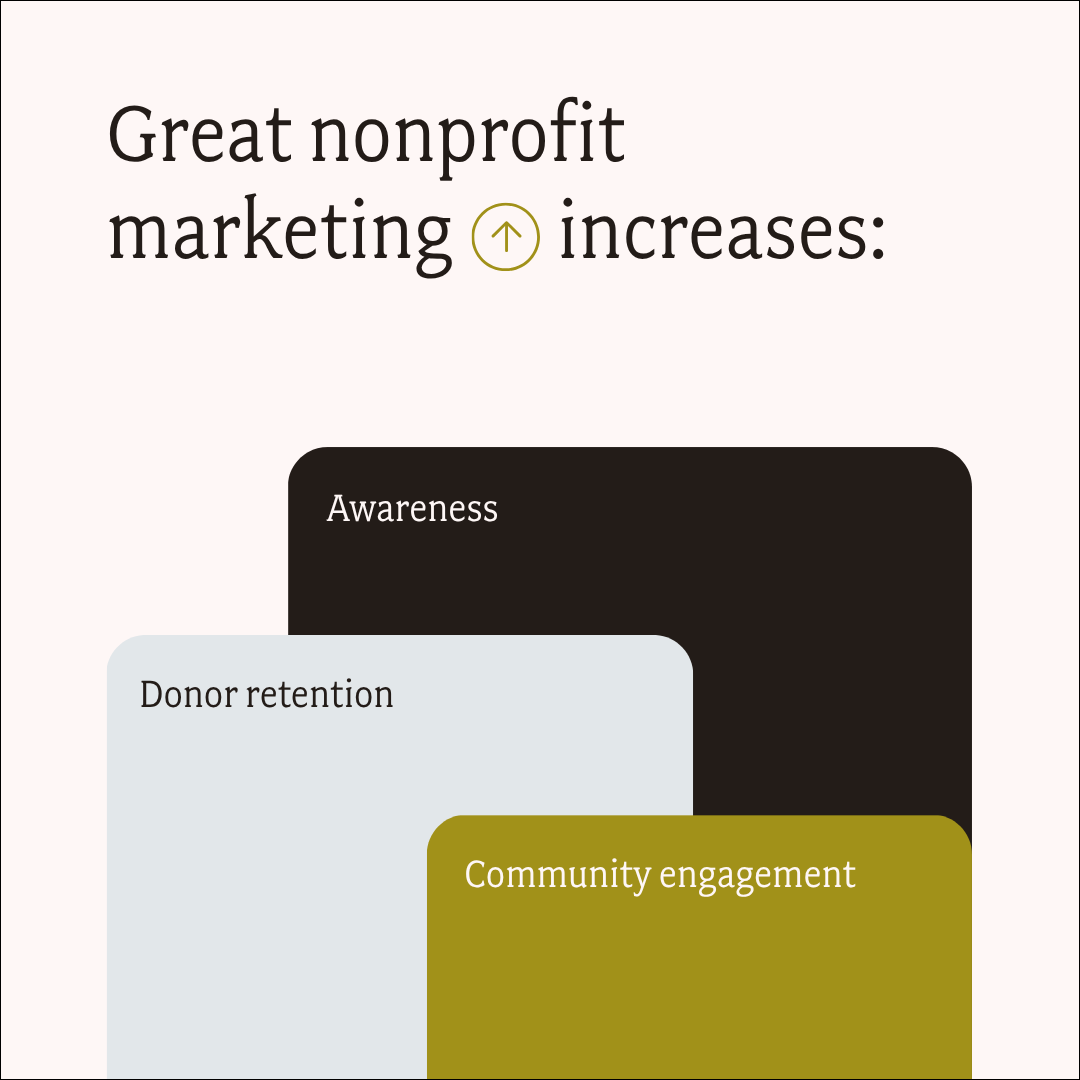
If your story isn't shared, awareness drops, donor retention falls, and community engagement slows down.

The good news: you can champion your mission and inspire action through many methods. Here are five strategic approaches for your nonprofit's marketing, so you can stand out and build lasting relationships with donors and supporters.
1. Show Up Where It Counts, Not Everywhere at Once

Be intentional with your online presence. Go beyond basic social posts and focus on building a thoughtful, genuine connection that reflects your mission. Consistency means showing up where your community is, not trying to be everywhere at once.

Strategic Action: Create a content calendar that includes both mission highlights and community stories. Let your values shape your message instead of just following trends.

2. Tell Your Story in Formats People Actually Feel

Share your impact in ways that connect with your audience. Use formats like podcasts and visual reports to help your community understand your work. Video is especially powerful, as it grabs attention and builds emotional connections, especially with younger audiences.

Strategic Action: Pick storytelling formats that fit your message and your audience’s preferences. Sometimes, a well-designed infographic can be more effective than a long report.

3. Make Community the Core, Not the Afterthought

From talking with many Marketing and Development Directors, I’ve seen that the organizations that stand out are those that treat community as a central part of their work, not just an extra.

​Strong communities grow from real connections and shared goals, not just transactions. Your job is not only to serve, but also to create spaces where donors, volunteers, and supporters feel part of something greater.

Strategic Action: Create intentional ways for your community to connect, both online and in person. Strong communities do more than support your mission, they help it grow.
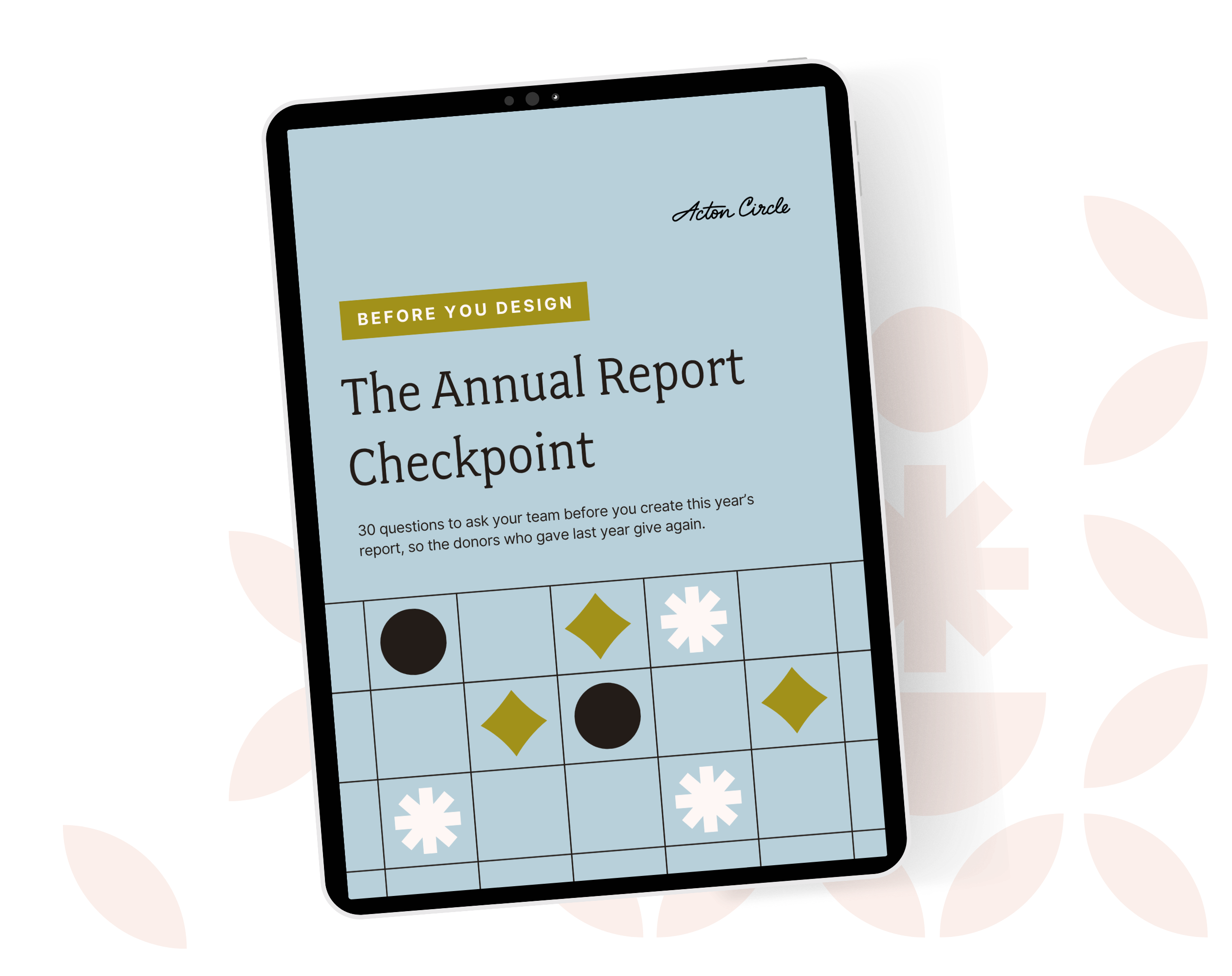
Ipad on a green floral background displaying an image of a blue, patterned PDF

Get The Annual Report Checkpoint

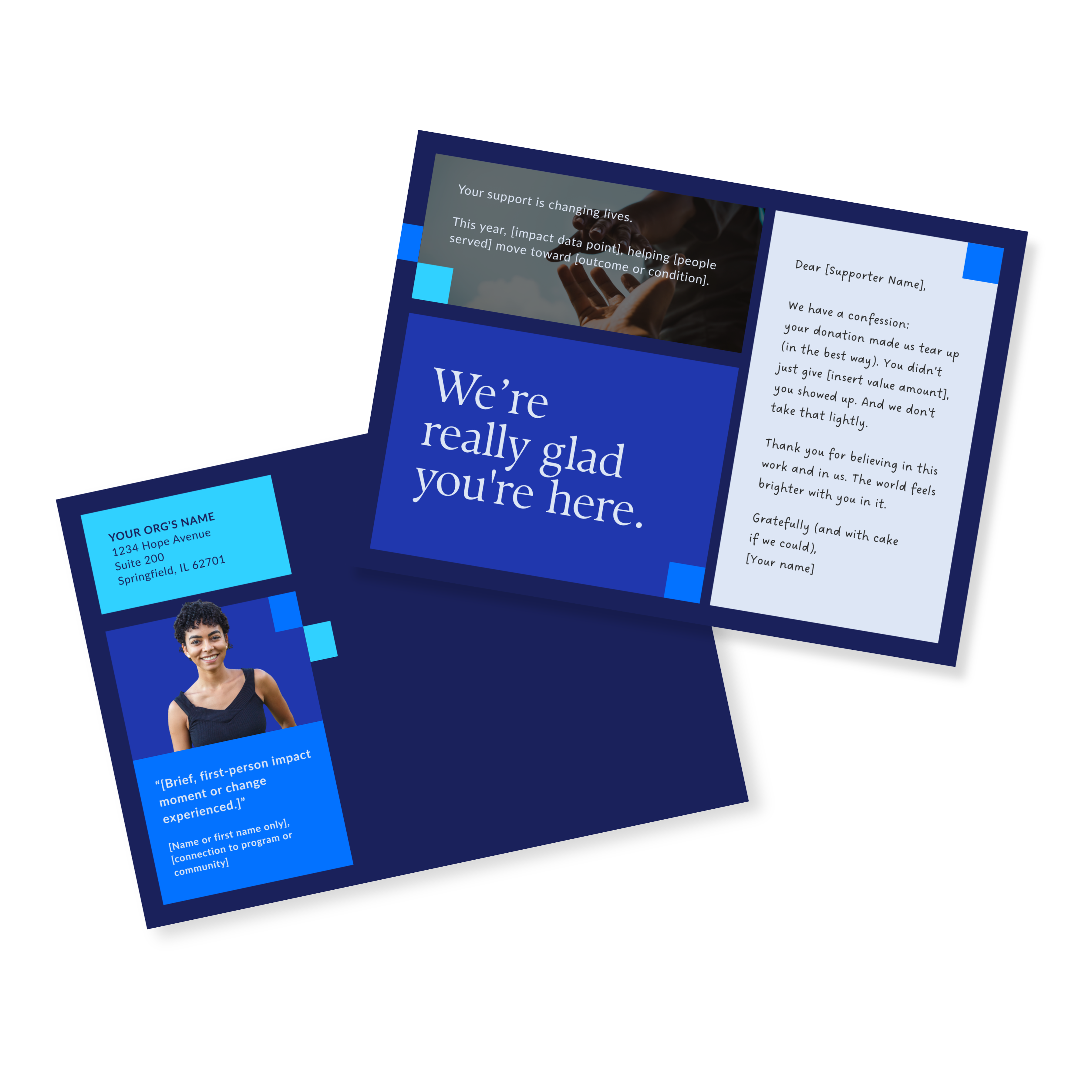
Donor Thank You Postcards Templates

Enter your info and we’ll send the postcards straight to your inbox:

4. Get Real Feedback From the People You Serve

The best insights often come from the people you serve. Making room for honest feedback not only improves your programs, but also builds trust and shows your commitment to growth.

Strategic Action: Set up ways to collect, respect, and use feedback from your community. Show your supporters that their input shapes your work.

5. Stop Guessing What Your Donors Want to Hear

Generic messages don’t help your mission. Your marketing needs a clear structure to help your nonprofit stand out. Knowing how different generations connect with your cause, including millennials’ interest in direct mail, helps you communicate with purpose.

Strategic Action: Match your communication strategies to what your audience truly prefers. Avoid guessing or making assumptions. Being authentic works across all channels.

Putting Your Nonprofit Visibility Strategy into Action

Nonprofit visibility is about showing up in ways that matter. Everything from your visual identity to your impact reports should show the depth and importance of your mission... and show it consistently.

Standing out begins with knowing your current position and imagining your potential. If you’re ready to raise awareness and create more engaging content but don’t know where to start, book a strategy call to find out what’ll work best for you.

Monthly Design Workshop

If you’re the one who usually handles design at your org, this is meant for you. You’ll leave with useful design tips you can start using right away.

see upcoming sessions
👋🏽 Hi, I'm Krista Reyes

I'm a writer and editor with almost a decade of professional experience. I spent most of my formative years working with local and international nonprofits, channeling my passion for worthy causes into written works with depth, value, and intention.

If I'm not working, you'll find me reading books, watching movies, playing chess, or bonding with my four dogs.

👋🏽 Hi, I'm Olivia Wheeler

I'm a creative leader with high standards for nonprofit storytelling. I work between homeschooling and gym sessions, obsess over typography, and believe your annual report should make supporters feel your mission in their bones.

I help nonprofits connect with new audiences and look like the org they're becoming, not the ones they were five years ago.

The stuff you’re wondering, answered straight

Why only 1 in 4 donor ever gives again

Your annual report is a stewardship and retention tool waiting to be used.

Most orgs treat it like a formality. Design it, ship it, forget it. Then wonder why the same donors don't show up again next year.

Donors leave because nobody showed them their gift mattered after they gave it.

First-time donors are THE MOST fragile group you have. One good report = a second gift.

We wrote about exactly how to use your annual report as a stewardship tool, not just a recap: Your Annual Report Is a Stewardship Tool. Here's How to Actually Use It That Way.

Why only 1 in 4 donor ever gives again

Great work along does not raise money

Programs don't fund themselves. Understood value does.

You can run the best program in your sector and still lose funding, because funders and donors don't fund what you did. They fund what they understood.

Most impact sections list activities. Meals served, kids reached, hours logged. None of that tells anyone what changed.

The gap isn't your work. It's the translation between your work and what the reader actually feels reading about it.

I broke this down here: How to Measure Your Nonprofit's Impact (And Make Sure It's Felt)

Great work along does not raise money

Where donors stop reading

Donors give you a few seconds before they decide if your report is worth their time.

Dense pages, no hierarchy, and nothing to pull the eye to what matters don't help.

I wrote about what actually earns attention in that window here: Annual Report Layout: Tips for a Report Donors Will Read

Where donors stop reading

A faster way to build your report

So you're doing your annual report solo again this year, huh? Same deal as last time: last year's PDF open in one tab so you can copy the bones, and a blank Canva doc that doesn't carry a single thing over.

A template is the thing that should've existed the first time you did this solo.

Here's a better approach to your report if you're handling it in-house: The Faster Way to a Beautiful Annual Report

A faster way to build your report

What you're not pulling from your own report

Your annual report is the most content-rich thing your org makes all year. And then it just sits on your website.

Real stories, real numbers, real proof your mission works, all sitting in one PDF that gets opened once and forgotten.

That same content could be twelve LinkedIn posts, three newsletter sends, a case study, a slide for your next pitch deck. Every one of those keeps your mission in front of donors between asks, not just during them.

More on how to make your report work past launch day: Simple and Flexible Annual Report Ideas for Busy Nonprofits

What you're not pulling from your own report

Explore more articles

Branding & Marketing
What belongs in a nonprofit brand guide, and what's just bloat? From lengths and chart rules to common pitfalls, let's dive into it.
Branding & Marketing
Learn how to build a nonprofit brand that earns donor trust, increases recognition, and supports fundraising with practical branding strategies and examples.
Branding & Marketing
Most nonprofits do good work. So why do some thrive while others struggle to stay funded? Here are 7 tips for running a successful nonprofit organization.