The Case for Hiring a Nonprofit Designer for Your Annual Report

Written by

the Acton Circle Team

/

Updated

December 13, 2024

Hiring a nonprofit designer for your annual report is one of those decisions that feels hard to justify... until you're down a marketing manager, mid-rebrand, and the deadline is closer than it looked last month.

The DIY temptation makes complete sense in that moment (and hey, we have templates to help you). But what if you also don't have time to update templates?

That's exactly when handing it off stops feeling like a luxury and starts feeling like the only move that really makes sense.

When "Good Enough" Works Against You

If you're mid-rebrand, every piece of communication you put out right now is doing double duty. It's representing the org you are AND signaling the org you're becoming.

A report that looks like it was assembled in a hurry sets a tone.

Your donors, funders, and internal stakeholders are already forming impressions based on what they can see.

A scrollable impact page that looks polished and intentional says: this team has it together, even in transition. A cobbled-together page says the oppositem, even when your actual work is exceptional.

Hiring a nonprofit designer for your annual report is partly about having something nice to send. But mostly? It's about making sure the thing you worked all year to accomplish doesn't get undersold by the document that's supposed to celebrate it.

What a Nonprofit Designer Brings to Your Annual Report

It's not only execution, but also the decisions you don't know you're making.

Font weight, spacing, color temperature, where the eye travels first. Your donors are reading your design before they read a single word. Most of those choices feel like instinct. And instinct, without training, often works against you.

A nonprofit graphic designer who specializes in annual reports (hey, that's me!) knows how to guide a donor through 24+ pages without losing them. How to set type so the report is comfortable to read, not just good-looking. How to make a financial snapshot readable to someone who isn't an accountant. Which story goes on page three and which one closes the report.

After working with 60+ nonprofits on annual reports and donor-facing materials, I can tell you: the teams whose reports move donors aren't necessarily doing more. They're doing it more deliberately.

That's not something that transfers automatically from general design work or even from a generalist nonprofit marketing background. It comes from doing this specific kind of work, over and over again.
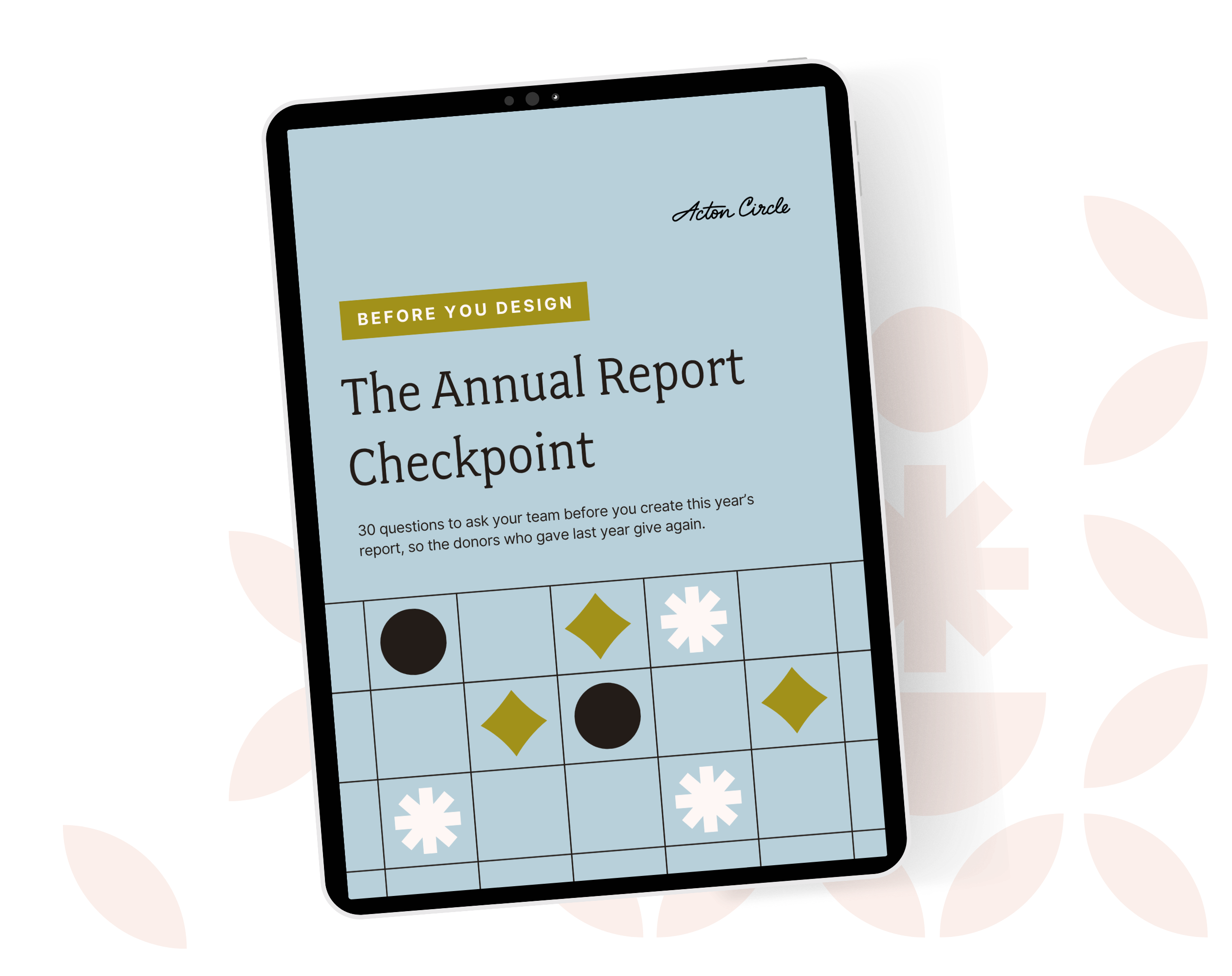
Ipad on a green floral background displaying an image of a blue, patterned PDF

Get The Annual Report Checkpoint

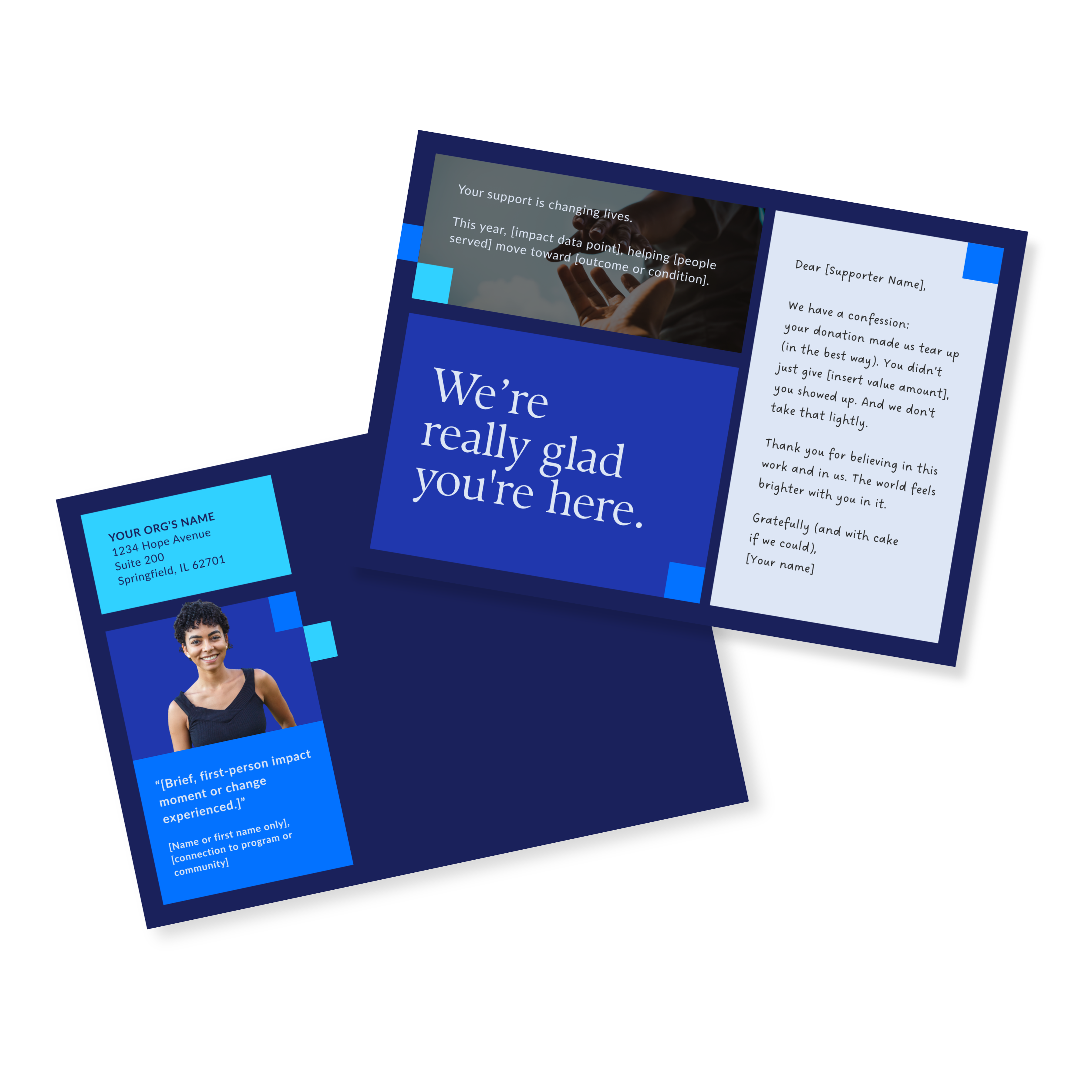
Donor Thank You Postcards Templates

Enter your info and we’ll send the postcards straight to your inbox:

"But We Don't Have the Budget Right Now"

This is the most common reason teams hold off on hiring a nonprofit designer. And it's worth taking seriously, not dismissing.

Here's the reframe: the question isn't whether you can afford to hire someone. It's what it costs you not to.

A report that looks underfunded says something to your donors that no budget savings can offset. When your materials look like they were finished in a hurry, it damages the credibility you've spent all year building.

And for most small and mid-sized nonprofits, working with a boutique nonprofit designer  (not a full-service agency) puts professional, donor-ready design within reach without a ginormous price tag.

The One Reason NOT to Hire a Nonprofit Designer

And I'm genuinely not trying to talk you into anything here.

Don't hire a designer if your foundation is shaky. If you're still sorting out your mission, vision, and what this report is trying to say. A better-looking page or report won't fix that.

No amount of good design can substitute for clarity about what you stand for.

But if you know what you stand for, you have the content, and you just need someone to take it from outline to a polished digital experience your stakeholders can point to?

That's exactly what hiring a nonprofit designer is for.

Think it might be time to hand this off?

Book a call and let's talk about this year's report: what you need it to do, where it fits your goals, and what working together would actually look like (process, timeline, investment, all of it).

If we're a fit, you'll know. If we're not, I'll tell you that too.

Monthly Design Workshop

If you’re the one who usually handles design at your org, this is meant for you. You’ll leave with useful design tips you can start using right away.

see upcoming sessions
👋🏽 Hi, I'm Krista Reyes

I'm a writer and editor with almost a decade of professional experience. I spent most of my formative years working with local and international nonprofits, channeling my passion for worthy causes into written works with depth, value, and intention.

If I'm not working, you'll find me reading books, watching movies, playing chess, or bonding with my four dogs.

👋🏽 Hi, I'm Olivia Wheeler

I'm a creative leader with high standards for nonprofit storytelling. I work between homeschooling and gym sessions, obsess over typography, and believe your annual report should make supporters feel your mission in their bones.

I help nonprofits connect with new audiences and look like the org they're becoming, not the ones they were five years ago.

Annual report lessons most nonprofits learn the hard way

Why only 1 in 4 donor ever gives again

Your annual report is a stewardship and retention tool waiting to be used.

Most orgs treat it like a formality. Design it, ship it, forget it. Then wonder why the same donors don't show up again next year.

Donors leave because nobody showed them their gift mattered after they gave it.

First-time donors are THE MOST fragile group you have. One good report = a second gift.

We wrote about exactly how to use your annual report as a stewardship tool, not just a recap: Your Annual Report Is a Stewardship Tool. Here's How to Actually Use It That Way.

Why only 1 in 4 donor ever gives again

Great work along does not raise money

Programs don't fund themselves. Understood value does.

You can run the best program in your sector and still lose funding, because funders and donors don't fund what you did. They fund what they understood.

Most impact sections list activities. Meals served, kids reached, hours logged. None of that tells anyone what changed.

The gap isn't your work. It's the translation between your work and what the reader actually feels reading about it.

I broke this down here: How to Measure Your Nonprofit's Impact (And Make Sure It's Felt)

Great work along does not raise money

Where donors stop reading

Donors give you a few seconds before they decide if your report is worth their time.

Dense pages, no hierarchy, and nothing to pull the eye to what matters don't help.

I wrote about what actually earns attention in that window here: Annual Report Layout: Tips for a Report Donors Will Read

Where donors stop reading

A faster way to build your report

So you're doing your annual report solo again this year, huh? Same deal as last time: last year's PDF open in one tab so you can copy the bones, and a blank Canva doc that doesn't carry a single thing over.

A template is the thing that should've existed the first time you did this solo.

Here's a better approach to your report if you're handling it in-house: The Faster Way to a Beautiful Annual Report

A faster way to build your report

What you're not pulling from your own report

Your annual report is the most content-rich thing your org makes all year. And then it just sits on your website.

Real stories, real numbers, real proof your mission works, all sitting in one PDF that gets opened once and forgotten.

That same content could be twelve LinkedIn posts, three newsletter sends, a case study, a slide for your next pitch deck. Every one of those keeps your mission in front of donors between asks, not just during them.

More on how to make your report work past launch day: Simple and Flexible Annual Report Ideas for Busy Nonprofits

What you're not pulling from your own report

Explore more articles

Branding & Marketing
What belongs in a nonprofit brand guide, and what's just bloat? From lengths and chart rules to common pitfalls, let's dive into it.
Branding & Marketing
Learn how to build a nonprofit brand that earns donor trust, increases recognition, and supports fundraising with practical branding strategies and examples.
Branding & Marketing
Most nonprofits do good work. So why do some thrive while others struggle to stay funded? Here are 7 tips for running a successful nonprofit organization.