When nonprofit teams ask about impact reports vs. annual reports, they're usually trying to answer one very practical question: what does this report need to do?
I see this come up constantly. You're staring at a massive pile of possible content and realizing that not everything can live in the same document. Something has to give.
That's where understanding the difference between an impact report and an annual report becomes useful.
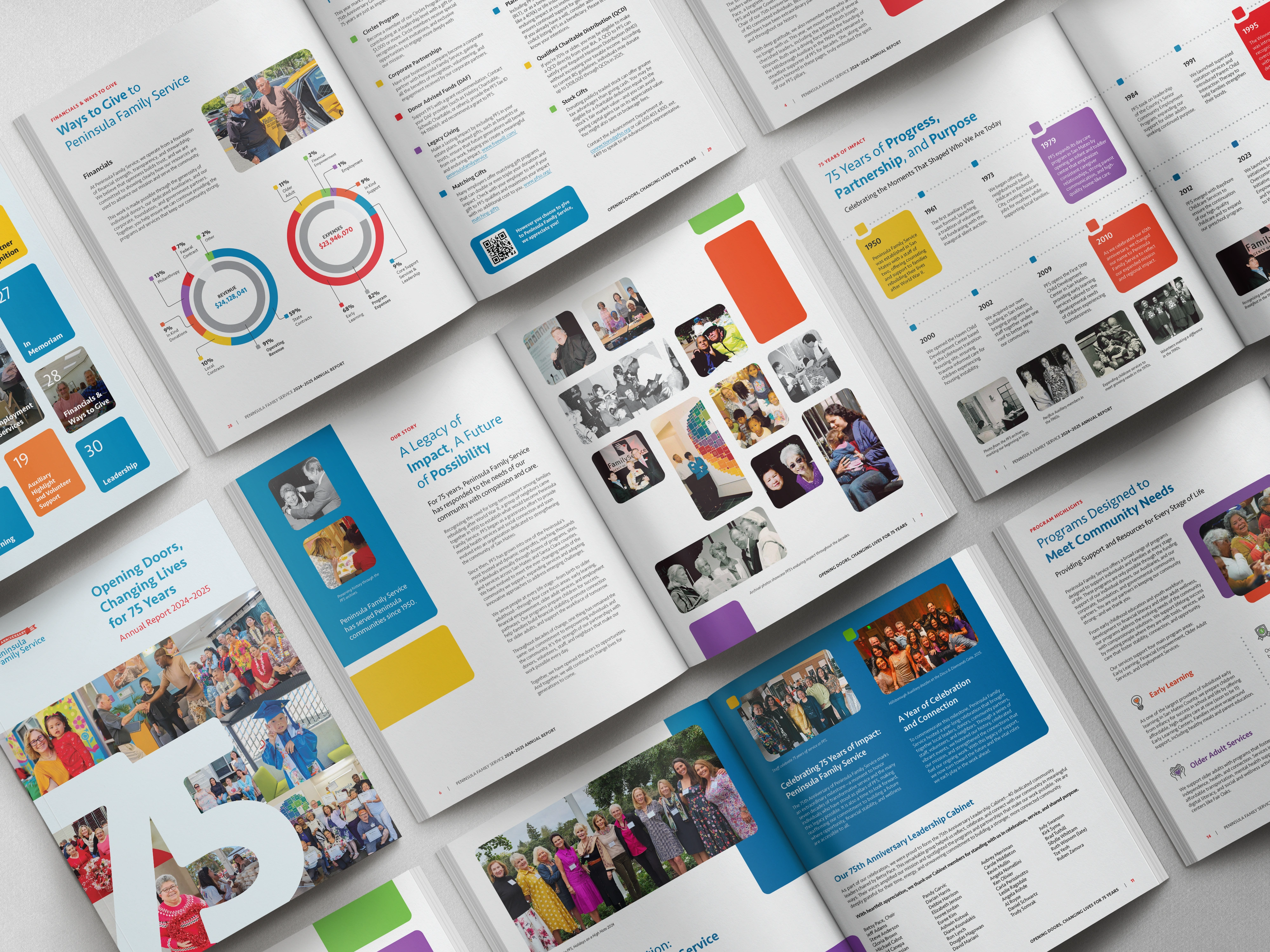
What is an annual report?
An annual report is a year-in-review. Its job is to document what your org did during a specific period and how you managed your resources.
For community-focused nonprofits, annual reports usually pull together:
- Updates from each major program area, such as housing services, education initiatives, health access, or food distribution
- A financial overview showing how funding was raised and allocated across that work
- Information about organizational leadership, board members, and governance
- A summary of the priorities that shaped decisions during the year
Annual reports help answer practical questions for boards, funders, and longtime supporters:
- What work did the organization prioritize this year?
- How were funds allocated to support that work?
- Which programs grew, shifted, or evolved over time?

After sitting with 65+ nonprofit teams, I've noticed something: the orgs that get the most out of their annual report are the ones who made a deliberate choice about what it's for before they started gathering content.
When that decision gets skipped, the report becomes a grab bag... comprehensive for the board, emotional for donors, accountable for funders. And it doesn't quite resonate with any of them.
Annual reports are important accountability tools. They exist because boards need them, funders expect them, and there's a familiar rhythm to annual reporting. But that familiarity isn't the same as effectiveness.
Here's the thing: annual reports aren't always the easiest way for someone to understand the meaning of your work. Especially when you're addressing interconnected needs like housing stability alongside education access, or healthcare alongside community building.
Annual reports are built to be comprehensive. They move quickly across programs, departments, and timelines. As a result, readers might understand what happened during the year without fully seeing how services connected or why certain outcomes mattered more than others.
Click here to get the free Annual Report Checkpoint.
What is an impact report?
An impact report zooms in on outcomes.
Instead of covering everything that happened, it focuses on what changed because of your work. It helps readers understand results in context, especially when progress is gradual or layered.
For community-based organizations, impact reports often highlight things like:
- Families gaining stable housing over time
- Students accessing consistent educational support
- Community members receiving preventive healthcare
- Neighbors gaining reliable access to food or services
Impact reports connect data to real experiences.
They help people understand how programs show up in daily life (what changed, for whom, and over what period of time) rather than relying only on totals or year-end numbers.
Impact Report vs. Annual Report: How They're Different

From what I've seen working across 65+ nonprofit clients, the difference between an impact report vs annual report isn't about design or length. It's about responsibility.
Purpose
An annual report documents activity and stewardship. An impact report helps people understand change.
Scope
Annual reports cover the full year across programs and departments. Impact reports narrow the focus, choosing specific outcomes to explore more deeply.
Content
Annual reports summarize programs, finances, and leadership. Impact reports center outcomes, pairing stories with data to explain progress.
Reader experience
In practice, annual reports and impact reports get treated the same way.
Both are skimmed, shared selectively, and referenced when needed. The difference usually isn't how they're read, but whether the structure helps readers understand the work without extra explanation.
Get The Annual Report Checkpoint

Donor Thank You Postcards Templates
Enter your info and we’ll send the postcards straight to your inbox:
Why Many Nonprofits Separate the Two
Community-focused nonprofits often serve multiple populations and address overlapping needs. When all of that work gets compressed into a single report, it becomes way harder for readers to follow what shaped the year.
Treating these as two different reports makes everything clearer. Financial and governance information stays easy to find. Outcomes get room to be explained without competing for space. Stories get chosen intentionally instead of mixed in everywhere.
This doesn't usually mean more work. In practice, it makes each piece easier to read, easier to share, and easier to use by the people who matter most.
Why Most Nonprofits Default to Annual Reports
Most nonprofits choose annual reports because they're contained.
Annual reporting happens once a year. There's a clear start and finish. You gather program updates, financials, and leadership context in one push, then move on to the next priority.
That rhythm makes annual reports the most realistic option for many organizations, especially when staff capacity is stretched, data lives in three different systems, or reporting already feels heavy.
When Impact Reports Become Possible (and Useful)
Impact reports tend to show up when organizations have stronger reporting systems in place.
That usually means:
- Data is being collected more consistently throughout the year
- Outcomes are tracked alongside programs, not just at year-end
- Teams have space to reflect on progress beyond a single moment
In those cases, impact reports support more frequent communication (quarterly updates, donor briefings, mid-year reflections) instead of asking one document to hold the progress of an entire year.
Because impact reports aren't tied as tightly to a single reporting period, they work best when organizations are already thinking beyond once-a-year storytelling.
Choosing a Format That Matches Your Reality
The question isn't which format is better in theory. It's what your org can realistically support right now.
When reporting matches your capacity, stories stay visible and supporters stay connected. It's that simple.
Not sure which fits your org, or whether your current report is doing what it needs to do?
The Annual Report Checkpoint is a free self-assessment across five key areas that helps you get an honest read before you invest time, budget, or team energy into building anything.