Here's the hardest part of annual report season: it has nothing to do with design. It's the feedback cycle.
Feedback comes from advancement, leadership, finance, programs, board members, and people who have strong opinions about a slice of something they've never had to build as a whole.
By the time you consolidate it all, the report's being pulled in six directions.
And you're the one caught in the middle.
Why Feedback Gets Messy
Most people reviewing your annual report aren't thinking about supporters. They're thinking about their program. Their team. Their language. Their priorities. Which is completely human… and also not helpful when you're trying to build something that moves someone to give.
When there's no shared understanding of what the report is supposed to do before feedback starts, every reviewer becomes an editor with a different agenda. You end up managing opinions instead of protecting strategy.
Better feedback forms won't fix this. Getting everyone aligned before the first draft circulates will.
That's the difference I've seen across hundreds of nonprofit projects. Orgs that get aligned upfront have smoother feedback cycles and stronger final products. Orgs that skip it? They spend their whole process pushing and pulling.
5 Alignment Conversations to Have Before the First Draft
These are worth having early, before any design happens. Before anyone has an opinion to protect.
1. What is this report supposed to do?
Get leadership to agree on one thing. Not a list. One thing.
What do you need supporters to believe or feel by the time they close the report? Write it down. Make it the filter for every feedback conversation that follows.
2. Who is the primary reader?
Is this primarily for major donors? Mid-level recurring supporters? Prospective funders?
The answer changes everything about tone, emphasis, format. If leadership assumes partners and you're designing for major donors, you'll spend the whole cycle fighting over the wrong things.
3. Name your non-negotiables upfront
Before reviews start, identify two or three things that are not up for debate: the throughline, the opening message, the lead story. Protecting those anchors keeps the report from spinning away from you when five people start pulling.
This is one of the most underused moves I see. Orgs that protect two or three anchors upfront almost always end with a stronger report than where they started.
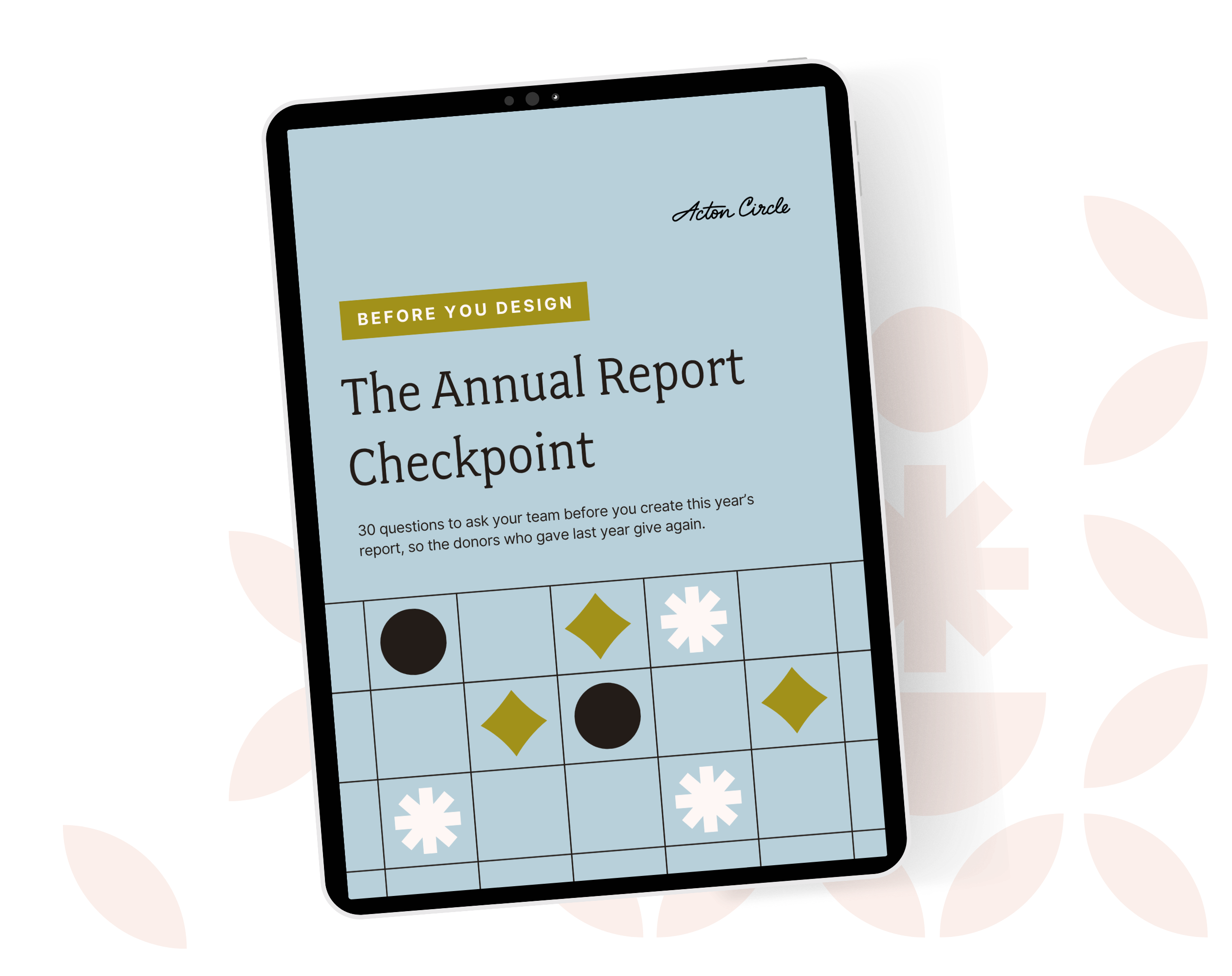
Get The Annual Report Checkpoint
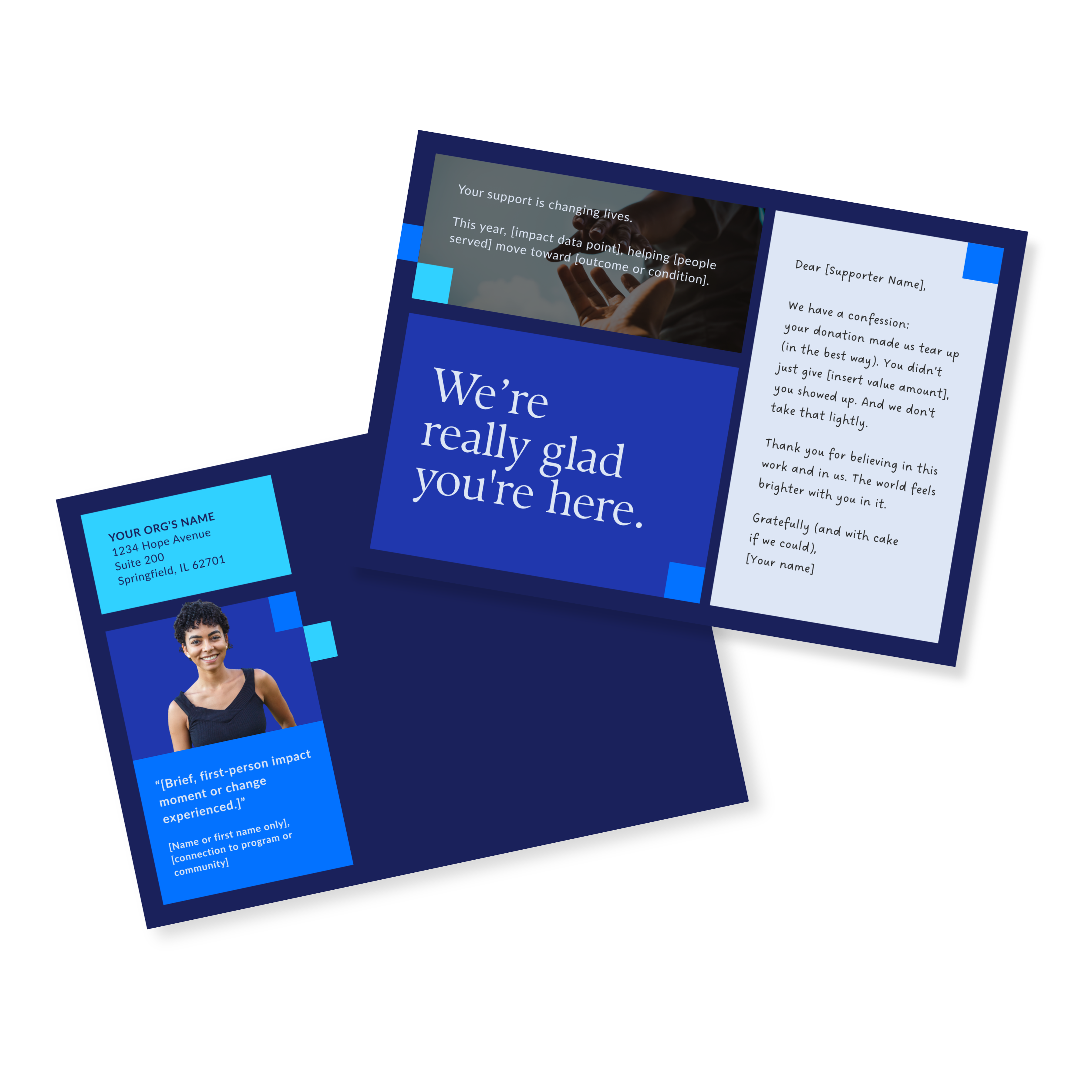
Donor Thank You Postcards Templates
Enter your info and we’ll send the postcards straight to your inbox:
4. Set the feedback lens
When you send a draft for review, tell people exactly how to read it. Something like: "We're looking for feedback on whether the impact feels clear and credible to a first-time major donor. Hold feedback on design and wordsmithing for the next round."
Giving reviewers a specific lens keeps feedback useful instead of overwhelming.
5. Do a gut-check before you incorporate anything
Before you change one word based on feedback, ask: "does this make the report better for the reader, or does it make the reviewer more comfortable?"
Those are two different things. You're allowed to know the difference and act on it.
From Opinion Management to Strategic Leadership
When your team is aligned on what the report needs to do before feedback starts, everything changes. You stop defending creative choices and start having productive conversations.
Feedback becomes easier to filter because you have a shared standard. And the report stays intact through a process that usually waters it down.
That doesn't mean everyone will agree on everything. But the disagreements are about strategy, not preference. And that's a much easier room to be in.
Get this right before the first draft goes out, and you'll spend way less time defending the work and way more time being proud of it.
Before You Build This Year's Report, Score Last Year's
You can have great photos, solid numbers, a clean layout, a mission worth funding... and still lose donors by page 4.
The Annual Report Checkpoint is a self-assessment that shows you where your report is building belief and where it's quietly leaking trust.
It takes 10 minutes. And it'll save you a season of second-guessing.