You know that heavy feeling that comes with owning a big project… in this case, your annual report.
The dread that creeps in before you even open the doc. Worse than figuring out what to cook for dinner every night. Worse than the family laundry that never ends. It's the ultimate chore that has to get done, and somewhere along the way it stopped feeling like the meaningful work it is.
And that's before we even get to the pressure.
Because on top of deadlines and leadership breathing down your neck, there's another kind of pressure nobody really talks about. The kind that sits quieter but heavier.
You know this document is going to represent your organization's impact, credibility, maturity, future... all at once.
It's going out across the world wide web to thousands of people, some you know and some you haven't met yet. It's getting mailed to donors. Shared in board meetings. Included in grant packets. Sitting on kitchen counters (you hope).
And somewhere underneath all of that, as the high achiever and doer that you are, you know it also reflects on you.
Not officially. Nobody puts that in your job description. But you're the one leading the charge… so yeah, it does.

When Your Report Isn't Broken but Still Doesn't Feel Right
The thing that makes this pressure so hard to shake: it's not always attached to an obvious problem.
If something was clearly broken, you'd fix it. Bad photos, wrong colors, missing data, those have solutions. You'd make the call, get it done, move on.
The report seems solid. Content is there, design is clean, it went out on time. And still, something wasn't sitting right. Nothing you could point to. It just didn't do justice to the work behind it.
Nothing is obviously wrong. But you know it could be stronger.
That's the hardest place to be because you can't put it in a revision comment or explain it in a stakeholder meeting. So you carry it into the next cycle and hope this year is different.
Why Seasoned Nonprofit Communicators Feel the Pressure Most
The longer you've been doing this work, the more you feel it because you know exactly what's at stake. You've seen the difference between a report that people barely read and one that gets shared. You know what it looks like when a document is so mission-deep people can feel it in their bones.
And when you're a comms team of one, creating the strategy, writing the content, managing stakeholders, doing the design direction all at once, there's nobody in the room to reality-check your instincts. You're making judgment calls alone, on the most visible thing your organization puts out all year.
That can be a lot to carry by yourself.
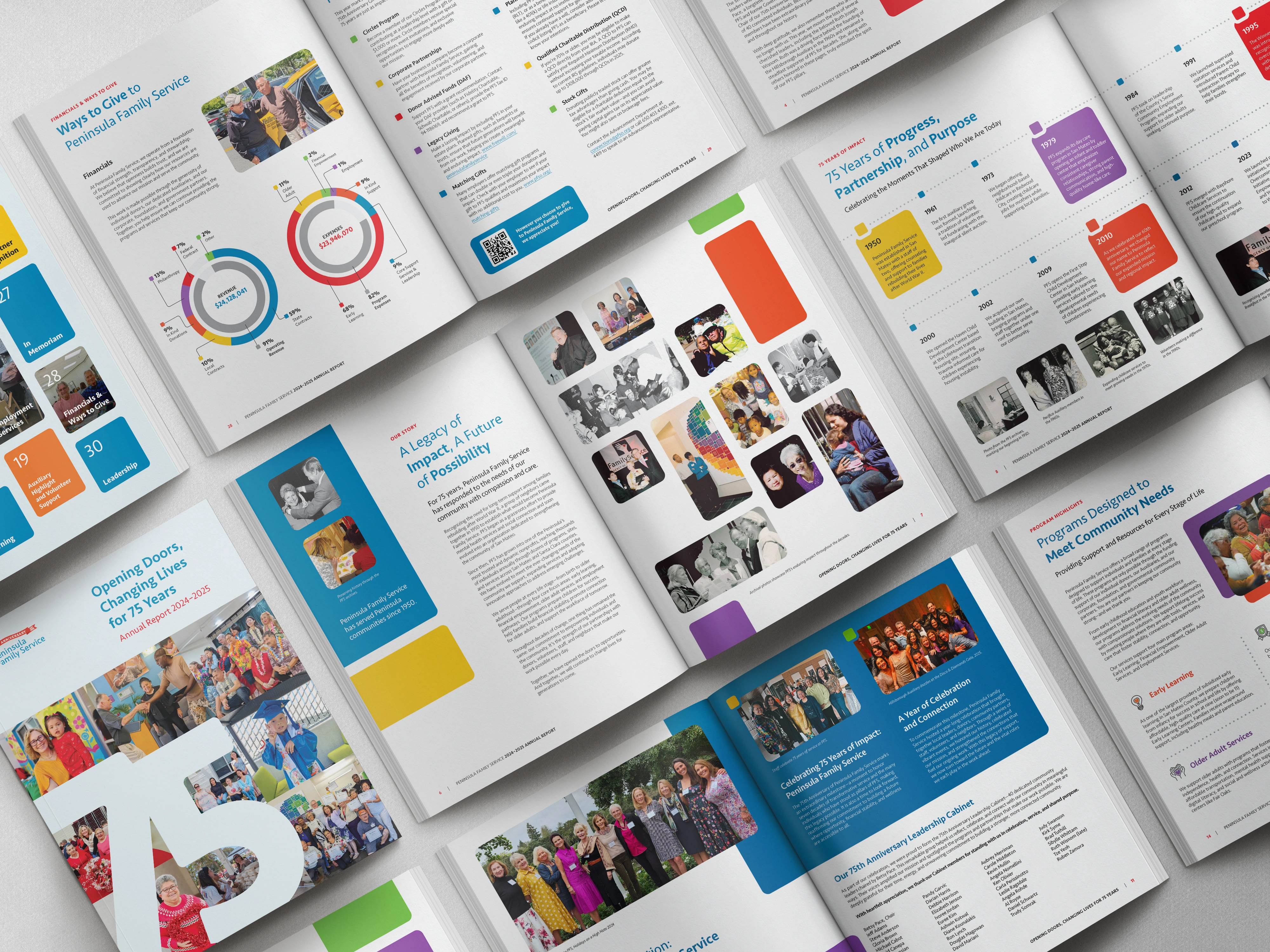
A marketing leader at Peninsula Family Service came to us carrying exactly this kind of weight. A report that needed to be right and not much room for back-and-forth.
After we worked through the strategy and direction together, she reached out the day it launched to say it looked absolutely amazing. Then asked about booking next year before the current one had even been distributed.
That shift… from dreading it to wanting to do it again… is what happens when you're not carrying the judgment calls alone.
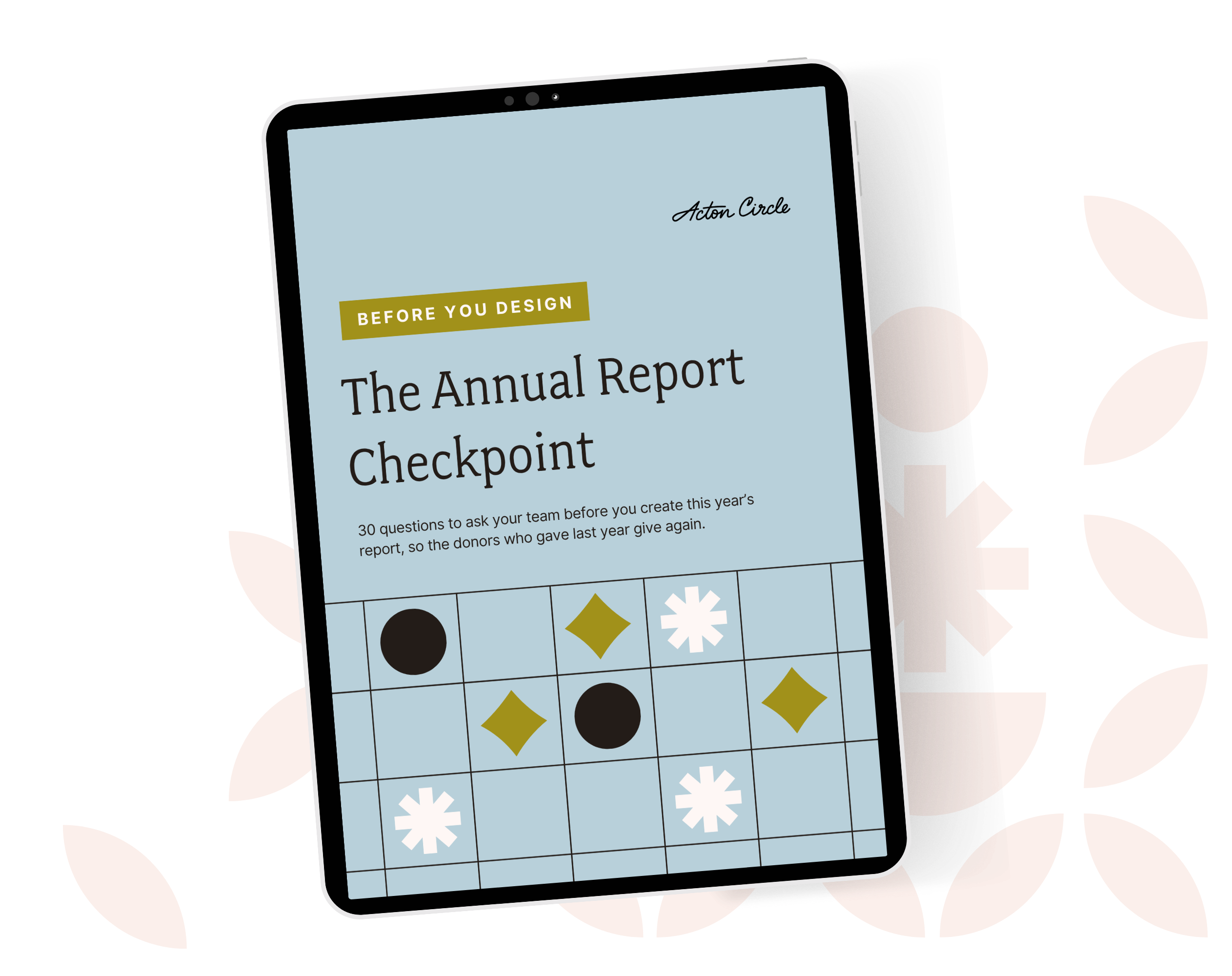
Get The Annual Report Checkpoint
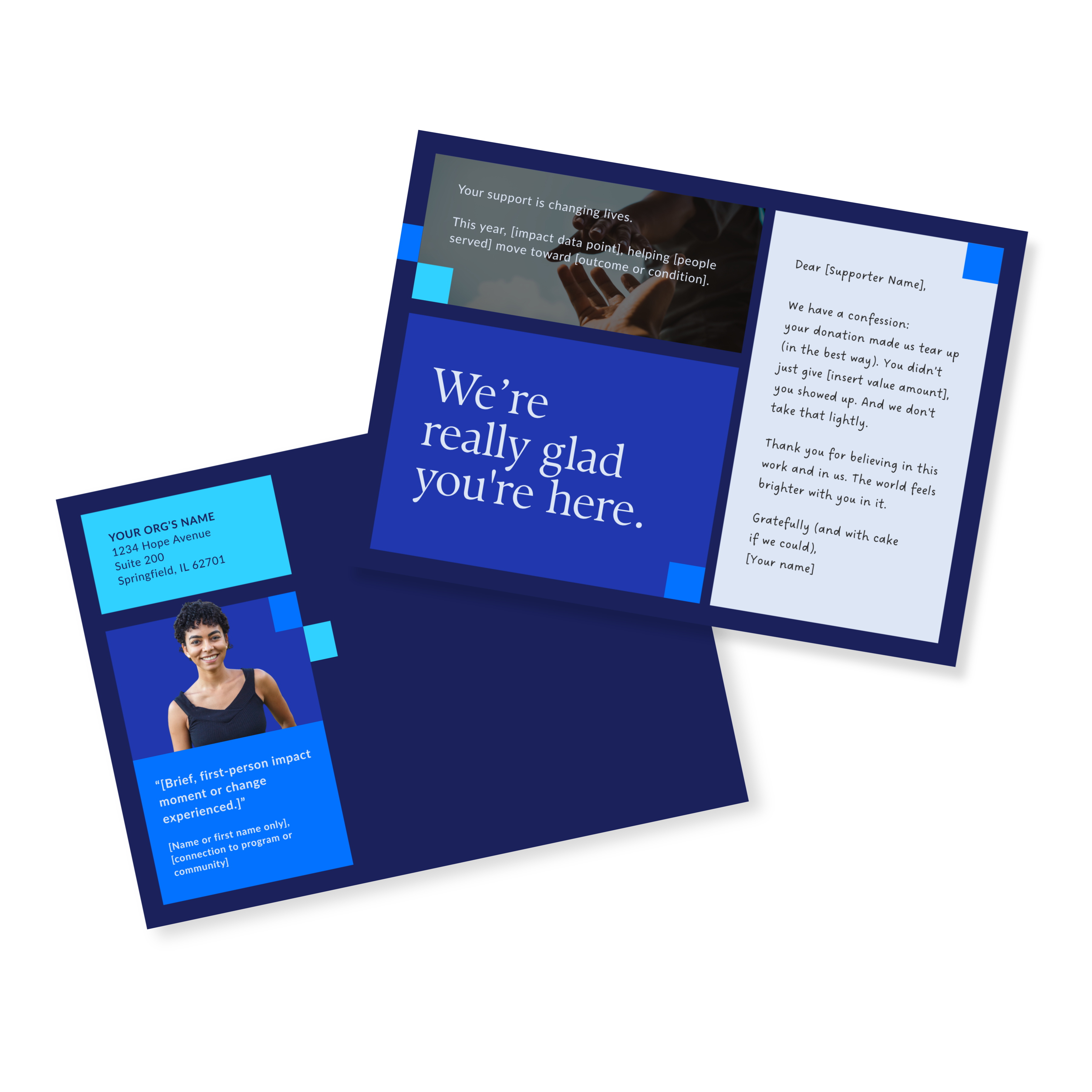
Donor Thank You Postcards Templates
Enter your info and we’ll send the postcards straight to your inbox:
Why Your Nonprofit Report Feels Off (and What Fixes It)
You don't need another template, a full redesign, or a longer timeline. (A nap? Possibly. But that's between you and your calendar.)
What helps is someone outside your org—someone who gets both the strategic and the emotional weight of this document—sitting down with you before design begins. Someone helping you with a fresh approach to a project you do every year in the same way.
Where the story could come to life more. Where the strongest proof got buried. Where the format stopped guiding your reader and started losing them. Where one shift in emphasis changes how the whole thing feels.
Not to take over. Just to help you finally see it clearly. From the eyes of a supporter and outsider.
The Annual Report Checkpoint
This is the self-assessment that will walk you through your current report the way I would: scored across five areas donors are already judging, built on our BELIEF by Design™ framework and 65+ nonprofit partnerships.
You'll walk away with:
✅ An honest read on your report, section by section
✅ A clearer picture of what each gap is costing you in donor response
✅ An idea of what to fix first, so you're not guessing
Everything else (the design, the templates, the full-service work) flows from here. But this is where to start.