Every year you do the same dance. The annual report hits the calendar, and comms steps up to the plate. Then slowly… inevitably… it becomes the most exhausting thing you'll do all year.
It's complex, sure. But mostly? It's hard because it touches everything.
On paper, it's one deliverable. In reality, it's at the intersection of comms, fundraising, finance, leadership, and branding. All moving at different speeds. All running different priorities.
When your annual report feels like a chore, it's an alignment issue. And that matters because it completely changes how you fix it.
The Cross-Functional Bottlenecks Nobody Plans For
There's no single villain here. Alignment breaks down because annual reports are genuinely cross-functional, and most organizations don't treat them that way.
Finance and comms are sprinting toward completely different finish lines. Finance cares about audit completion, and comms cares about publication date. Those two calendars almost never match, and nobody's explicitly synced them until it's already a crisis.
Leadership reviews happen too late, too. By the time the ED or CEO weighs in, design is nearly done, and copy's been through three rounds. One "actually, can we reframe this?" unravels weeks of work because it came at the wrong time.
Content ownership is muddy in most orgs. Who writes the program summaries? Who approves the impact numbers? Who has final say on the donor list? If those questions don't have clear answers before the project starts, they get answered under pressure. And that's when mistakes happen.
And underneath it all: the annual report gets dumped on comms. Everyone else contributes when asked. That dynamic means comms is always chasing, and everyone else is always too busy right now.
Sound familiar? That's because it's the norm, not the exception.
If you've been feeling like you're running this solo, you probably are. And that's the problem worth fixing.
Your Annual Report Is an Organizational Project, Not a Comms Deliverable
Good alignment doesn't mean everyone's equally involved. It means everyone knows their role, their deadline, and why it matters before day one.
Start with a kickoff that includes more than just comms. Even a 20-minute meeting with finance, a program lead, and whoever approves content saves weeks of back-and-forth later.
From there, a simple one-page content map can help move things along: what needs to be written, who owns it, when it's due. Shared with everyone who touches the report. That one document eliminates most of the chasing.
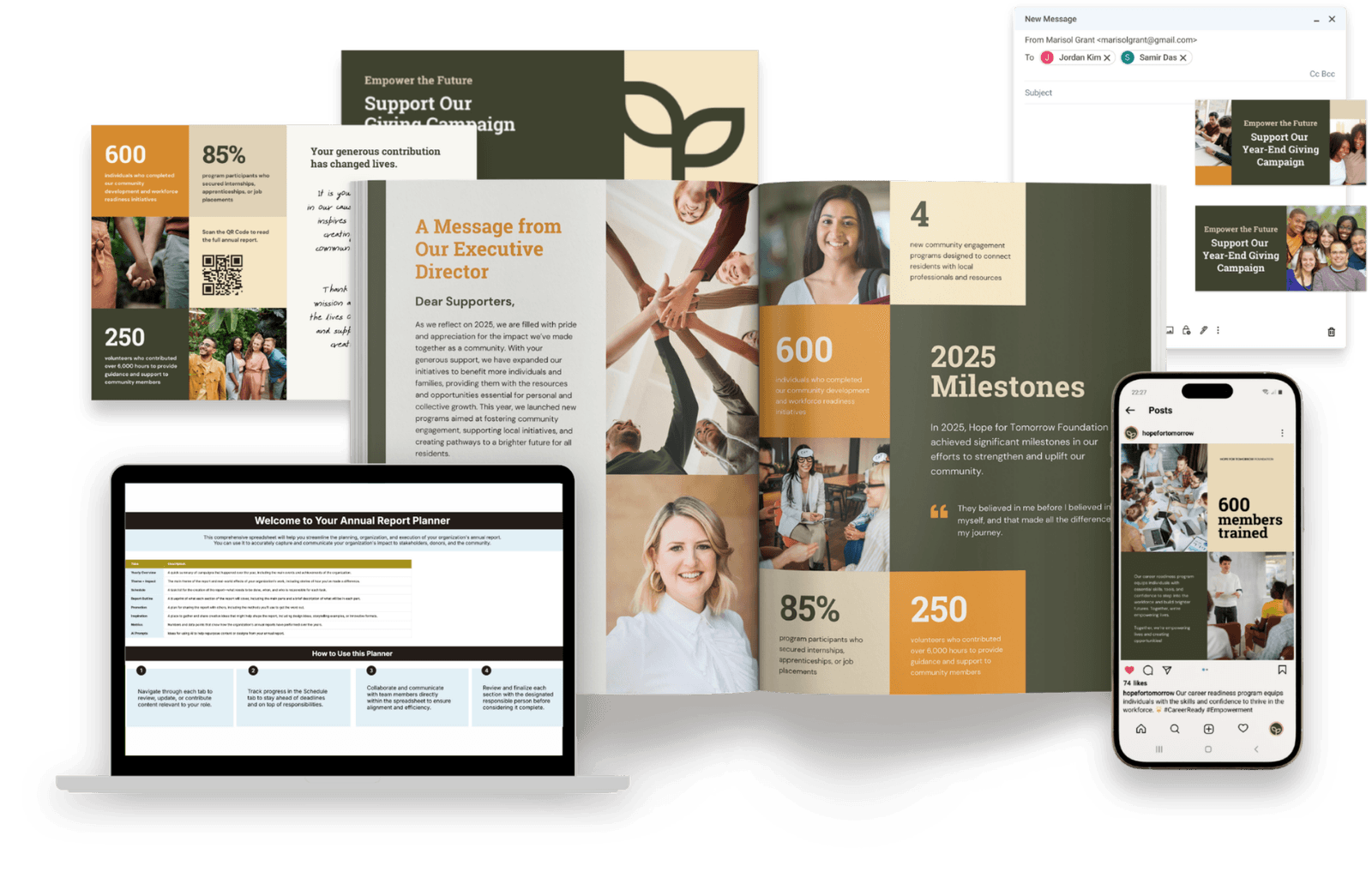
I created an Annual Report Planner for exactly this reason.
Review rounds are where things usually fall apart, so collapse them. Instead of three rounds with different stakeholders giving conflicting feedback, aim for one round with decision-makers present and a clear scope: here's what we're reviewing, here's what we're leaving alone. That boundary alone saves hours.
And finance needs to be looped in from day one, not asked for numbers at the last minute. If the audit runs late, comms should know early enough to adjust.
All any of this requires is treating the annual report like the organizational project it is, not a comms deliverable that everyone else gets around to when convenient.
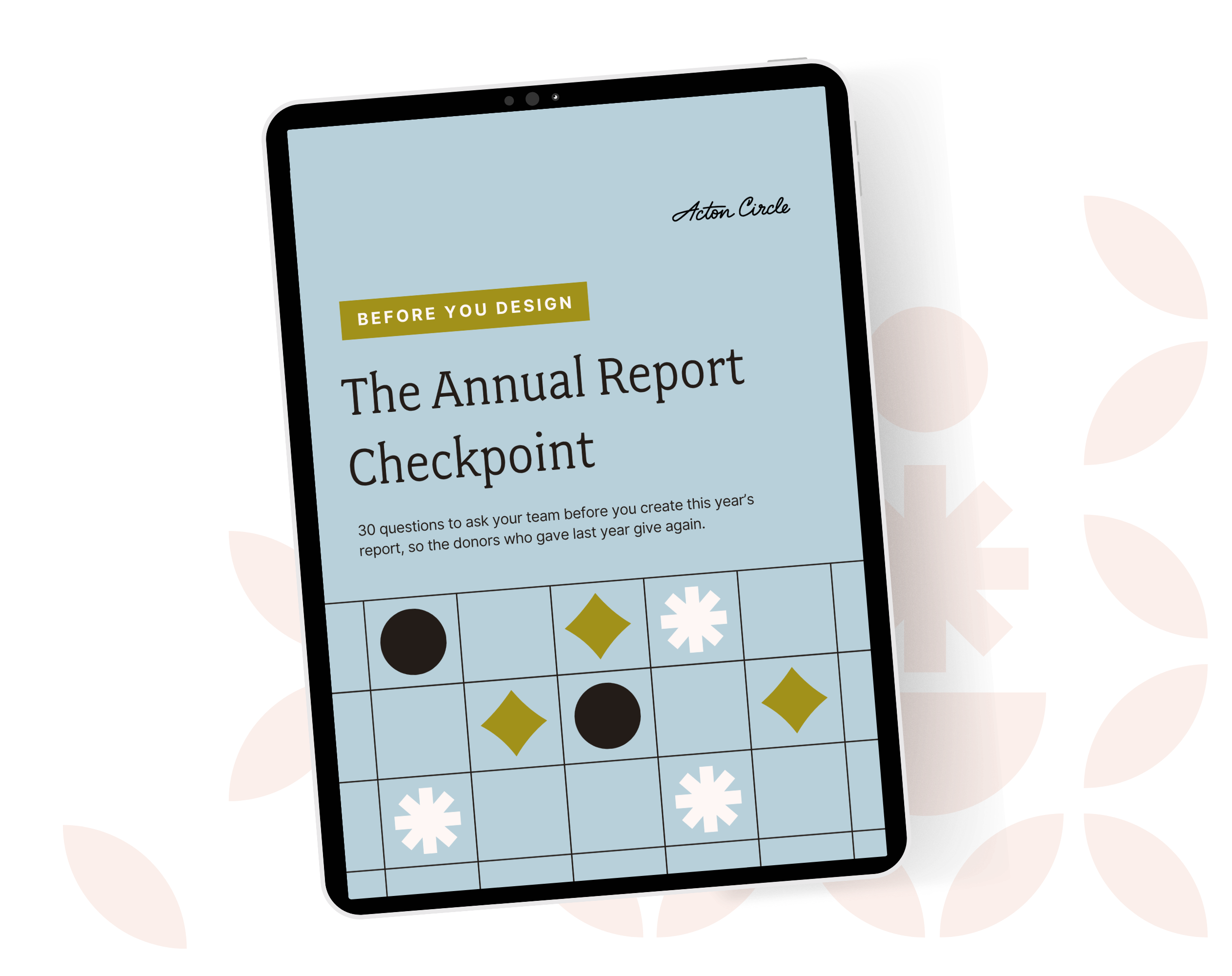
Get The Annual Report Checkpoint

Donor Thank You Postcards Templates
Enter your info and we’ll send the postcards straight to your inbox:
Getting Finance and Leadership Involved Before It's a Fire Drill
You can't force alignment. But you can make the case for it and make it easy for people to say yes. The smartest move is framing earlier involvement around their priorities, not yours.
Finance cares about accuracy and avoiding last-minute pushes. Leadership cares about the report reflecting well on the organization. When you show them how earlier involvement protects both, it stops feeling like a favor and starts feeling like common sense.
Come with a timeline, not a request. "Can we meet soon to talk about the annual report?" is easy to defer. "Here's the timeline. I need financials by X and a 30-minute leadership review by Y. Does this work?" is specific enough to act on. Specificity makes commitment easier.
If you need to make the case more directly, name the cost of waiting.
Late financials mean rushed design. Rushed design means errors. Errors mean reprints, corrections, or a report that looks like it was produced under pressure.
Most leaders don't want that… they just haven't connected the timeline to the outcome yet.
And if last year was rough, use it. Not as a complaint, but as data. "Last year, we lost two weeks waiting on content approvals. Here's how we avoid that this time." That kind of framing is hard to argue with.
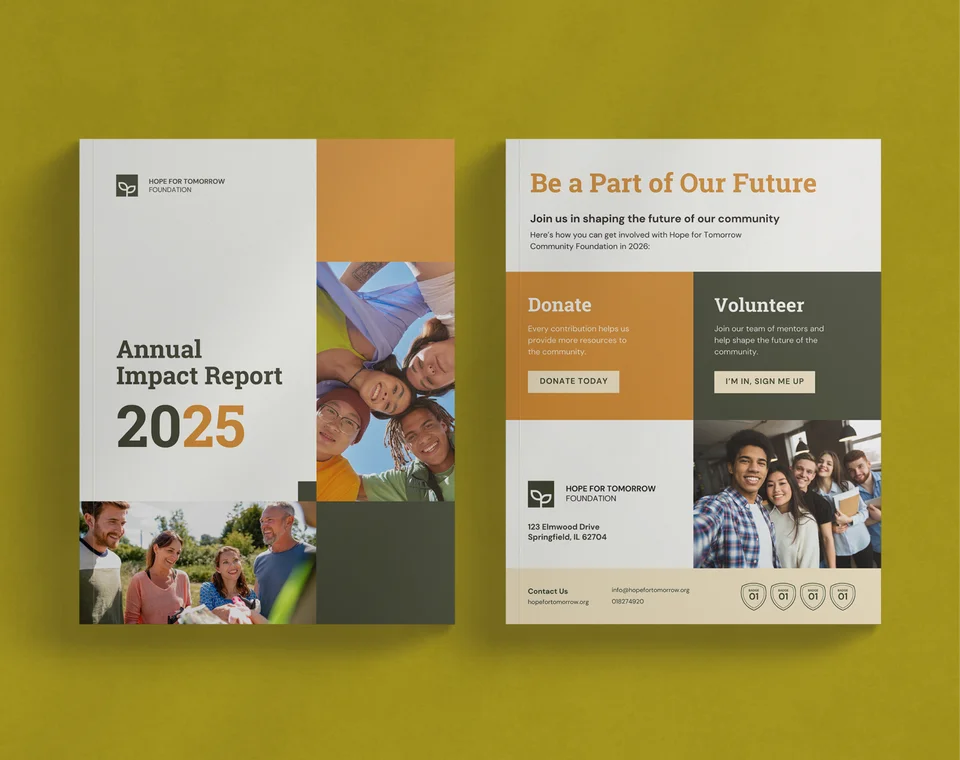
Assess Your Process Before Your Next Report Cycle Starts
Before your next report cycle starts, run a quick assessment of your process. Where does alignment typically break down? What's the thing that always derails your timeline?
If your annual report consistently feels harder than it should, it's a sign the organizational infrastructure around it hasn't caught up to what it requires. Alignment is fixable, but it needs a conversation before the project starts, not during it.
The Annual Report Checkpoint is a self-assessment that walks you through your current report the way I would: scored across five areas donors are already judging, built on our BELIEF by Design™ framework and 65+ nonprofit partnerships.
You'll walk away with:
✅ An honest read on your report, section by section
✅ A clearer picture of what each gap is costing you in donor response
✅ An idea of what to fix first, so you're not guessing
Everything else (the design, the templates, the full-service work) flows from here. But this is where to start.