Have you ever found yourself struggling with your nonprofit's donor retention even though you feel like you're doing mostly everything right?
It's frustrating… but more common than you'd think.
In our work with nonprofits over the years, we've found that while most orgs do the big things well (annual reports, big donor events, and year-end campaigns) they struggle with some of the smaller things that fly under the radar.
Today, we're pulling back the curtain on 9 unexpected things that may be hurting your donor retention. See if any of these sound familiar.

Website Issues Hurting Donor Retention
Your nonprofit's website can either build trust or chip away at it. Here's what to watch for:
1. Your website is talking about yourself too much
Think about the last time you landed on a website that was clearly written for the org and not at all for you. "Here's our mission. Here's our history. Here's every program we've ever run."
You probably clicked away pretty fast. Your donors are doing the same thing.
A homepage that leads with your story instead of theirs (what they care about, what their gift makes possible, why they should stay) is a missed opportunity at best and a turnoff at worst.
2. You only ask for money
If the only thing your website invites donors to do is give, you're missing most of the relationship.
What about signing up for your newsletter? Following your impact stories? Learning about volunteer opportunities or upcoming events?
Donors who stay connected between campaigns are far more likely to give again. If your site has one button and one ask, you're leaving a lot of relationship-building on the table, and making it easy for people to disengage the second they close the tab.
Branding Issues Hurting Donor Retention
Your brand shows up before your mission does. If it looks inconsistent, generic, or disconnected from your work, donors feel it.
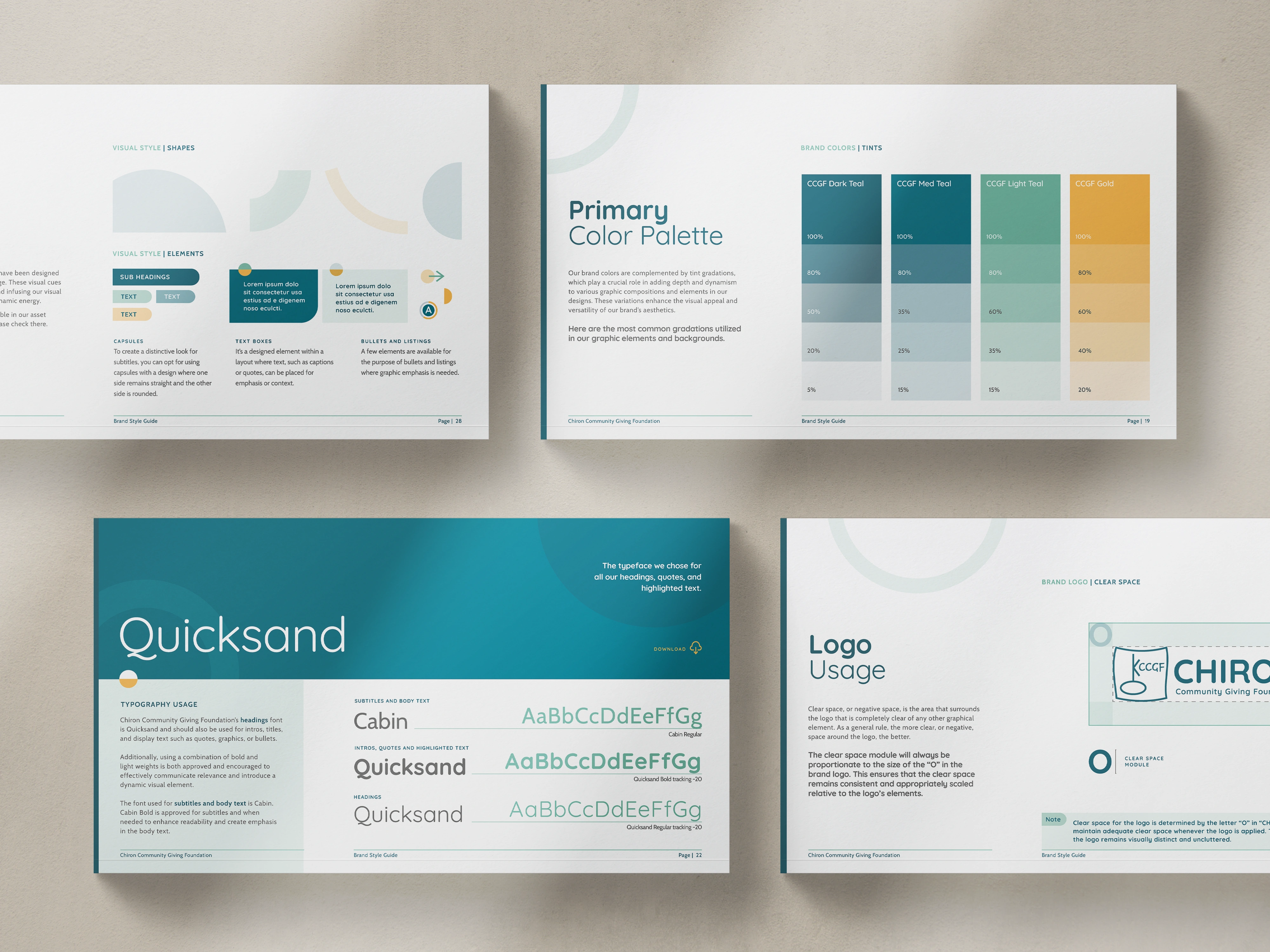
3. You look like three different organizations
When your website looks different from your social media, which looks different from your printed materials and annual report, it creates confusion. And confusion works against trust.
Donors are interacting with your brand across multiple touchpoints before they ever give. If those touchpoints don't feel like they belong to the same org because of different colors, inconsistent fonts, and a voice that shifts depending on the channel, it screams disorganized, even when your actual work is anything but.
4. Your donors feel like a number
Donors want to feel seen, not processed.
Mass emails that don't acknowledge gift size, giving history, or how long someone has been supporting your work send a message you don't intend: that their support is interchangeable.
The donor who just gave for the first time and the one who's renewed for five years in a row are getting the same generic thank you. They shouldn't be.
Segmentation doesn't have to be complicated. Even small adjustments like a different subject line for lapsed donors, a specific acknowledgment of a gift amount, shows that you're paying attention. And donors who feel noticed give again.
5. You sound like every other nonprofit
There are a lot of nonprofits doing important work. If your messaging could be copied and pasted onto any of their websites without anyone noticing, that's a red flag.
Generic mission statements, stock photography that could belong to anyone, impact language that's heavy on numbers and light on story, none of it makes you stand out.
Donors aren't just choosing whether to give. They're choosing which org feels worth staying connected to. A distinct voice and point of view is what makes that choice easy.
6. You talk at donors instead of with them
One-way communication is a donor retention killer.
If your outreach is all broadcasting and no listening (no surveys, no replies, no sense that feedback is welcome) donors feel like a revenue source, not a partner.
The orgs with the strongest retention treat their donors like they're partners in their mission, not just funding it.

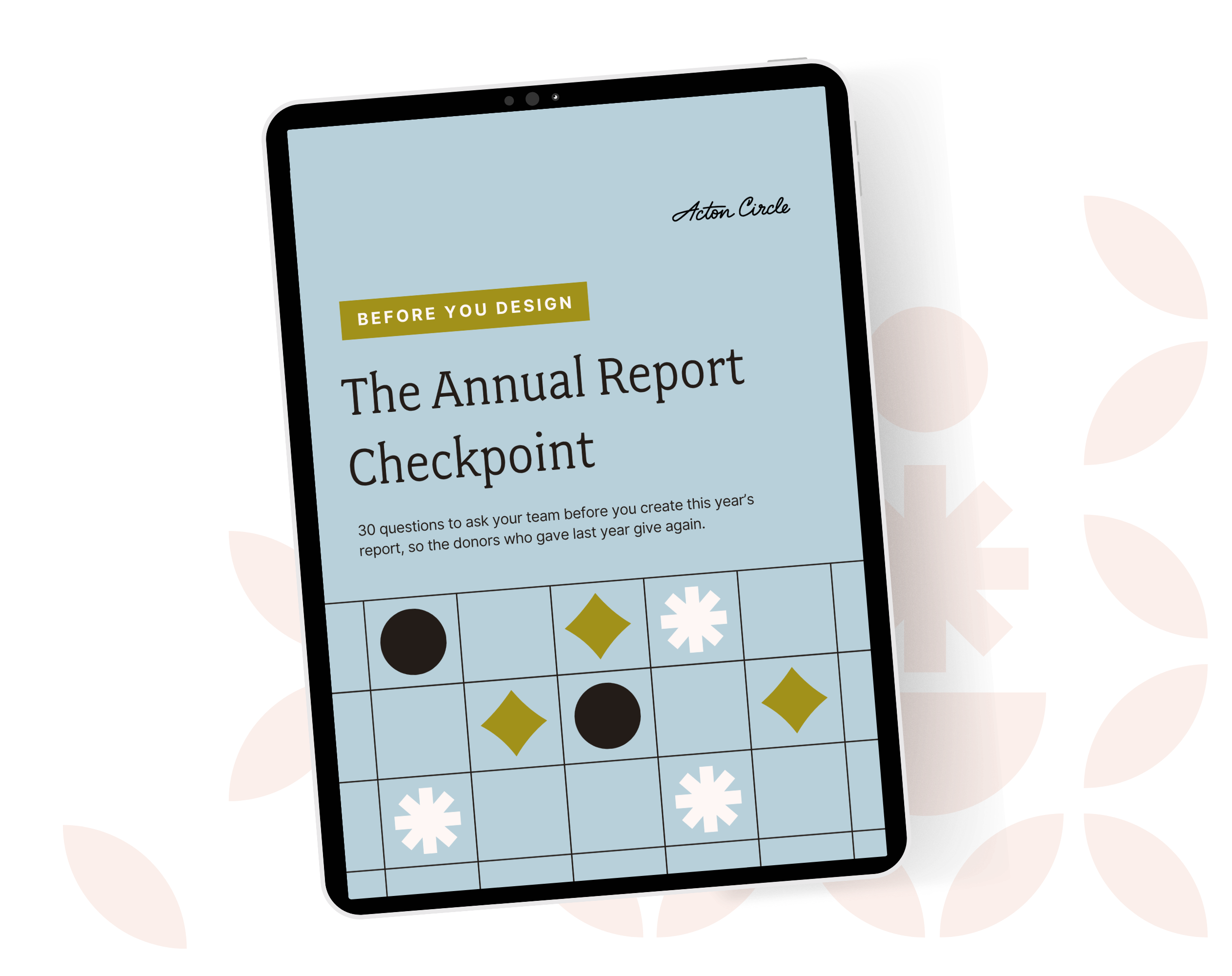
Get The Annual Report Checkpoint

Donor Thank You Postcards Templates
Enter your info and we’ll send the postcards straight to your inbox:
Trust Gaps Hurting Donor Retention
Your website and brand are the visible layer. These three work underneath, and they're just as likely to be the reason a donor doesn't return.
7. Your donors are super clear on where their money goes
Trust is the foundation of every giving relationship. And nothing messes it up faster than vagueness about how donations are used.
If your financials aren't easy to find, your impact reporting is thin, or donors have to go digging to understand where their gift went, you're asking people to give on faith alone.
Most won't. And the ones who did once will not do it again.
8. Your thank you's have gotten a little generic
Most orgs have a thank-you process. What they don't have is a thank you that feels geniune.
Automation at scale, it's necessary. It's an issue is when automation becomes the whole strategy. When the receipt that fires two seconds after a gift is the only acknowledgment a donor ever gets. That's not gratitude.
The automated receipt handles the logistics. Something else has to handle the relationship.
A personal follow-up for first-time donors. A handwritten note for major gifts. A check-in email that references what they gave toward, not just how much. A small act that says: someone on this team saw your gift in real time and wanted to say something real.
That's the bar. And it's lower than you think to clear it.
9. You're not letting happy donors speak for you
Testimonials and success stories are some of the most powerful retention and acquisition tools you have.
Donors want to see that others believe in this work and it validates their own decision to give and gives hesitant supporters the nudge they need.
If you're sitting on positive feedback and not sharing it, you're leaving your most persuasive content unused.
What is a key strategy for donor retention?
Consistent, personal communication. That's it.
Donors stay when they feel seen, appreciated, and connected to the impact of their gift, throughout the year.
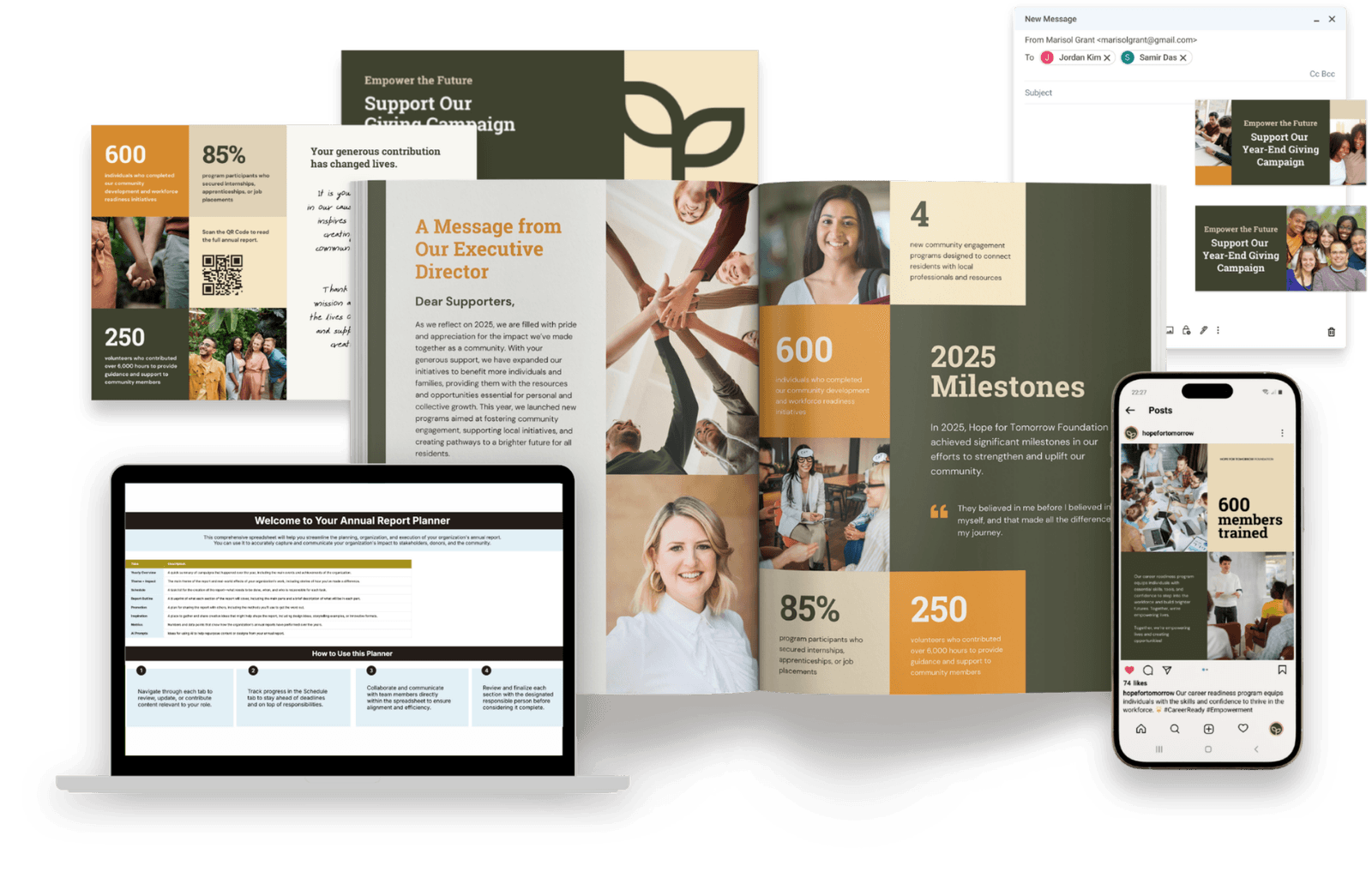
That means segmented outreach, timely thank yous, and materials that remind them why their support is appreciated long after the campaign closes.
If you want to go deeper on building your retention strategy, start here.
If Three or More of These Hit Close to Home, Let's Fix It
None of these problems is permanent.
They're just what happens when donor communications get treated as an afterthought instead of a strategy. If you find yourself nodding yes to any parts of this list, and you're done waiting for next year to be different, let's talk.