Emotions are what drive people to support your work. They see a real story, feel something real, and decide to get involved. That's absolutely true.
But there's a line between honest inspiration and fear-based manipulation. Most people think it's about the words. But in reality, design choices push people over that line all the time, and most folks never even think about it.
I've seen it over and over, teams reaching for the most vulnerable photo they can find, slapping on a guilt-trip headline, hoping for clicks.
You know those commercials with the sad piano, close-ups of crying kids or pets, and a voiceover that makes you want to change the channel? Donors feel the same way about your materials when you go that route.
Sure, you might get a donation. But you won't get a second one.
What are the principles of ethical storytelling?
Honesty and consent matter. But if you're running nonprofit comms, you know it goes deeper. So take note of the following steps:
1. Ground every story in real data
Stories create emotion, while data builds trust. You need both.
If you share a story, back it up with real numbers. Make your visuals engaging, but don't fudge the data. Donors notice when you stretch the truth, even a little. And when they catch on, they're gone.
2. Center the people you serve, not your org
The communities you work with are not problems to fix. They are people with their own agency and dignity.
Ethical storytelling means you're not the hero. Your job is to show what's possible, not to play the rescuer.
3. Invite action, don't pressure it
Ethical messaging allows people to say no, and that takes courage. This approach builds real loyalty, attracting donors who truly believe in your work, not just those who feel guilty enough to give.
4. Carry ethics into the visual layer
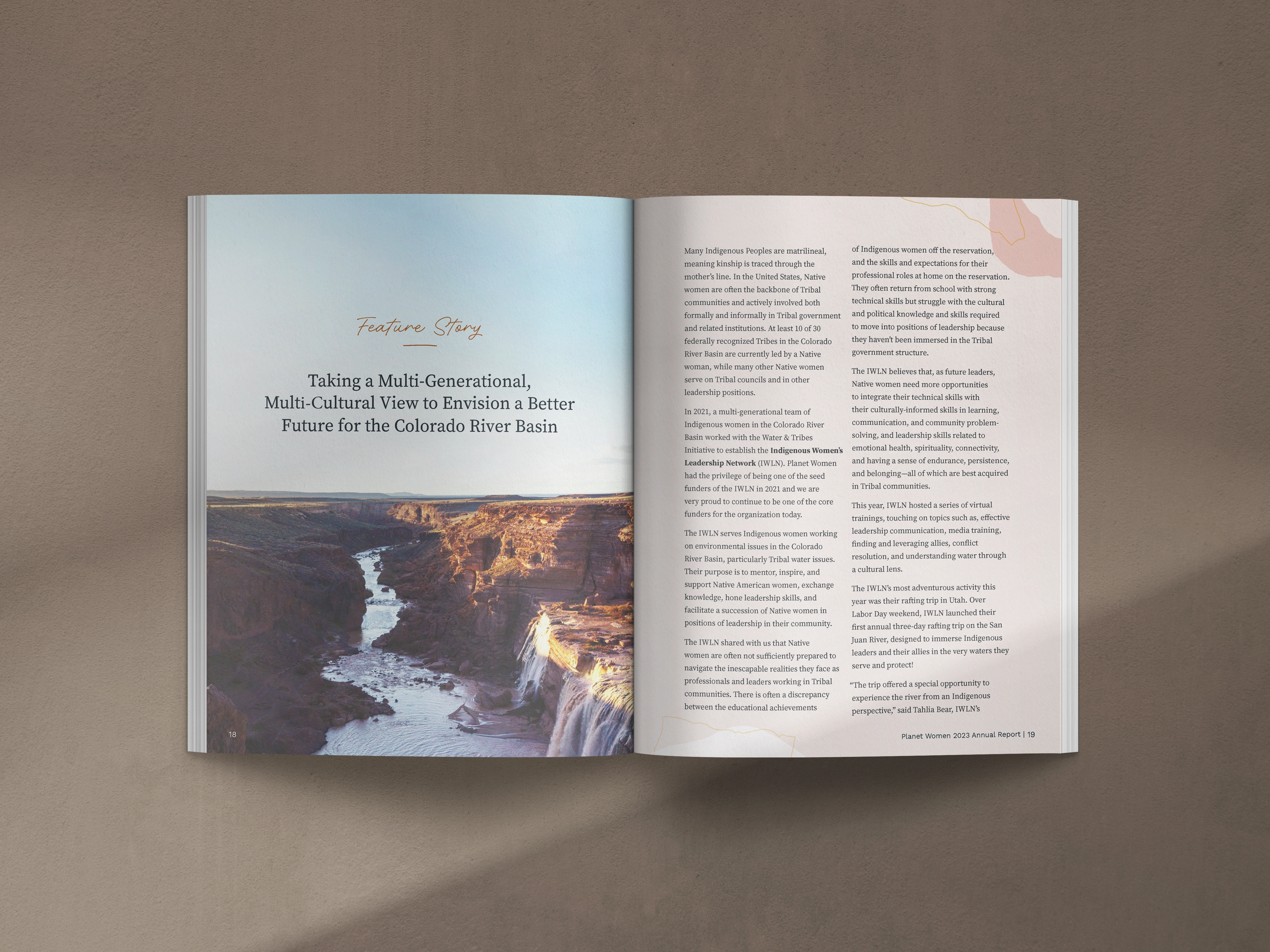
Most guides skip this part. For every photo, layout, and chart you're making, you're making ethical calls (whether you know it or not).
Photos that turn people into symbols of suffering, charts that blow things out of proportion, layouts that bury the human story… it all sends a message.
Your design choices show exactly how you see the people you serve.
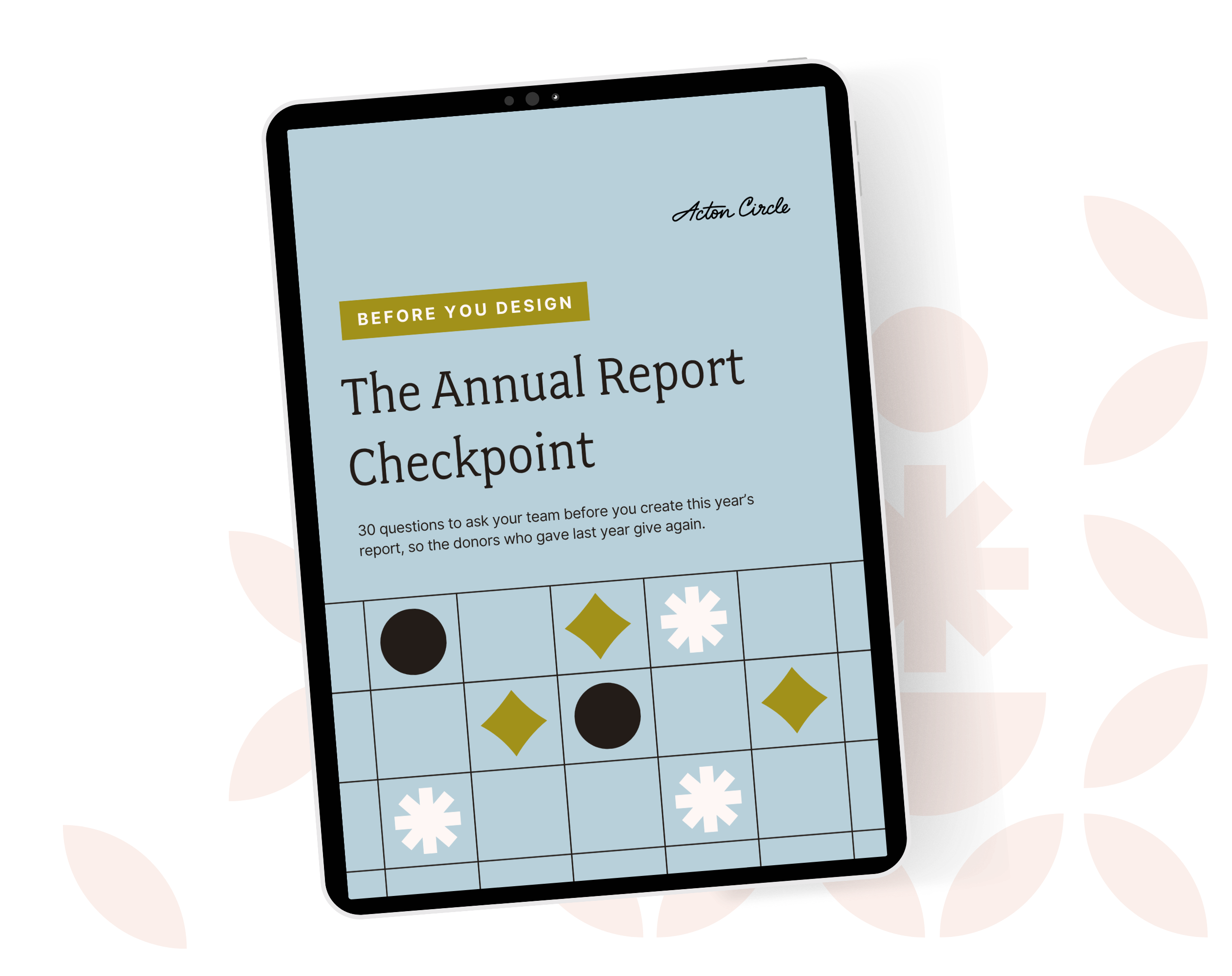
Get The Annual Report Checkpoint
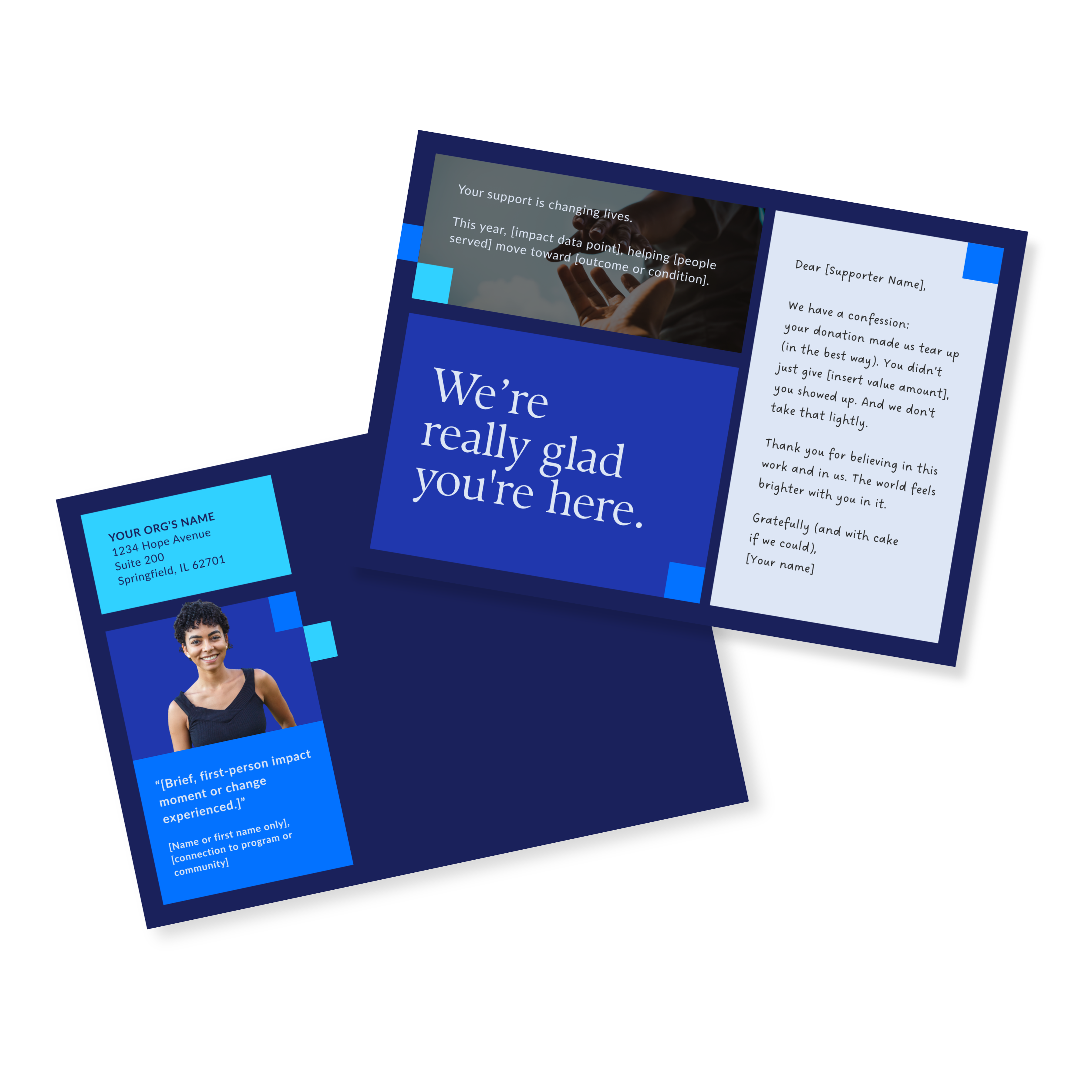
Donor Thank You Postcards Templates
Enter your info and we’ll send the postcards straight to your inbox:
When It Tips Into Manipulation
Your job isn't to trick people into caring. Show what your community is building and trust the truth to do the work.
When your message matches your mission, urgency is real, stories are true, and people keep their dignity. That's ethical storytelling. And you'll see it in donor retention, in major gifts, in whether people actually share your annual report, or just ignore it.
Manipulation, on the other hand, can start small. A little exaggeration here, some missing context there. Maybe you crank up the urgency or lean on guilt instead of inviting people in.
Here's where that leads:
-> Overstating the problem or the solution feels harmless when you believe in the cause. But donors notice when your story doesn't match reality. That's how you lose trust.
-> Shame might work once. Maybe twice. But it wears out fast and leaves people feeling bad for even showing up.
-> Fake urgency is toxic. Use the real thing when it's there. But panic for the sake of a reaction? That kills trust.
-> Stripping people of their dignity to make donors feel bad does the most damage to the very communities you're trying to help.
Ethical Storytelling Builds Relationships
Lead with the truth. Real impact. Real stories. Real needs. That's when donors show up for real.
They stay involved longer, give more, and truly believe in your work because you’ve given them something real to support. I see it every time a team treats their annual report like a chance to tell the truth, not just check another box.
If you want your annual report and donor comms to show the depth of your work, that’s what we do. Book a call to see how we can work together.