Donor engagement isn’t about one moment. It’s about many thoughtful, well-timed touchpoints that show donors they matter long after their first gift.
And no, a thank-you email isn’t enough on its own.
Strong engagement strategies reinforce impact, invite participation, and build trust over time. The good news? You don’t need a full comms department to do it well—just a clear plan, some intentional design, and a little consistency.
Let’s start with the basics.
What is the donor engagement process?
Donor engagement is a relationship, not a transaction. It usually moves through five stages:
First, you attract attention through stories, events, or word of mouth. Then you inform them about what you do using clean visuals and clear messages. From there, you engage with opportunities to act, whether that’s giving, attending, or sharing.
Next? Recognition. Thanking them in meaningful, memorable ways. Finally, you retain them through consistent updates and follow-up, even when you’re not asking for money.
The key: don’t wait for the next campaign to reach out. Stay present. Stay human.
What is a good engagement strategy?
A solid donor engagement strategy is intentional, consistent, and personal, and you can measure it.
Each touchpoint should have a purpose. Whether it's thanking, informing, or asking, your communication should never feel random. Regular cadence matters too—don’t ghost your donors between campaigns.
Make sure your outreach reflects individual donor preferences where possible. Tailored messages build connection. Bonus points if you’re tracking what’s resonating so you can adjust and improve.
And don’t underestimate the analog moments: a handwritten card, a visual thank-you piece, or even a voice message can create a connection that email can’t.
So—what does all of that look like in practice?
Below are three strategies we’ve seen work again and again for purpose-driven teams. Each one blends storytelling, data, and design to help your donors feel connected, appreciated, and motivated to stay involved.
Strategy 1: Show the Change, Don’t Just Count It
Donors want more than numbers—they want proof that their support mattered. Visual storytelling helps them see what words alone can’t do.
Instead of blocks of text, try iconography to break down your outcomes. A visual showing 1,500 meals served hits faster than a sentence buried in paragraph three.
Pair quotes with visuals that set the scene—photos, expressive illustrations, or even textures that bring emotion into the mix. It makes testimonials feel more like stories than stats.
Want something digestible and powerful? Try one-page story sheets. Before-and-after snapshots of a program with supporting data let you share transformation at a glance.
Strategy 2: Design-Led Marketing = Stronger Donor Relationships
If your fundraising emails, landing pages, or updates look like a jumble of mismatched styles, your message gets lost before it’s read.
Use branded templates to keep visuals consistent, even across teams. It helps your comms feel cohesive, and yes, it saves you time too.
Don’t skip the small things. A thank-you postcard with thoughtful design can leave a stronger impression than a 400-word email. Same goes for donation pages, welcome kits, and campaign graphics—they don’t need to be flashy, just clean and intentional.
And when it’s time to make a case for support? Combine a compelling visual with a clear, benefit-driven message. (If you’ve never made a visual case statement, this is your sign.)
Thoughtful design shows that you’re serious and organized. Donors notice.
Strategy 3: Make Annual Reports People Want to Read
An annual report shouldn’t feel like a financial audit. Done right, it’s a visual summary of your year and a trust-building tool all in one.
Start with design that respects your reader’s time. Use charts, infographics, and visual highlights to bring your impact to life quickly. Don’t bury the lead—put the big wins up front.
Add warmth with real faces. Showcase donors or program participants using short bios, photos, or a pull-quote that hits home. Then, choose one or two key programs and show transformation—what changed, not just what happened.
Wrap it all with a clear next step: donate again, volunteer, share the story. Whatever it is, say it clearly and make it easy.
A great example of this—and even taking it a step further—is the 10,000 Degrees’ Annual Report and Donor Appreciation Booklet, where they recognized donors and the amount they donated.
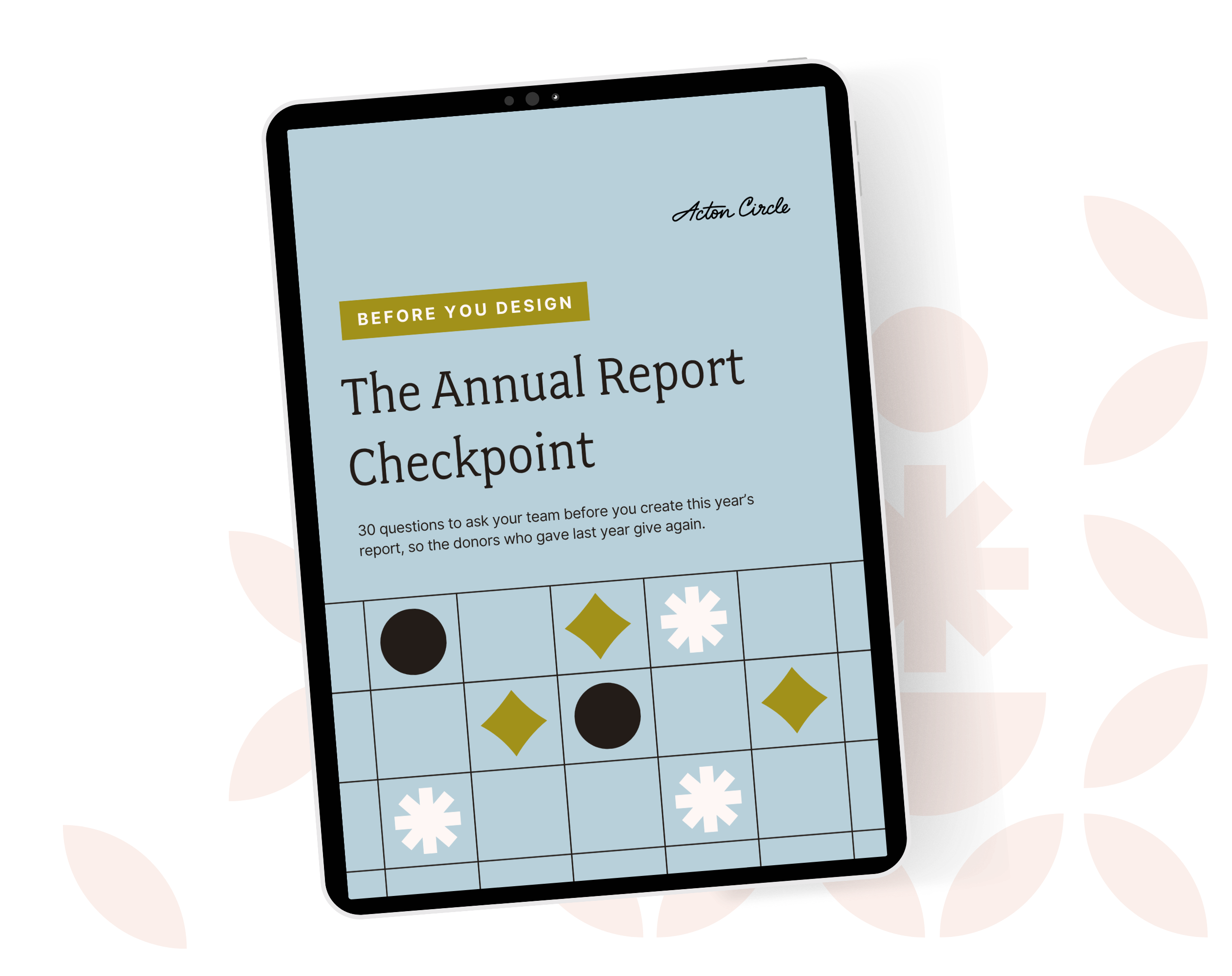
Get The Annual Report Checkpoint
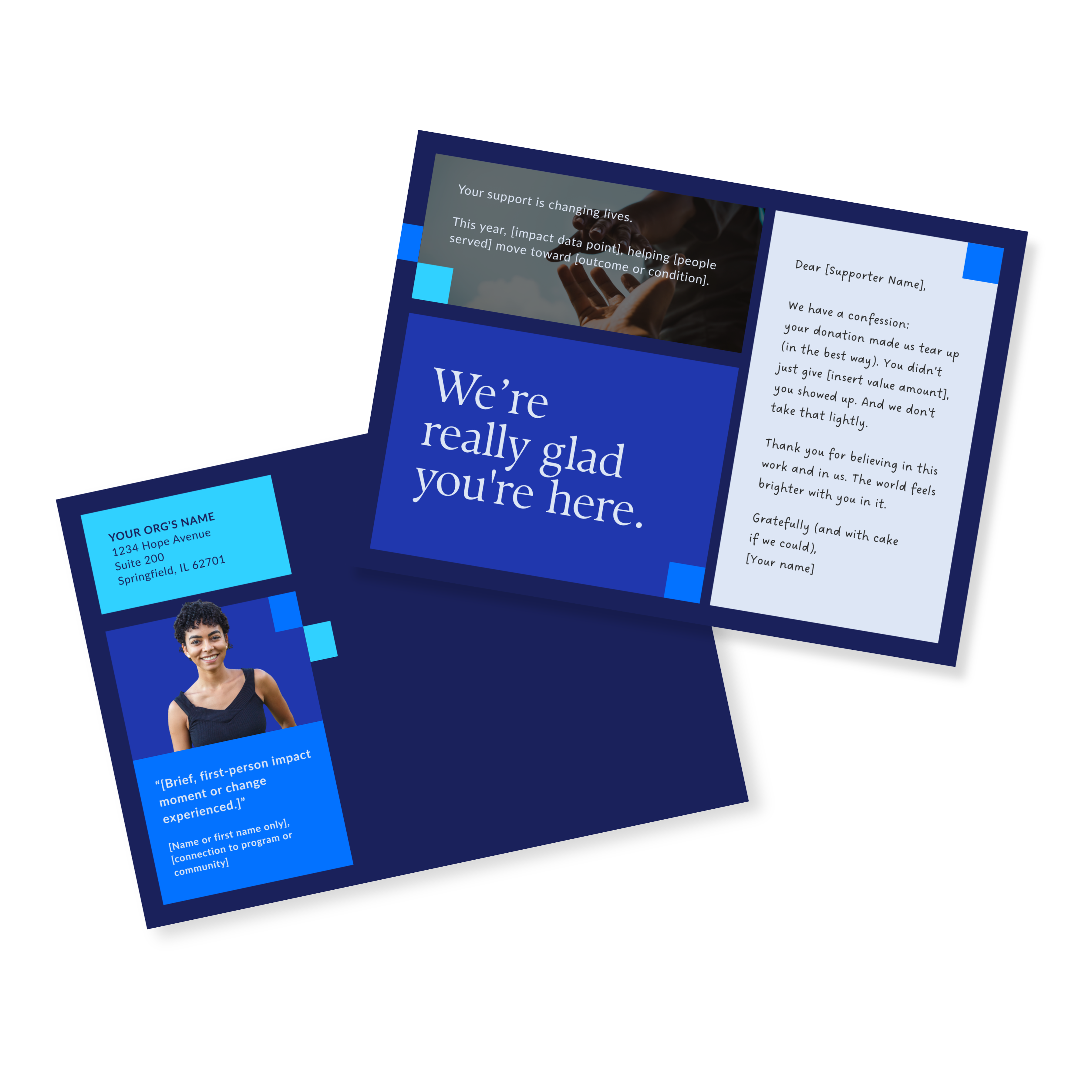
Donor Thank You Postcards Templates
Enter your info and we’ll send the postcards straight to your inbox:
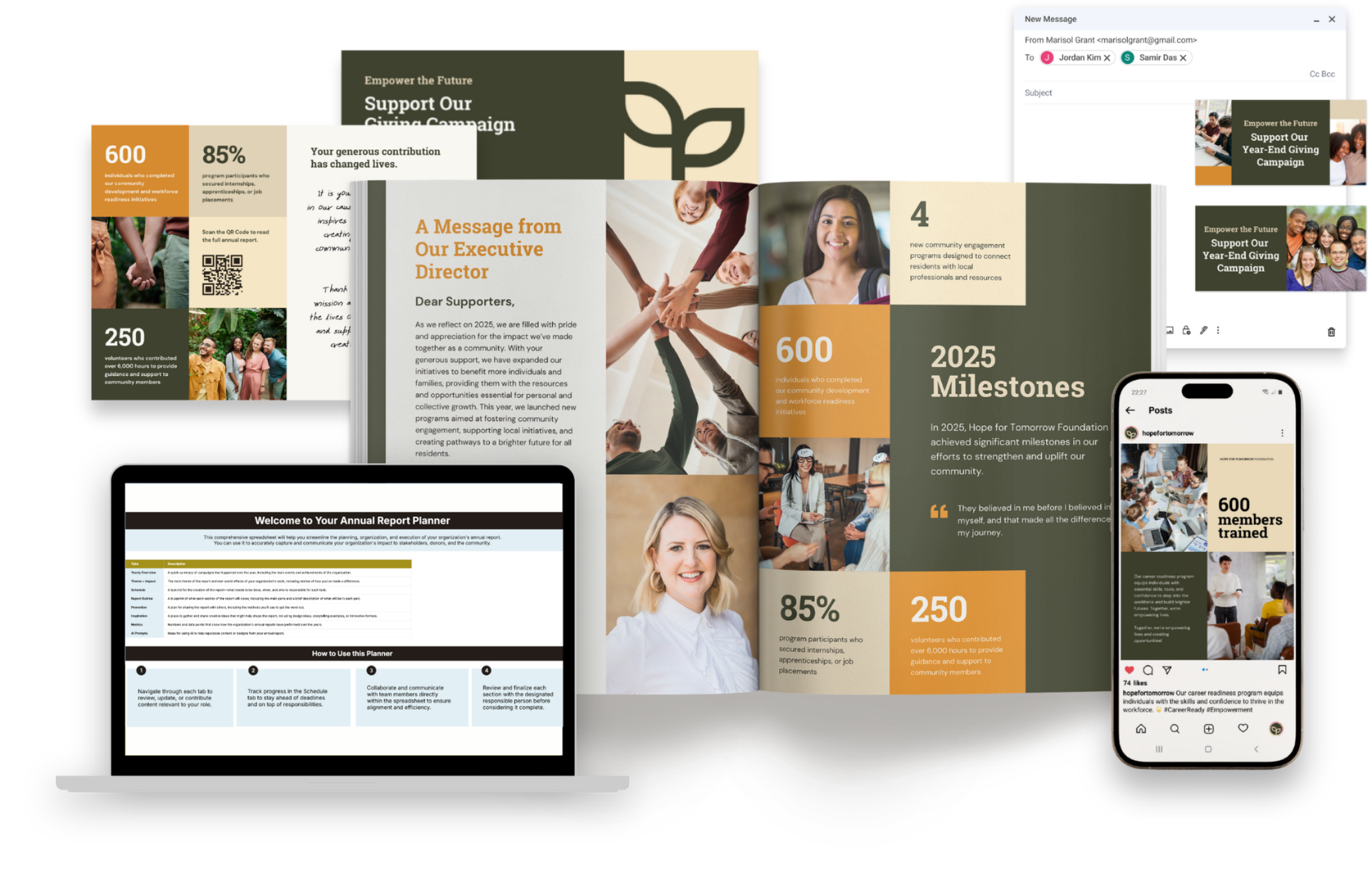
Annual Report Template Kits
Turn a folder of half-finished docs into a donor-ready annual report, without hiring a designer or pulling another all-nighter.
What is the Donor Engagement Funnel?
The funnel is a step-by-step flow of how someone becomes your supporter—and eventually, your advocate.
It starts with awareness: they hear about your work, maybe through a friend or social post. Then comes consideration—when they research, scroll your site, or read your annual report.
If you’ve made a strong case, that turns into a first donation. From there, your job is to keep them close through thoughtful updates and repeat engagement, eventually guiding them toward advocacy, where they share your mission with others.
At each stage, your visuals and messaging should evolve. What works for awareness (big bold graphics, storytelling) won’t always work for loyalty (custom donor portals, personal updates).
How to Measure Donor Engagement?
Skip the guesswork. Track what matters.
Email performance is a great start—opens, clicks, unsubscribes. Look at donation patterns too: how often someone gives, how long between gifts, and whether they respond to specific campaigns.
Watch for event metrics, website behavior (like how long they stay on your impact page), and social media activity. Even better? Ask. Donor surveys are gold when used intentionally.
One more angle: see what kind of visuals perform better. Are infographics outperforming text posts? Do donor quotes in carousel graphics get shared more? Those patterns tell you what to design next.
Design That Keeps Donors Coming Back
Engaged donors don't happen by accident. They stick around because your communication feels clear, personal, and worth their time, and good design is what makes that happen consistently.
Start with the essentials: your annual report, thank-you messages, donor updates. These aren't just deliverables. They're opportunities to reinforce trust.
Our Annual Report System was built for exactly this: premium, on-brand tools that help you create thoughtful, donor-ready materials fast.