Not a shocker: nonprofits are busy and overwhelmed. Resources are tight. Programs, fundraising, and ops teams are being pulled left and right all year. And content teams are lucky if they have as many as five people on the team.
Although the majority of nonprofits rely on content marketing in some way, only 5% of comms professionals in this space agree that their roles are understood very well by their peers. At the same time, over 60% say that time restrictions are often why the role of comms teams isn’t maximized.
That is why nonprofits need a strategic content plan. In this article, we will discuss the benefits of a content strategy for nonprofits and show what an effective one looks like in practice.
What are the key benefits of a nonprofit content strategy?
A successful nonprofit content strategy goes beyond sharing a few social media posts or hoping a piece of content goes viral. It’s a clear, repeatable plan designed to help you hit your biggest goals while building trust and credibility over time.
A well-rounded content strategy should help you achieve these:
- Your team will save time and resources. Without a consistent strategy, teams risk wasting time on content that ultimately falls flat.
- Your message will be consistent across the board. This includes not just what you say but also how it’s presented; consistent visuals and design help reinforce recognition and trust.
- All content will tie back to your nonprofit’s mission. In other words, it’ll be easier for your audience to understand your impact and why it matters.
But to get there, you need to know who to reach, what you want them to do, and how best to engage them with the resources you have. Your content should not only be seen but also understood and believed.
This is where clear messaging paired with thoughtful, accessible design comes in.
What is a realistic framework for a nonprofit content strategy?
Creating an effective nonprofit content strategy can eat up your time if you don’t know what to do or where to start. Below, we break down the 6 steps you need to follow for a sample nonprofit communications plan:
Step 1: Define your mission + objectives
Imagine that you are Laura, a busy communications director at a mid-size nonprofit. Your mission is all about food insecurity relief.
Before you even think about what to write or where to post it, you need to know why you’re creating content. Let’s say you want to increase monthly donations. However, your team is small, you have limited resources, and you don’t know what clear success looks like.
This is where you have to think “SMART”—specific, measurable, achievable, relevant, and time-bound.
Instead of a vague goal that can look different to every member of your team, you clearly define what you want to see happen: increase monthly donors by 20% over the next three months using informative blog content.
Step 2: Identify your audience
Next, you need to consider who you are creating content for. When you try to cater to a broad “everybody,” chances are you’ll come up with content that’s too generic.
When you create audience personas for each audience segment, you’re able to craft content tailored to your targets. Every material you put out will land.
So, Laura researches her audience thoroughly. What is their general age range? What motivates them to act, and what is their preferred method of communication?
You may discover an audience profile that looks something like this:
- Existing and past donors: Donors between the ages of 30-65+ who are value-driven and community-oriented.
- Local community members: Volunteers, event attendees, and neighbors who fall within the same general age range as existing donors.
- Younger supporters: Potential donors who are between the ages of 18 and 30. Socially conscientious (engages first and donates later).
Step 3: Decide where you need to be
The work doesn’t stop at identifying who you’re talking to. Instead, ask yourself where these individuals spend most of their time and how they prefer to engage with content on each platform.
By matching each audience to the channels they use and presenting your content in a way that fits those spaces, you increase the chances that your messages will be seen and acted upon.
For Laura’s audience, this may look like:
- Existing and past donors: Keeping them up-to-date with personalized emails that are visually organized and easy to skim.
- Local community members: Reaching out in Facebook groups with clear, approachable visuals and straightforward messaging.
- Younger supporters: Posting on Instagram using eye-catching graphics and concise, impactful text.
Based on this information, you might choose email, Facebook, Instagram, and a website to host blog content.
Remember that each channel comes with its own expectations for both messaging and design. Adapting your visuals to fit the platform helps your content feel more natural, credible, and engaging.
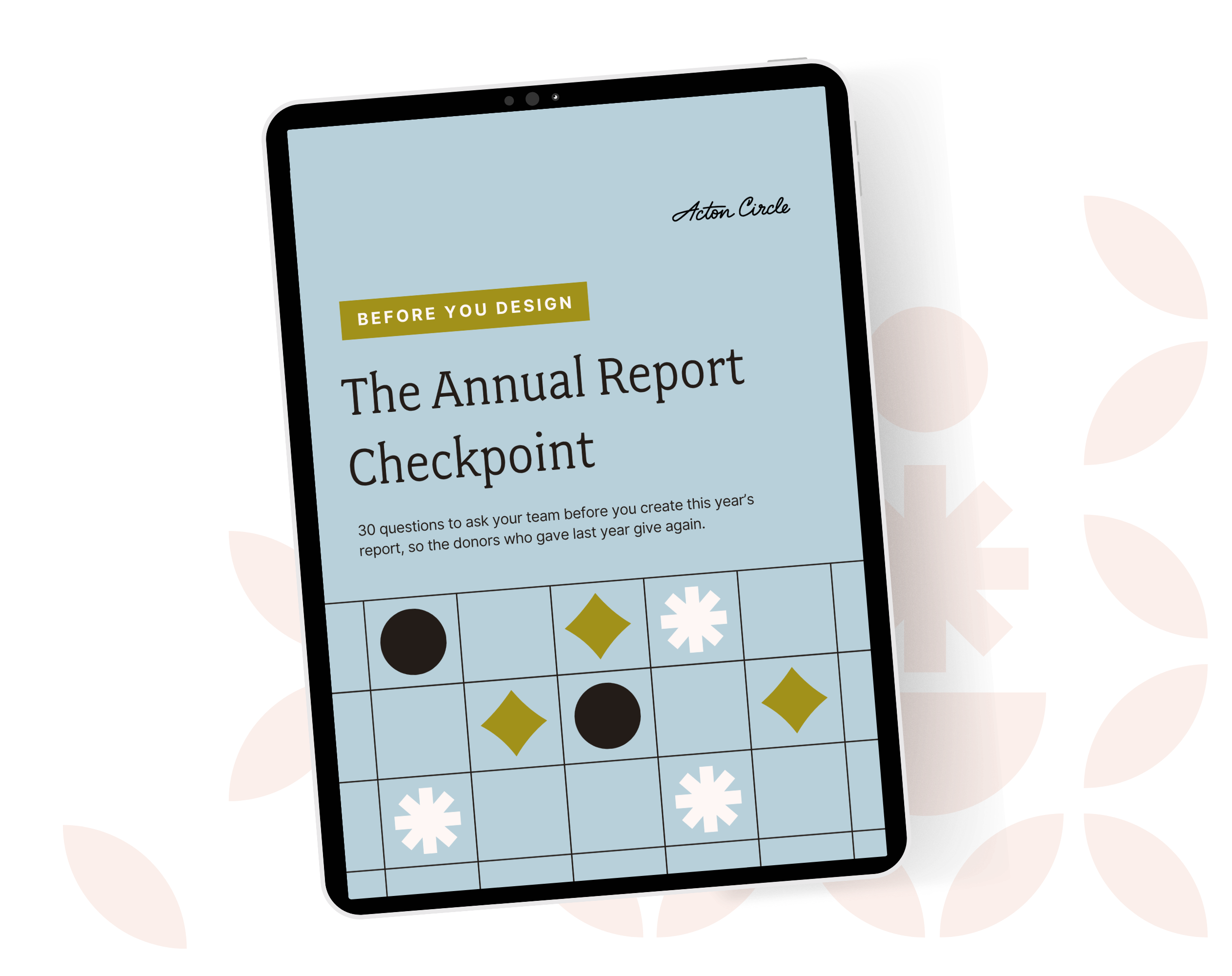
Get The Annual Report Checkpoint
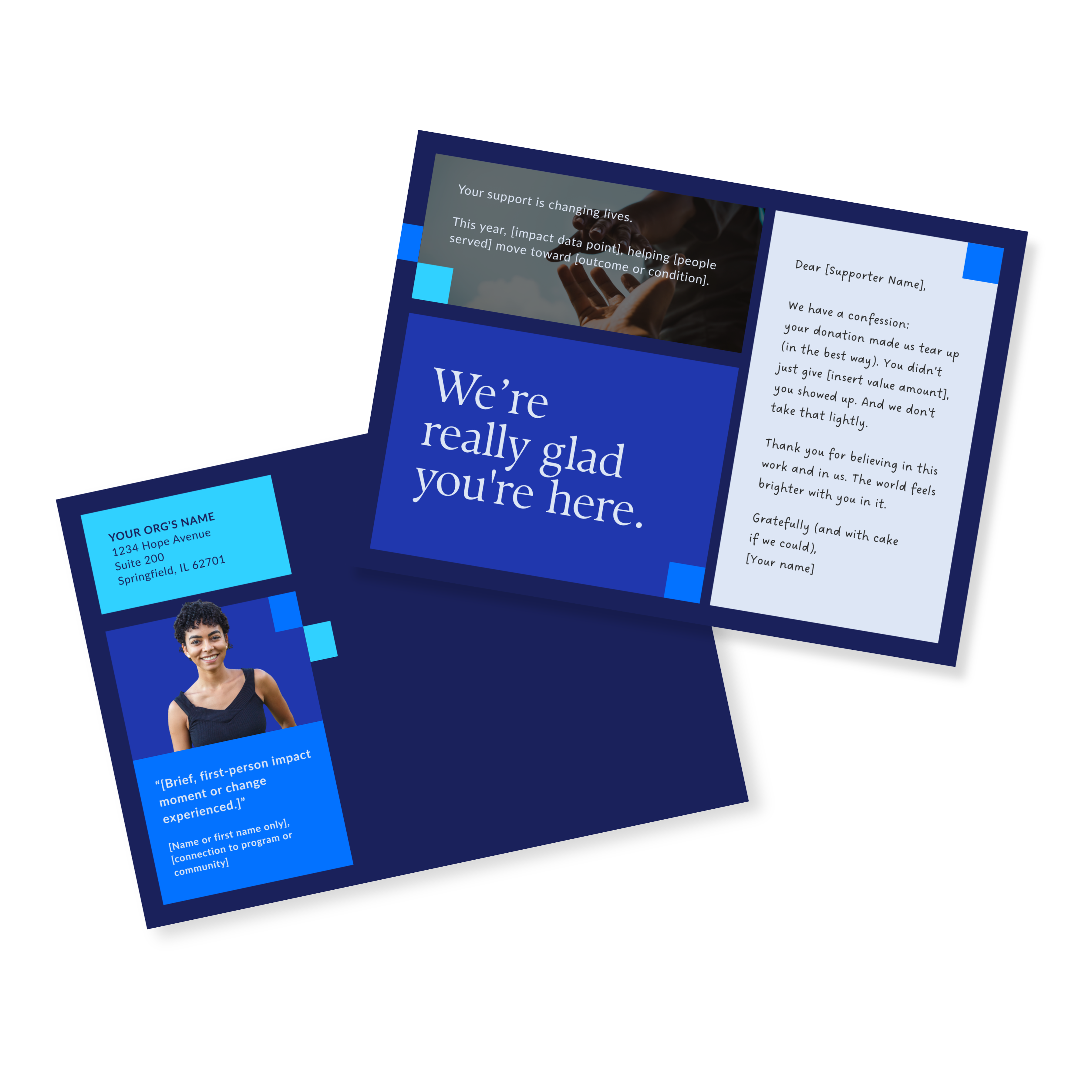
Donor Thank You Postcards Templates
Enter your info and we’ll send the postcards straight to your inbox:
Step 4: Determine your key message + medium
Key messages are a must in every nonprofit content strategy, but they only work when they are built with your goals and audience in mind. Laura’s key message might be, “Your monthly support ensures families don’t go hungry year-round, not just during emergencies.”
When it comes to how you want to deliver this message, it’s best to mix and match based on the platforms you chose. In Laura’s case, we might see a newsletter for email, infographics for Facebook and Instagram, and blog posts for the website.
For other platforms, you may want to create impact stories, case studies, and annual reports.
Important: Selecting the format or medium alone isn’t enough. You must also design the content in a way that fosters understanding and trust. A clear, well-structured infographic can make complex issues like food insecurity easier to grasp. An interactive and belief-building annual report can help show donors where they stand in your mission (and make them want to keep supporting).
Step 5: Implement your content plan
Use a content calendar to plan ahead, and avoid putting things off until the last minute. It’s also best to assign roles and responsibilities to make it clear who does what from the start.
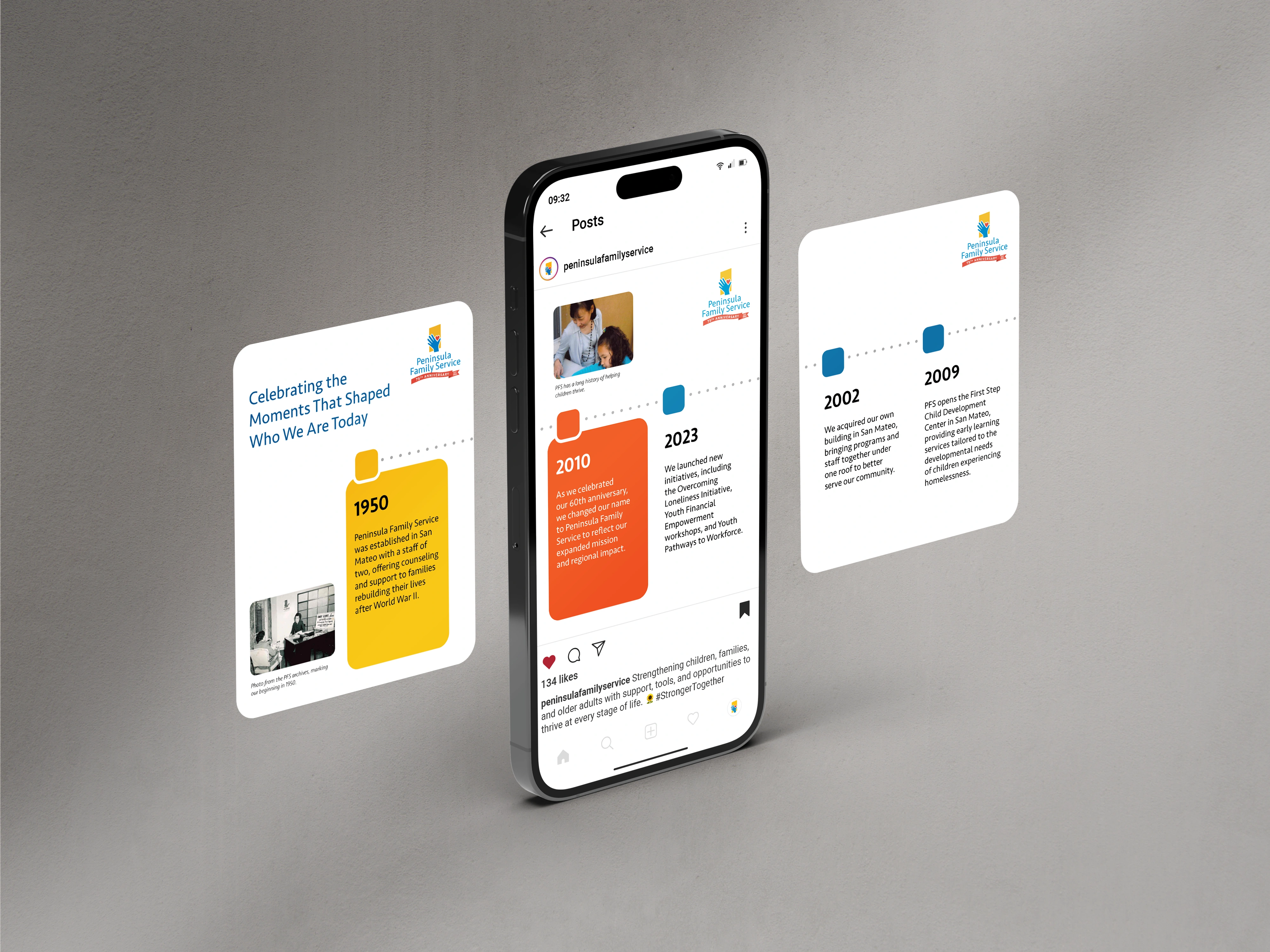
As you create content, focus on maintaining consistency not just in messaging, but in design. Using consistent colors, fonts, and layouts across platforms helps reinforce recognition and build trust over time.
Based on best practices for each platform, a sample nonprofit communications plan for Laura may look like this:
- Email: 1x a week
- Facebook: 2x a week
- Instagram: 2x a week
- Blog: 2x a week
You can also use smart tech and automation to personalize donor communications and post content at the best times. Pairing personalization with clear, well-designed content ensures your message feels both relevant and easy to engage with.
Step 6: Set your success metrics (and follow through!)
Those SMART goals you set at the beginning? This last step is about building off of those to set key performance indicators (KPIs) that measure your progress.
As Laura, your primary KPI will most likely be the percentage increase of total donors compared to last month. You may also keep track of website traffic, social media engagement, and email outreach metrics to compare how they’re affecting your donor expansion efforts.
Analytics tools on website hosting and social media platforms can help monitor KPIs. There are also customer management relationship (CRM) systems that can help link your performance metrics directly to donor behavior.
All this information tells you what is working, what’s not, and where to change direction. Measuring and reporting on your content feeds back into creating better content in the future.
FAQs: Nonprofit Content Strategy
How often should we post content?
This largely depends on what type of content you’re creating and the distribution channel you choose. For example, a blog works best when updated at least once or twice per month.
Always prioritize quality over quantity. A few engaging, well-thought-out social media posts a week are better than daily half-hearted posts.
What if we don’t have enough time to create a regular stream of content?
Consider repurposing content. You don’t need to create everything from scratch each time. For example, one annual report can be broken down into several infographics and newsletter features. One blog post can become two weeks’ worth of social media posts.
Do we need to be on every social media platform?
No, you don’t need to be on every platform all at once. The best platform to be on is where your audience is already active, which is why audience personas are so important.
Blending Messaging and Design for a Nonprofit Content Strategy That Works for You
Nonprofit comms teams seldom (if ever) function like a content marketing agency that can churn out content rapidly and regularly throughout the year. And even with a clear strategy in place, it’s often hard to stay on schedule. A new one-pager is suddenly needed with a 48-hour turnaround. An event tomorrow requires updated flyers. A 3 o’clock board meeting is calling for a 20-slide presentation.
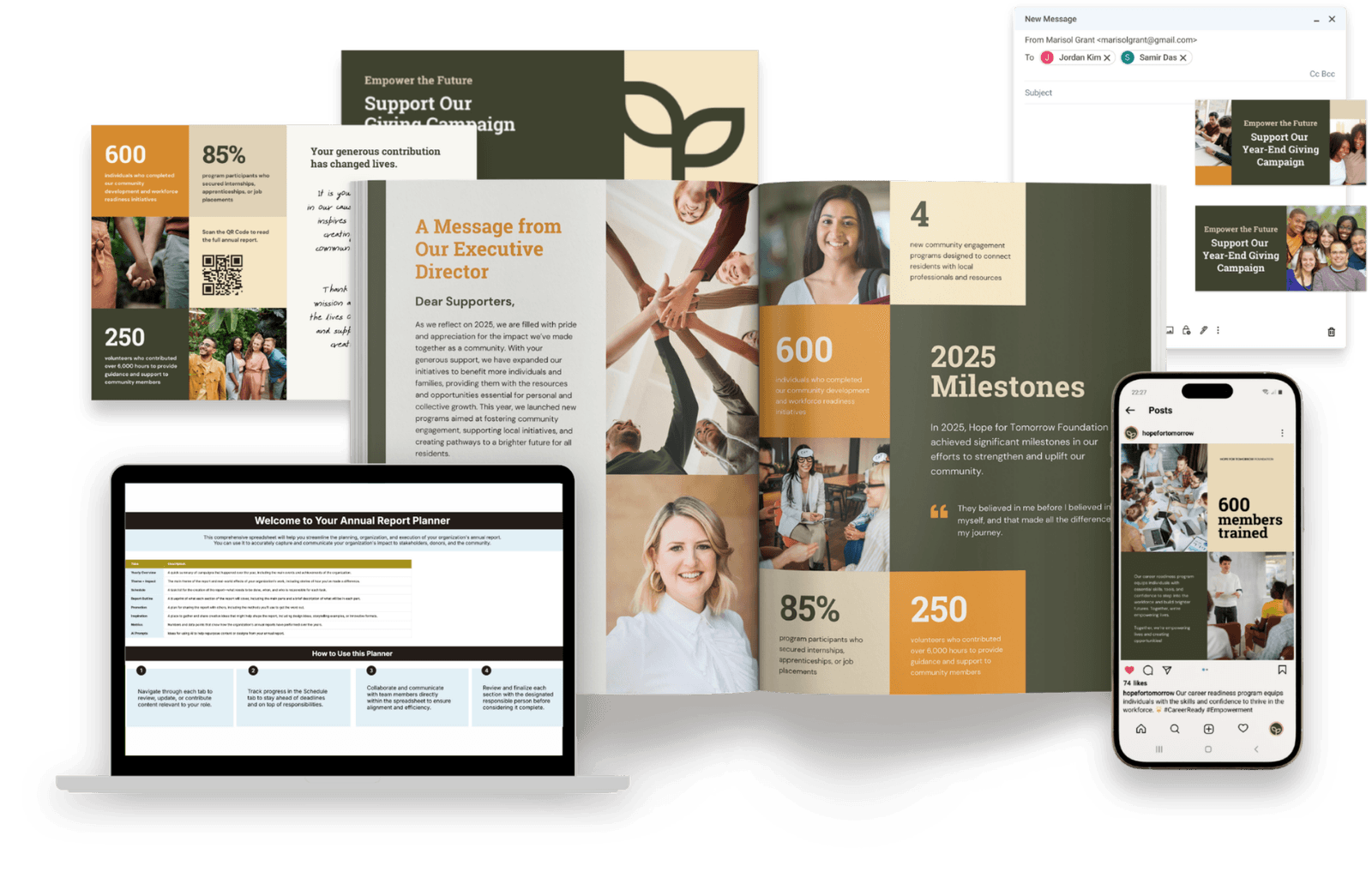
At Acton Circle, we’ve seen how well a properly designed annual report can work for a nonprofit. When the message is clear, the visuals are inviting, and the delivery is effective, an annual report can become more than just a one-time asset. It can give you a year’s worth of content that connects with your audiences.
Remember, a nonprofit content strategy doesn’t have to be complicated, and it definitely shouldn’t be “more work.” It can be as simple as repurposing belief-building content you already have, so you have time to plan instead of react.
Our Annual Report Systems come with promo graphics (for social media, email, and more) to help jump-start your year-round content strategy.
If you’re looking for something custom, our Annual Report Design Intensive is best for you.