The thing about annual report season... it doesn't sneak up on you all at once.
It creeps in. A few weeks go by. Then a few more. Then suddenly your Executive Director is asking for a draft, your board wants to review before it goes to print, your program leads are buried in campaigns, and the designer you were going to hire has a six-week waitlist.
If you're currently thinking you've got a little time left, this post is for you.
The Problem With "Later"
"Later" feels responsible, like you're being realistic about your capacity.
But here's what "later" looks like on the backend:
Your best impact stories are getting buried under the next campaign. The donor quote that stopped you in your tracks three months ago? It's somewhere in an email thread you'll never find. The photos from that site visit, the ones that showed what your work looks like in real life, are somewhere across four people's camera rolls.
"Later" costs you something: the version of this report you're capable of making. The one that doesn't just inform supporters, it inspires them to join in.
That report takes time you won't have if you wait.
Still on the fence? Here's how you know it's time.
Sign #1: You're Sitting on Report Gold Right Now
You probably just wrapped something worth talking about like a program milestone, a partnership that finally came through, or a donor who said something that stopped you in your tracks.
THAT'S your report, but haven't captured it yet.
Strong annual reports are built from the moments in time that are still fresh that your team remembers vividly, the quotes that haven't been paraphrased into oblivion yet, the numbers that came in better than expected and nobody's had time to celebrate.
Those gems have a shelf life.
Start a "Report Nuggets" doc today. Drop in anything remotely worth keeping: quotes, photos, stats, little wins, that one email from a program participant you almost deleted.
It doesn't need to be organized or final. Just keep it somewhere you can find it. Those goodies? They become the backbone of your entire report.
→ Wish you had an annual report organizer? We've got you. Get our Annual Report Planner
Sign #2: Last Year's Late Night Wokring Sessions Still Haunt You
You know the ones. The nights you put your kids down for bed, told your partner you'd be done in a couple hours, then headed back to your computer making layout tweaks... wondering if the whole thing was going to come together.
You had a vision for that report. Something that reflected the care behind your work, not just the data.
But the timeline compressed, feedback came late, design time vanished into thin air, and you ended up settling for decent instead of what you imagined.
You got a report that informs. What you needed was one that builds belief.
Sign #3: Your Report Is Competing With Feeding America's (Whether You Like It or Not)
Your donors are not reading your report in a vacuum.
They're getting beautifully designed materials from orgs with STACKED creative teams. They're seeing polished digital experiences from national names with serious comms and marketing budgets. And then they open yours.
Your mission is just as important and programs change just as many lives (if not more). But if your report looks rushed... we're talking inconsistent fonts, bad stock photos, disorganized like it was built in a hurry... it signals something you don't intend.
Supporters are 100% paying attention. Not necessarily to every caption or comma. But to tone, overall vibe, and execution? ABSOLUTELY.
A report that looks polished and reads smoothly says: this organization is organized, this team is strategic, and this mission is being led by people who take their work seriously.
A report that looks like it was finished the night before says the opposite, even when that's the furthest thing from true (we KNOW that isn't true, but they don't).
Starting early is how you give your story the visual credibility supporters expect.
Sign #4: You Want to Enjoy The Process This Year
You did jaw-dropping work this year. Don't let the process be the thing that undersells it.
Starting now means leading the process instead of surviving it. It means your program leads can contribute while they still have capacity. It means you can review a draft without a deadline breathing down your neck. It means you get to be creative, not just reactive.
There's a version of annual report season where you feel good about what you made.
That version requires starting before you feel 100% ready.
Get The Annual Report Checkpoint
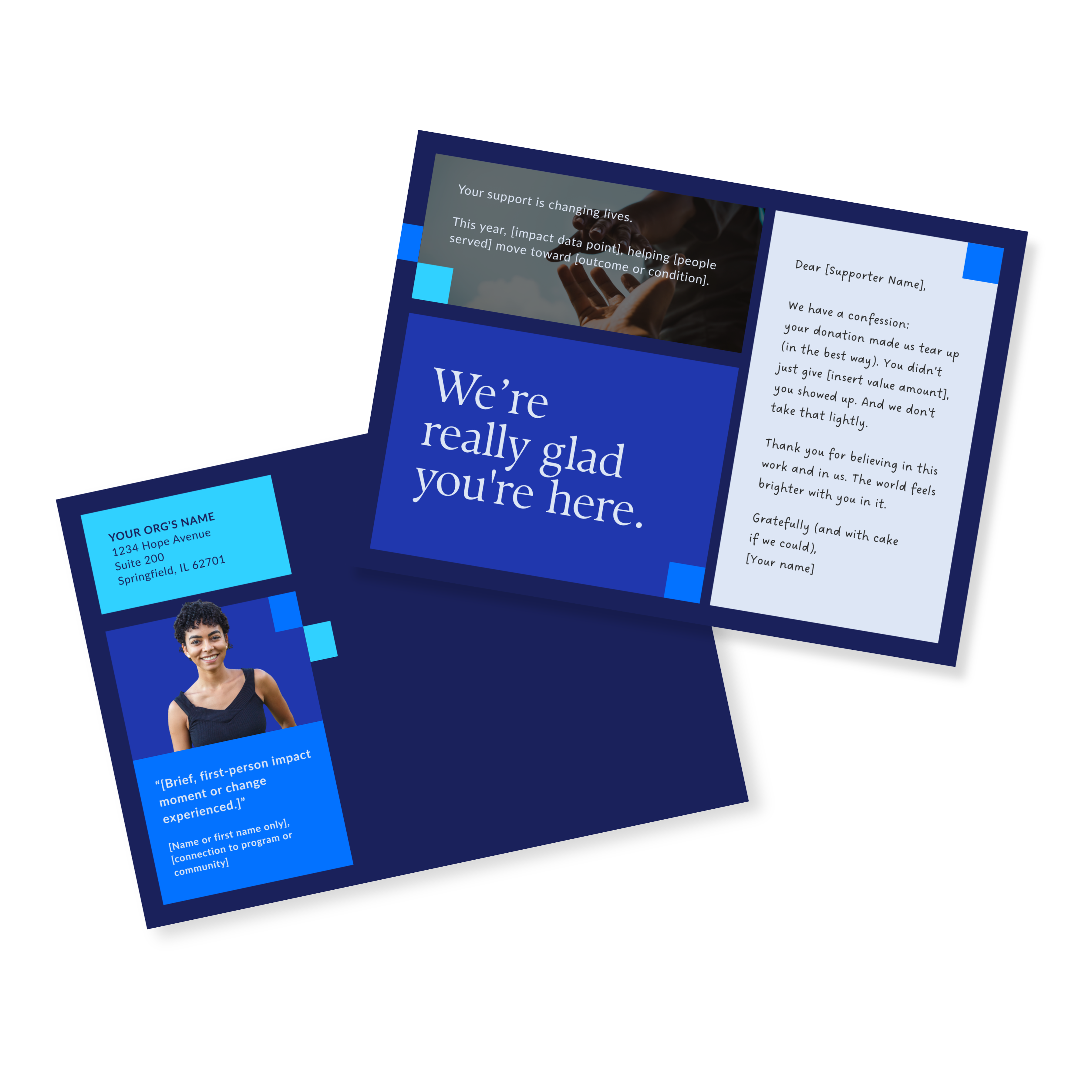
Donor Thank You Postcards Templates
Enter your info and we’ll send the postcards straight to your inbox:
Sign #5: You Swore You'd Never Wait That Long Again
This is a lot of teams I work with.
Maybe last year took longer than it should have.
And you said (maybe out loud, maybe just to yourself): next year, we're doing this differently.
Let this be the year that's true.
Not a sprint. Just a steady start, so when crunch season hits, you're finishing. Not starting.
"But We Don't Have Final Financials Yet"
Totally fair. Most orgs don't have final financials until later in the process.
That's not a reason to wait. It's a reason to move on everything else.
Your content strategy, your layout, your impact stories, your photos, your pull quotes, none of that requires finalized numbers. Build the whole report and leave a placeholder for the financials. They'll slot in when they're ready.
Starting early also gives your design team time to make the financials look good (and digestible) not just accurate, but worth reading.
One More Thing: This Report Is a Year's Worth of Content
When you prepare your annual report early, you're building your content library for the next twelve months.
If you haven't heard it from me yet:
That impact story becomes your next donor email. Those pull quotes are ready-made social posts. That program overview is your next pitch deck slide. The photos you curated? They're working on your website, your newsletter, your next gala slideshow.
A report made with intention doesn't live for a season. It works for you ALL YEAR.
BUT ONLY if you had time to build it that way.
Hitting close to home? Here's the next step.
Most teams jump straight into designing without stopping to ask the harder question: is this building belief in our mission?
You can have great photos, a modern design, and solid numbers and still produce something that doesn't make anyone want to give again.
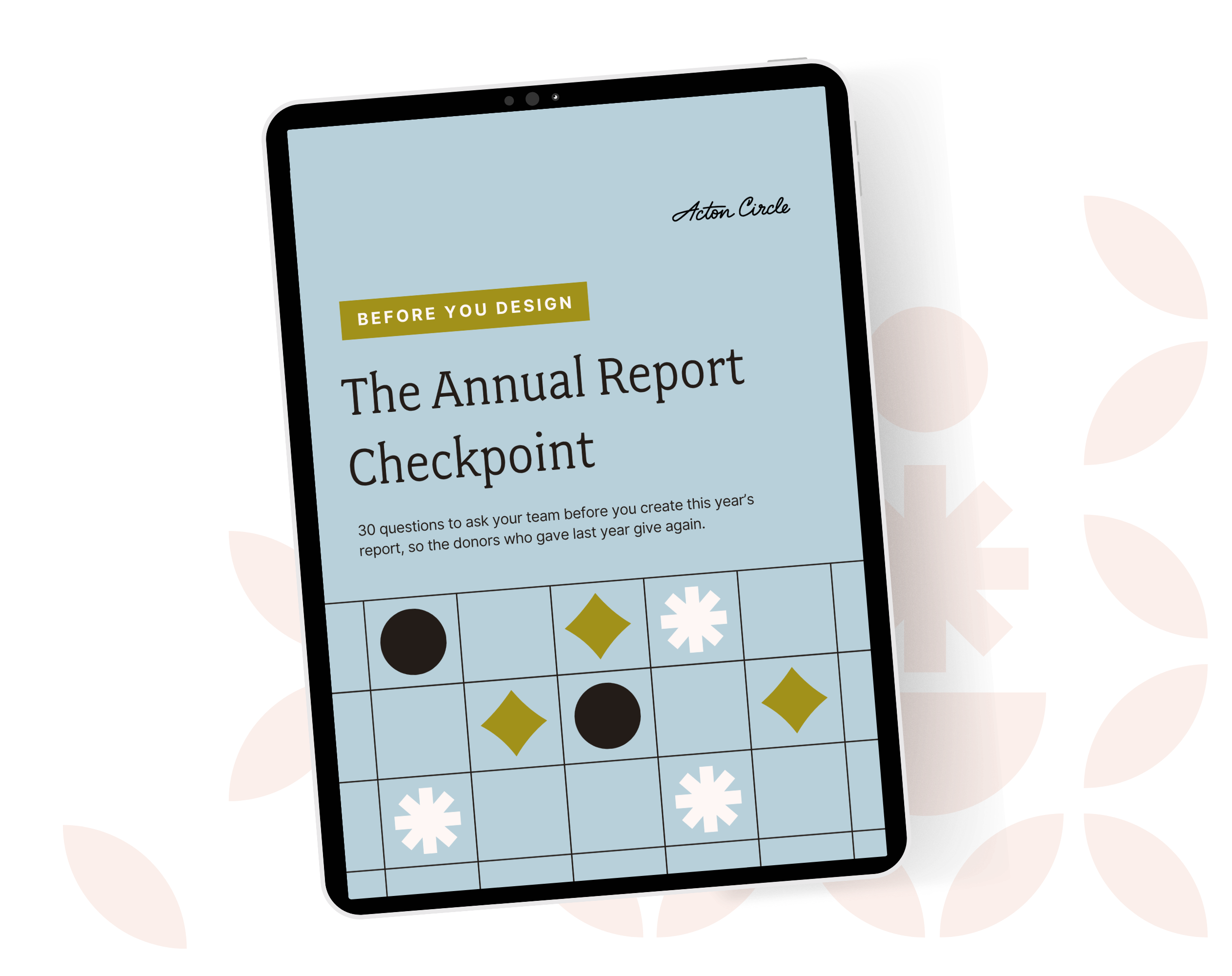
The Annual Report Checkpoint helps you catch that gap before your report goes live.
You'll walk away with an honest read on your report across five key areas, clear direction on what to address first, and the clarity to design with intention, not just deadline.