Most annual reports get sent out, maybe shared a couple times, then vanish until someone needs a stat half a year later.
That's a wild waste of the most content-packed thing your org makes all year.
A good annual report isn't just a box to check at year-end. It's supposed to be the engine for your comms, long after launch. It should make donor convos easier, give your team words to steal, and save you from inventing content from scratch.
If your report ghosts after launch, it's not living up to its potential.
It's Your Content Bank for the Rest of the Year
The annual report is usually the deepest dive a supporter will ever take on your org. It's got the data, the stories, the receipts, the vision. And then most teams just hit send and cross their fingers.
Just... crickets.
The smarter play? Use it as the backbone for every supporter convo after.
Grab the two or three proof points that show what you did this year and make sure your team can talk about them in their sleep. Turn your best story into a go-to for major donor meetings. Use the financials as the opener for a giving ask, not just a lonely PDF.
When a supporter reads your report and then hears your team echo the same proof in a call, that's credibility you can't fake. The report sets the stage. Your team lands it.
If a major donor called tomorrow and said, "I read your report—tell me more," would your team know what to say? Instantly?
I've worked with 65+ nonprofit teams, and the ones who get value from their reports treat them like a year-round resource, not a one-and-done.
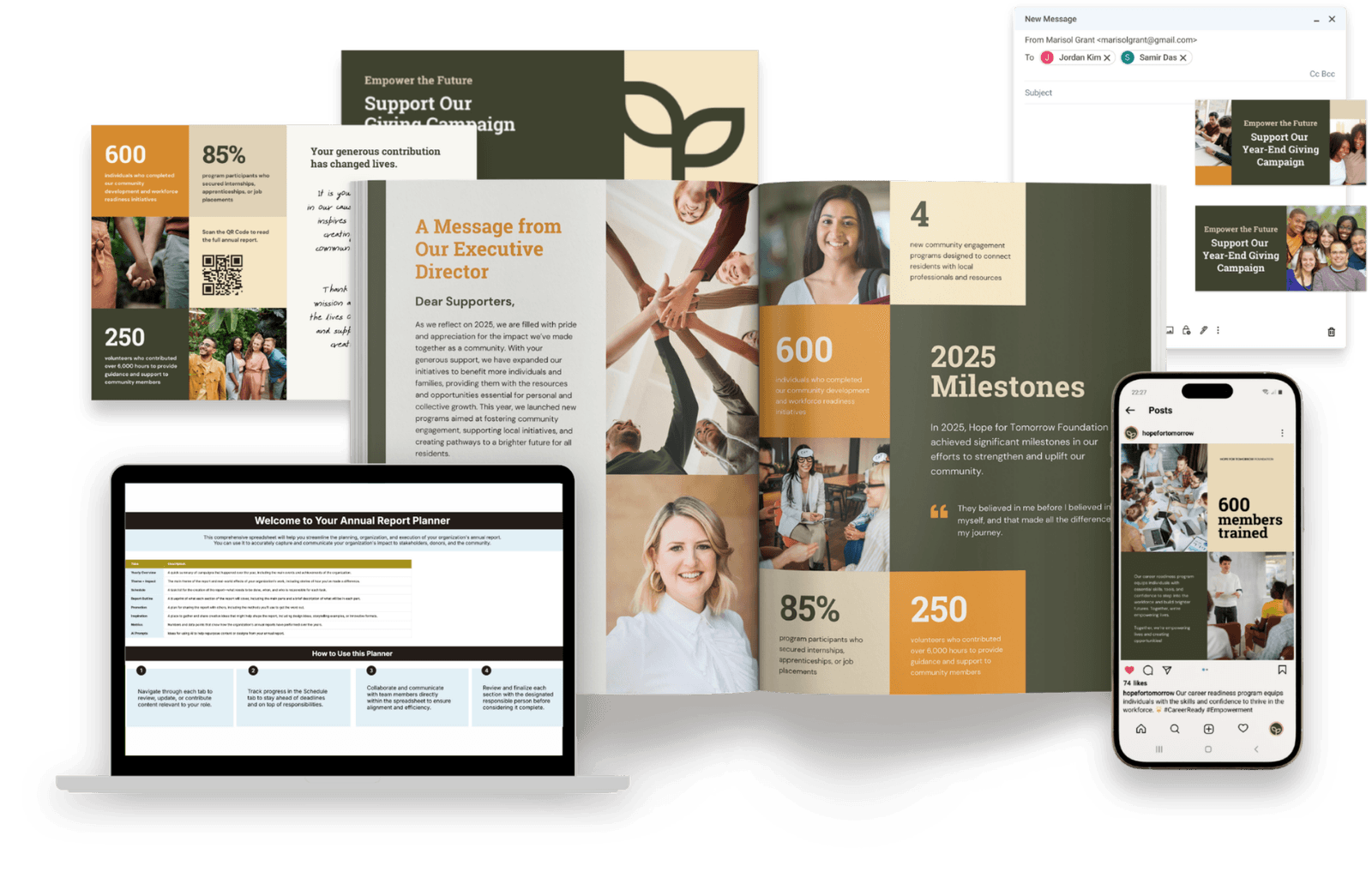
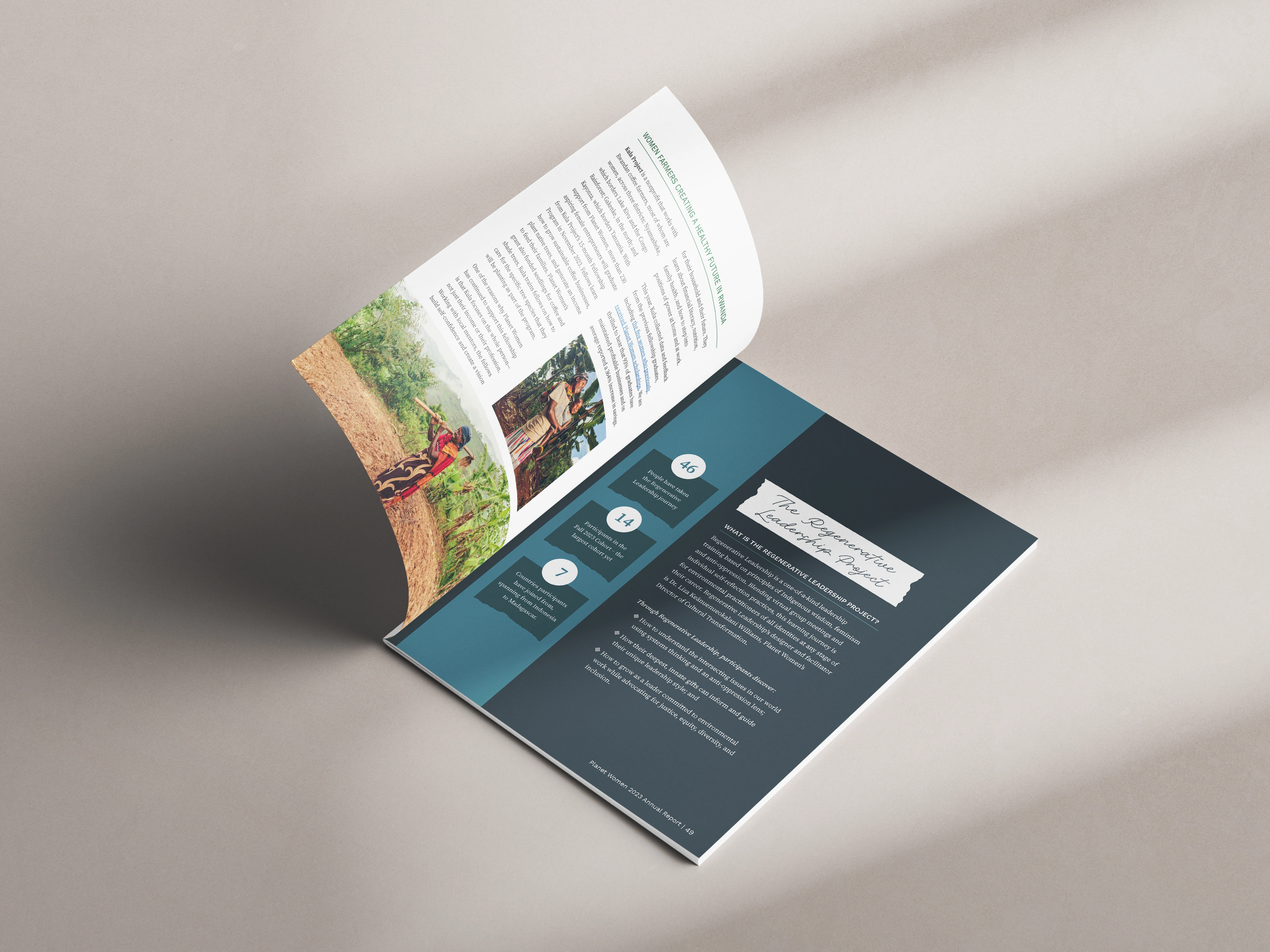
With Planet Women, we built their report to be a storytelling asset that kept paying off for months. One production cycle, ongoing return. That's what repurposing looks like when you do it right.
It Makes Your Grant Applications and Proposals Stronger
Funders want proof. They want to see you get your own impact, talk about it clearly, and show the receipts.
A solid annual report hands you all of that in one spot.
When you're writing a grant or a proposal, you shouldn't be starting from zero. You should be stealing from your report. The impact data? Already there. The stories? There. The financials? There. The proof you can actually deliver? Yep, there too.
But I still see teams rebuilding from scratch every cycle. Not enough time, high stakes, nothing to start with, so the grant narrative sounds like it was written at midnight. Because it was.
The teams who get the most out of their reports build them with proposals in mind from day one. They know which proof points funders care about, how to frame outcomes so anyone gets it, and which visuals can drop straight into a pitch deck without a redesign.
Your report should make the next proposal a breeze, not another thing you have to build from the ground up.
A communications leader at a national health advocacy organization shared that on the day they released four pieces of health-protective legislation in Congress, they used the Acton Circle-designed report as a major hook in their advocacy efforts. That's a report doing way more than sitting in a PDF folder.
Get The Annual Report Checkpoint
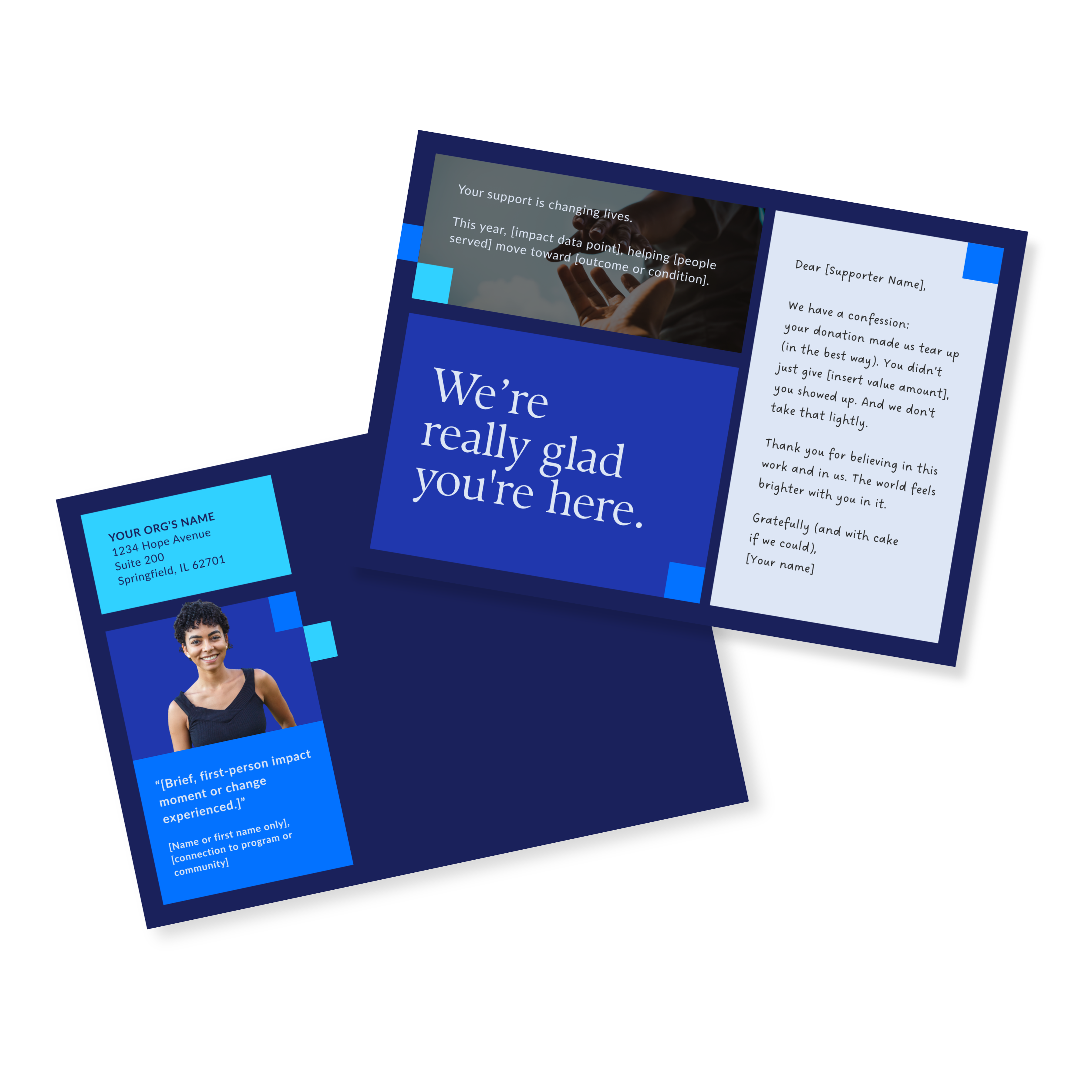
Donor Thank You Postcards Templates
Enter your info and we’ll send the postcards straight to your inbox:
It Gives Your Campaign Messaging a Foundation
If you're launching a campaign after your report drops, you've got a head start most teams ignore.
The report has already established your org's credibility, laid out your impact, and introduced donors to the community you serve. Your campaign doesn't need to rebuild all of that context. It can add to it.
Use the report's main thread as your campaign's anchor. Lead with the strongest stat. Let the donor story you featured become the campaign's hook. The report built belief. The campaign turns it into action.
When your report and campaign messaging line up, donors don't see two separate things. They see one story from an org that knows what it's doing.
Here's what actually happens: report goes out in November, year-end appeal in December, and they sound like two different orgs. Same mission, totally different language, different proof, different vibe. Supporters feel the disconnect, even if they can't put their finger on it.
It Builds Board Confidence in Ways That Last
Board members should be your loudest champions. But they can only advocate as clearly as they get what you do.
A good annual report gives board members something to point to, share, and speak from. It becomes the go-to for convos with their networks, the thing they send when someone asks what your org does, the proof they grab when making the case for a big gift or partnership.
I've lost count of how many times clients say, "Our board was so impressed." That's major donor access you didn't have to hustle for.
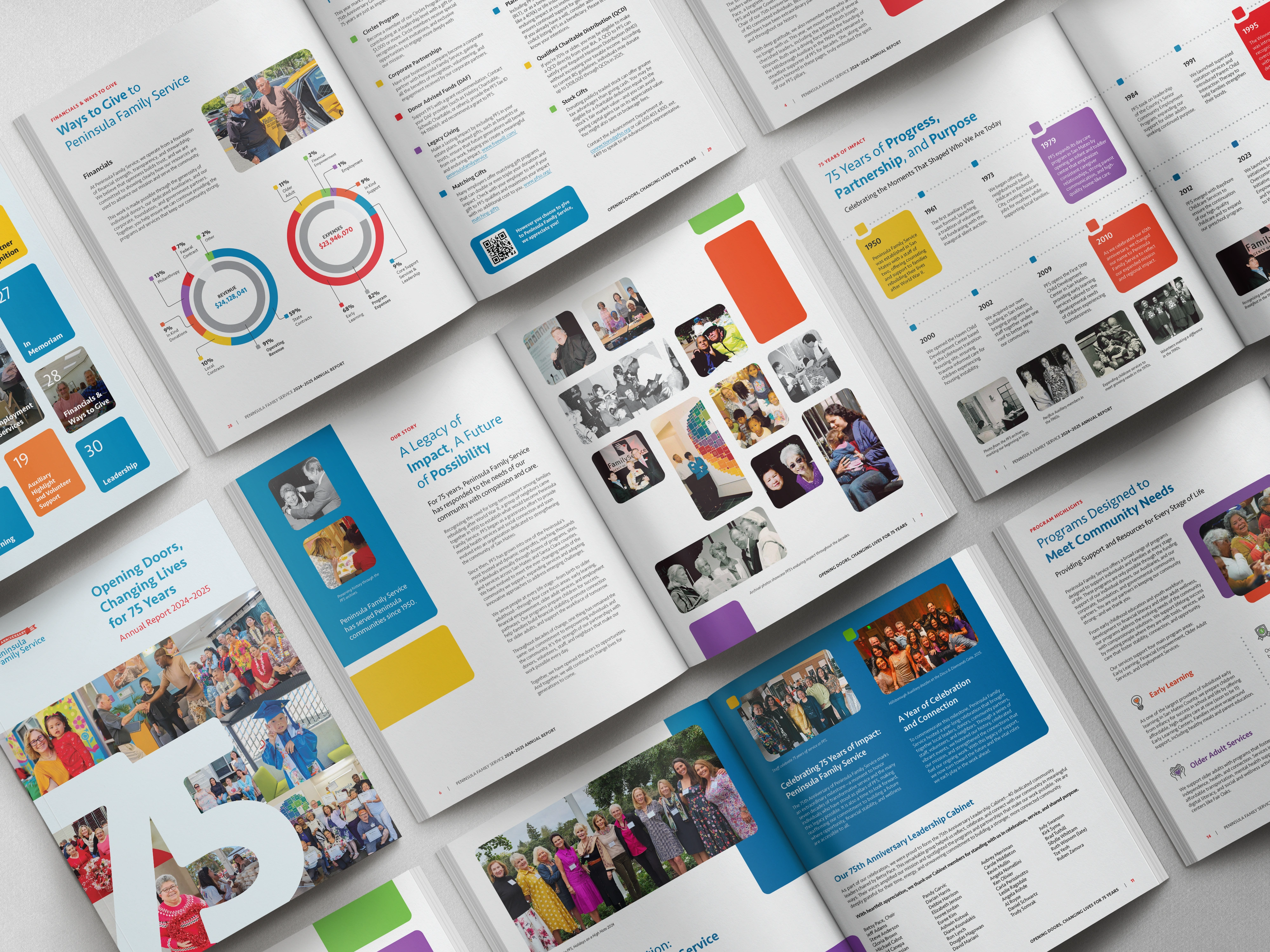
With Peninsula Family Service's milestone report, we built something board members could put in front of major donors and feel good about. The print version became the leave-behind in big meetings. The digital version got shared at the board level in ways their old reports never did. When the design matches the org's legacy, board members notice.
A marketing leader at Peninsula Family Service put it simply:
"It took very few revisions to reach the final product."
When a board member is proud to share your report because it genuinely represents the work well, that's the sign that your report is doing its job as a strategic asset. Not just informing. Building belief.
Why Most Reports Don't Get Used This Way
All this only happens when you build the report with intention from the start… content, format, and design, all working together for something bigger than a PDF.
Most reports don't get used this way because they weren't built to. Content gets gathered last minute. Format is just last year's template. Design gets rushed under deadline. By the time it goes out, everyone's just glad it's over.
I get it. Report season is pure survival mode for most teams. But if you want a report that works as your best comms asset, you need a different kind of upfront thinking.
What do we need donors to believe? What does our team need to say? What will funders want to see? What content can we design to travel?
Those questions are quick to answer, but you have to ask them before design starts. The orgs that do? Their reports are still working for them in June.
The Annual Report Checkpoint is a self-assessment that shows you where your report is building belief and where it's quietly leaking trust.
It takes 10 minutes. And it'll save you a season of second-guessing.