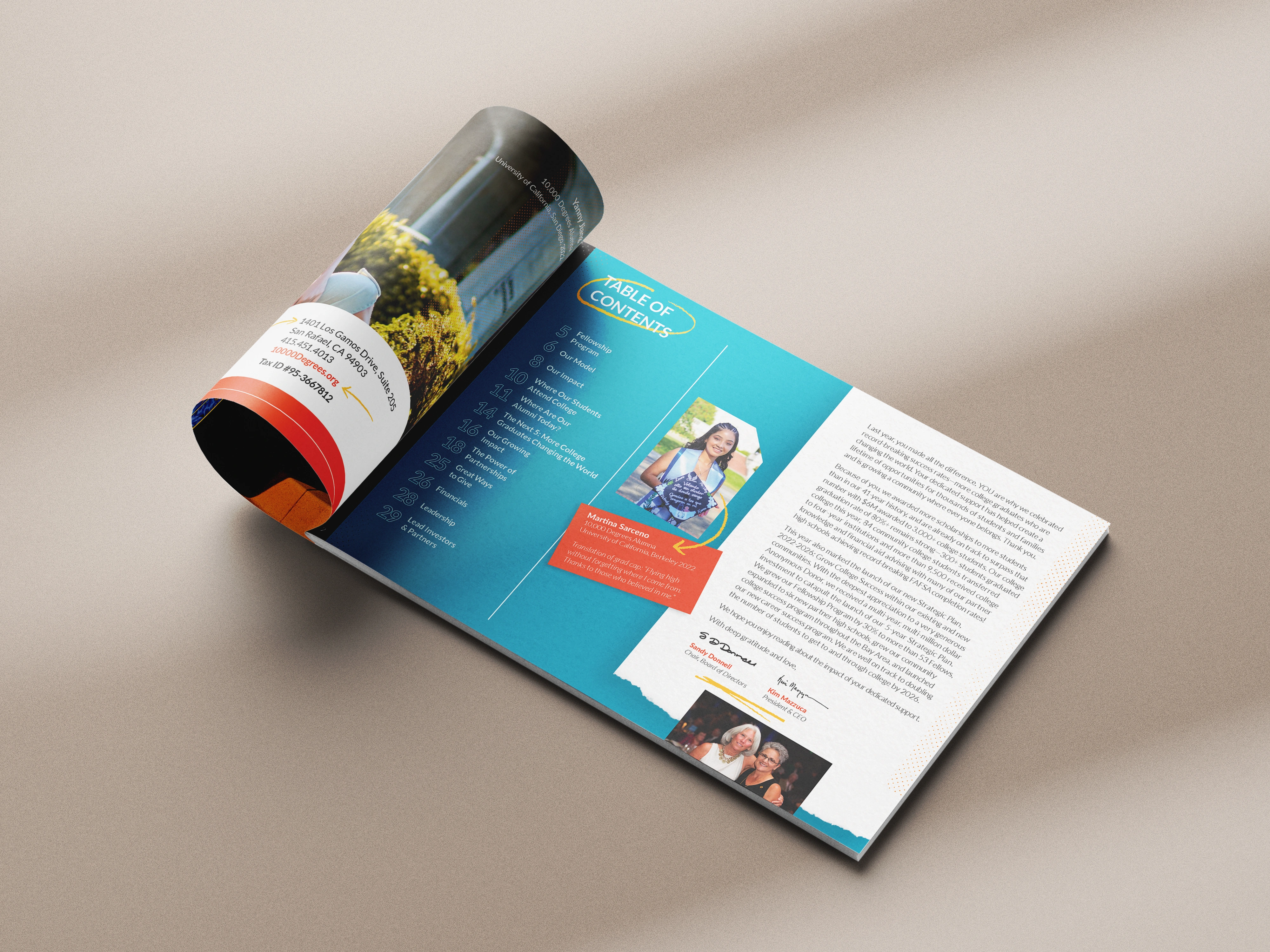
Ask a nonprofit comms lead what needs to change about last year's annual report and you'll hear some version of the same answer: the design. More visual. More modern. More polished.
And look, design does talk first. But polishing the wrong thing is how you end up with a very expensive (and pretty) report that still doesn't move donors to action.
So what's the problem? Usually one of four things. And honestly, knowing which one changes everything.
4 Problems That Look Like Bad Design But Aren't
I see these constantly. And they almost always get blamed on design.
Your story isn't clear enough
Not unclear like confusing. Unclear like uncommitted.
The report tries to honor every program, acknowledge every partner, celebrate every milestone. Which is understandable. But supporters don't need the full, complicated picture. They need a clear one.
When a report doesn't have a through line, readers absorb facts without the pieces connecting. They finish knowing things about your organization without believing anything about it.
That's a content decision, not design one.
Your opening doesn't grab confidence fast
Most leadership letters open with gratitude and bury the point around paragraph three. Donors aren't waiting.
The opening has one job: make them feel like your org knows what it's doing.
A strong opening is specific and direct. "We served more families this year" is forgettable. "This year, we crossed a threshold we've been building toward for a decade" makes someone turn the page.
Get The Annual Report Checkpoint
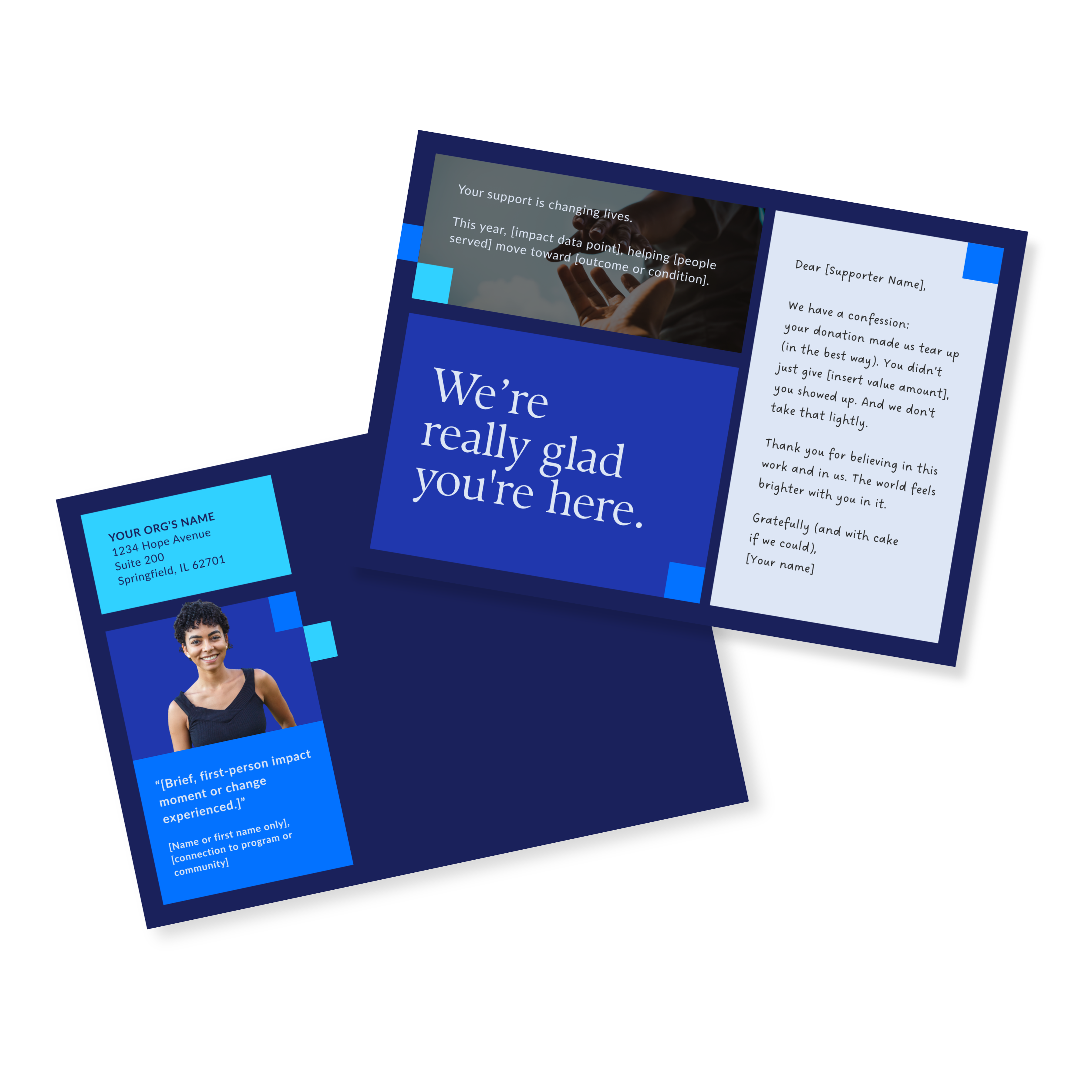
Donor Thank You Postcards Templates
Enter your info and we’ll send the postcards straight to your inbox:
Your strongest proof is on page 9
This one's so consistent it might as well be sector tradition…
The stat that would stop a donor cold. The story that makes the work real. The outcome that justifies every dollar. All buried in the back.
It happens because most teams organize reports the way they organize work: by program, by quarter, by department. That makes internal sense, but it's not how supporters read.
Supporters are looking for evidence that their investment is going somewhere meaningful. Lead with your strongest proof and build trust early. Then go deeper.
Your format doesn't guide anyone anywhere
A report without a reader journey is just organized information. Pretty, maybe. But aimless.
Every section should answer two questions:
- What does this tell supporters?
- And where does it lead them next?
Design a sequence that builds on itself. Not more CTAs, not an aggressive layout. Simply: each section points forward.
By the end, supporters don't just know more, they feel something. That's the difference between a report that gets glossed over and one that gets shared.
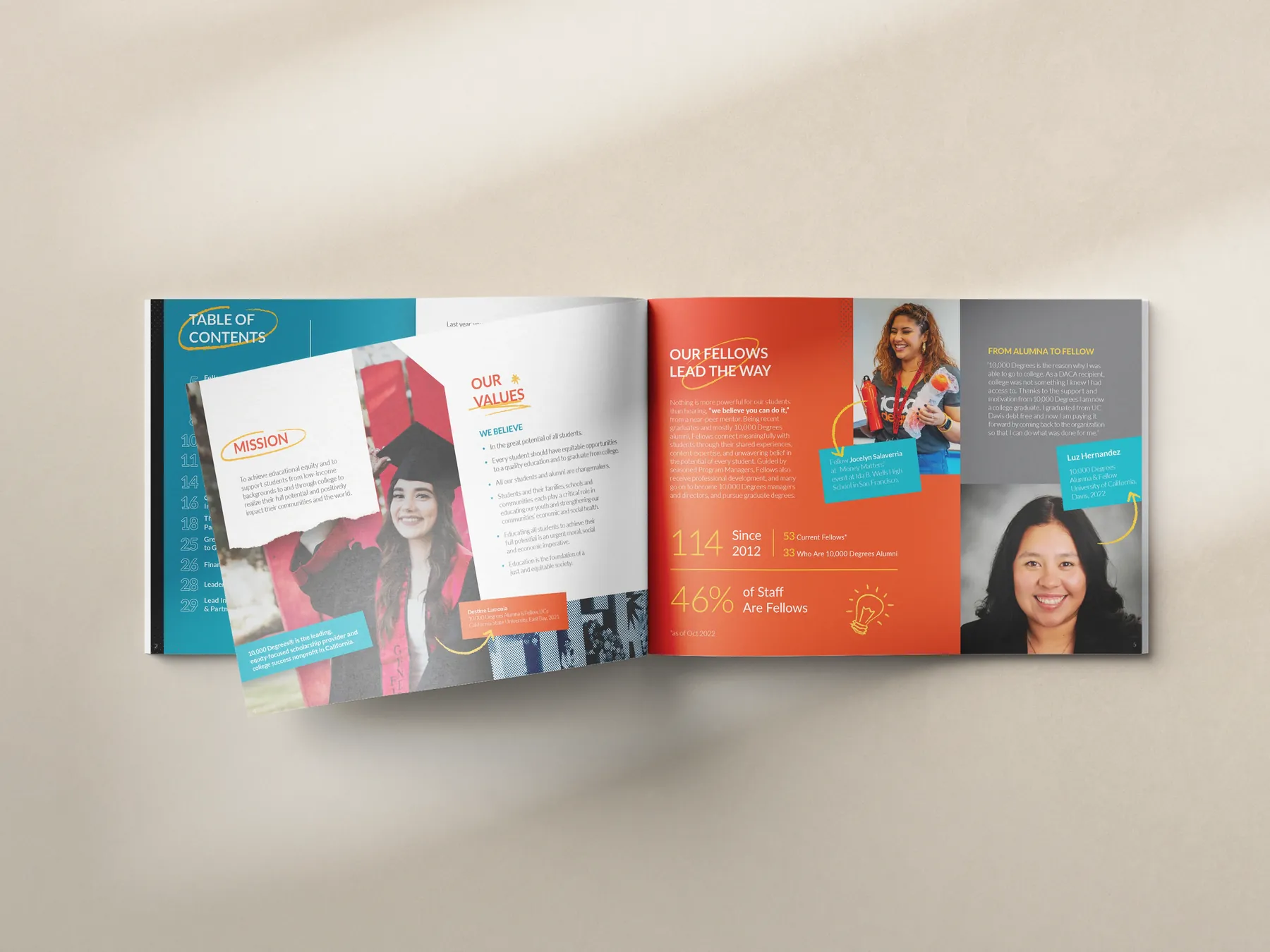
Why Teams Keep Solving the Wrong Problem
When something feels off, the most visible fix is how it looks. Design is tangible. You can mark it up, present changes, get sign-offs on color palettes.
Unclear strategy is harder to name and harder to fix.
So teams "polish." The report looks better. But underneath, the problem is still… there just wearing a nicer layout.
Here's what I've seen from working with 65+ nonprofits: the ones with the strongest donor response figured out their story before anything got designed.
The Annual Report Checkpoint
Here's a self-assessment that walks you through your current report the way I would: scored across five areas donors are already judging, built on our BELIEF by Design™ framework and 65+ nonprofit partnerships.
You'll walk away with:
✅ An honest read on your report, section by section
✅ A clearer picture of what each gap is costing you in donor response
✅ An idea of what to fix first, so you're not guessing
Everything else (the design, the templates, the full-service work) flows from here. But this is where to start.