Your donor has never seen your donor stewardship plan.
They've never seen the spreadsheet. Never seen the color-coded tabs, the owner column, the tidy little cadence you mapped out in January when you had energy and a fresh notebook.
What they've seen is a thank-you letter. A spring email. An event invite that came in the mail. A PDF someone forwarded them once.
And from those four things, they've already decided how they feel about you.
Most stewardship advice stops at the matrix. Segment your donors, assign owners, review quarterly. All good, all necessary.
But the plan is the kitchen. The donor only ever eats the meal. And if the meal comes out looking like it was assembled last minute by someone who had four other things due, no amount of scheduling fixes that.
So let's talk both. The plan, and the part that actually reaches the donor.
What Is Donor Stewardship?
Donor stewardship is everything you do after the gift lands.
Thanking. Reporting back. Showing the person what their money turned into. Staying in touch during the long stretch when you're not asking for anything, so that when you do ask, you're not a stranger with your hand out.
It's the difference between "we received your donation" and "here's what happened because of it."
A quick line people mix up: cultivation happens before the gift. Stewardship happens after.
Cultivation is how someone decides to give you $500. Stewardship is why they give you $500 again next year, and $1,500 the year after that. Same relationship, different half.
And what stewardship isn't is the automated receipt. It's not the year-end appeal wearing a nicer subject line. It's not the plaque in the lobby. It's not the tote bag.
Stewardship is the ongoing case you're making that this person made a good decision. Every single touchpoint is quietly answering one question the donor is asking without saying it out loud: was I right about you?

What Is a Donor Stewardship Plan?
A donor stewardship plan is the written answer to four questions:
- Who gets contacted
- What they get
- When they get it
- Who on your team is responsible for making it happen
Most people build this as a grid. Donor segments down the left, months across the top, touchpoints in the boxes. You'll see it called a stewardship matrix. And it's a good tool… you should absolutely make one.
But a matrix is a schedule. And a schedule is not an experience.
The box says "impact report, Q3." Your donor doesn't receive a box. They receive a document that either makes them feel something or doesn't. Same box, wildly different outcomes, and the plan can't tell the difference.
Which is exactly why so many of these plans quietly die.
Why Most Donor Stewardship Plans Stall by August
You built the matrix. It was good. But it's August, and you've done maybe two of the eleven things on it. And before you write it off as a discipline problem, look closer at what's actually sitting in those boxes…
"Send spring impact update." → Well, that's not a task. That's a whole project in a trench coat.
You need the numbers from the program team (who are busy), photos you can legally use (which nobody catalogued), a story from a participant (that someone has to go ask for), copy that doesn't sound like a grant report, and a layout that doesn't look like a memo.
It's a spreadsheet cell dressed as a 40-min errand, but it's closer to 40 hours of work.
So it slips. And then the next one slips. And by fall, you're pouring everything into the year-end appeal because that one has a hard deadline (and the rest didn't).
You built a plan that assumed the materials would materialize. And sure, better project management helps. But the reason those boxes are so heavy sits upstream of your calendar.
People decide whether to trust something before they read it
Here's another thing most nonprofit teams overlook: your assets are getting judged before they get a chance.
Before a single sentence gets processed, your donor's brain has run a check: does this look like an organization that has its act together?
Does the layout look rushed? Are the fonts readable? Are the colors harmonious? Are the spreads cluttered or calm?
If the answer is "no" to a single one of these questions, the words underneath are working uphill the whole rest of the way.
And this isn't a taste conversation. Nobody's asking your donor to admire your typography. The question is whether your materials suggest an organization that's careful with money and consistent about it.
The same person who can't articulate one thing about your layout will absolutely tell you they "don't really know what that organization does anymore."
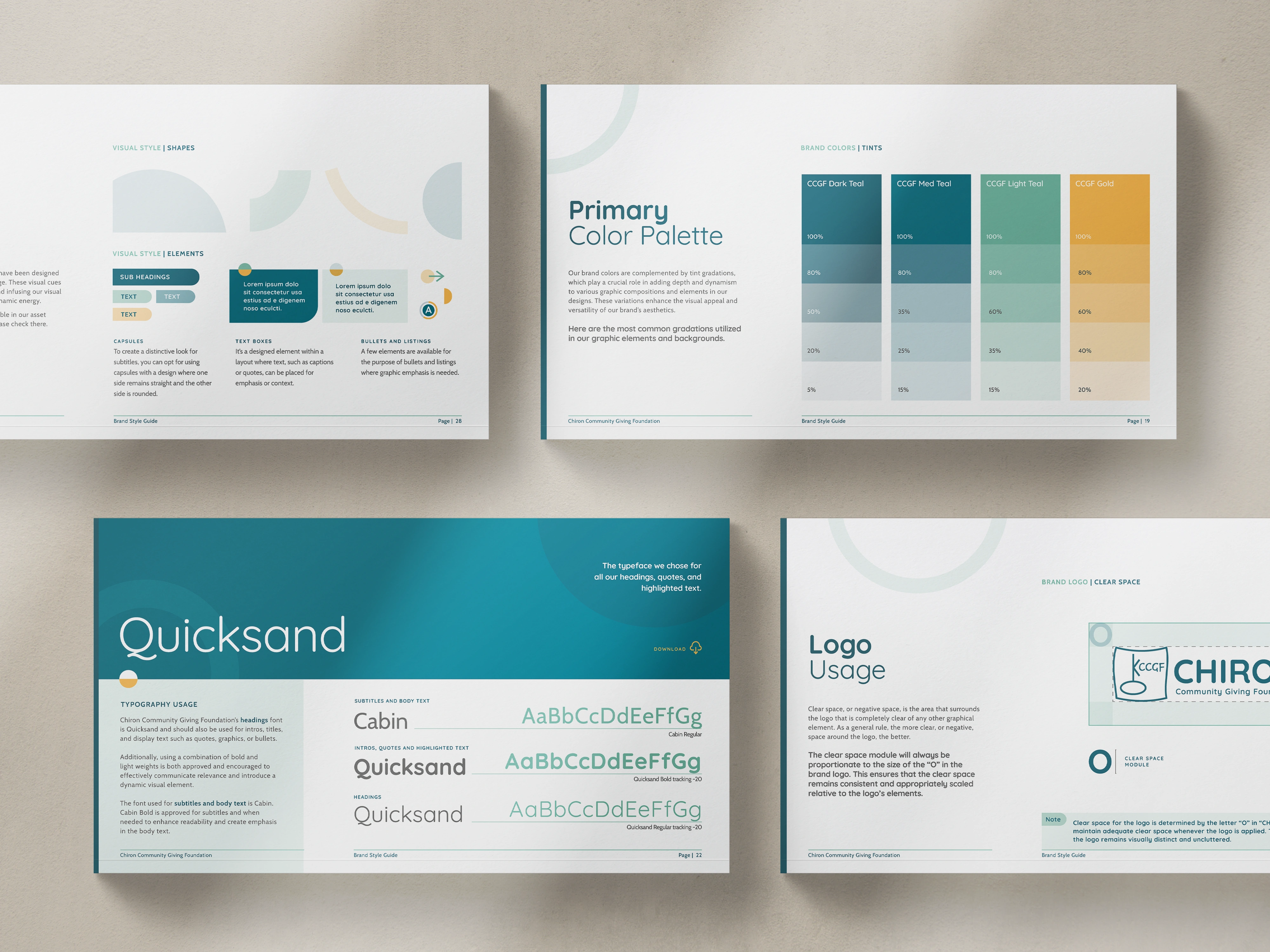
What the donor ends up seeing
Pull up the last four things your org sent to donors. Put them side by side on your desk. Right now, physically, if you can.
Do they look like they came from the same place?
For a lot of teams, honestly? Not really.
The thank-you letter is in Times New Roman because it lives in a Word template from 2019. The email uses your new brand colors. The impact PDF uses the old brand colors because that's what the intern had. The event invite is a Canva template somebody grabbed at 9 pm because the thing had to go out Tuesday.
Four pieces. Four different organizations (as far as the donor can tell, anyway).
What your donor is "reading" without reading
Consistency across pieces. When every touchpoint looks like it came from the same organization, each one makes the next one more believable. When they don't match, every piece starts from zero.
This fix changes the most and costs the least. Pick the colors. Pick two fonts. Write them down. Make everyone use them, including the board member who loves a gradient.
Readability for the people actually reading it. Your donor base skews older than your staff does. Someone is reading your impact report in a kitchen at 7 am with the overhead light on and their readers halfway down their nose.
Nine-point gray text on a photo background won't cut it. Size up. Raise the contrast. Give the page some air. Your biggest givers are often your oldest ones, and nobody gives to something they couldn't read.
Where the eye lands first. Every page teaches the reader what matters by what it makes big. If your most meaningful number is buried in a paragraph on page six and the biggest thing on page one is your logo, you've told the donor the logo was the point. Decide what you want someone to walk away holding, then let the layout say so.
Evidence of effort. People can tell when something took work. Not expensive, not fancy: cared for. A piece that took real effort communicates that the donor's gift was taken seriously, before it says anything else. And the opposite reads just as loud. A piece that was clearly rushed tells the donor something about how their gift was received.
None of this requires a design budget. Most of it requires deciding once and then not re-deciding every time you make something. Which, conveniently, is also how you stop your stewardship plan from eating your entire fall.
Get The Annual Report Checkpoint
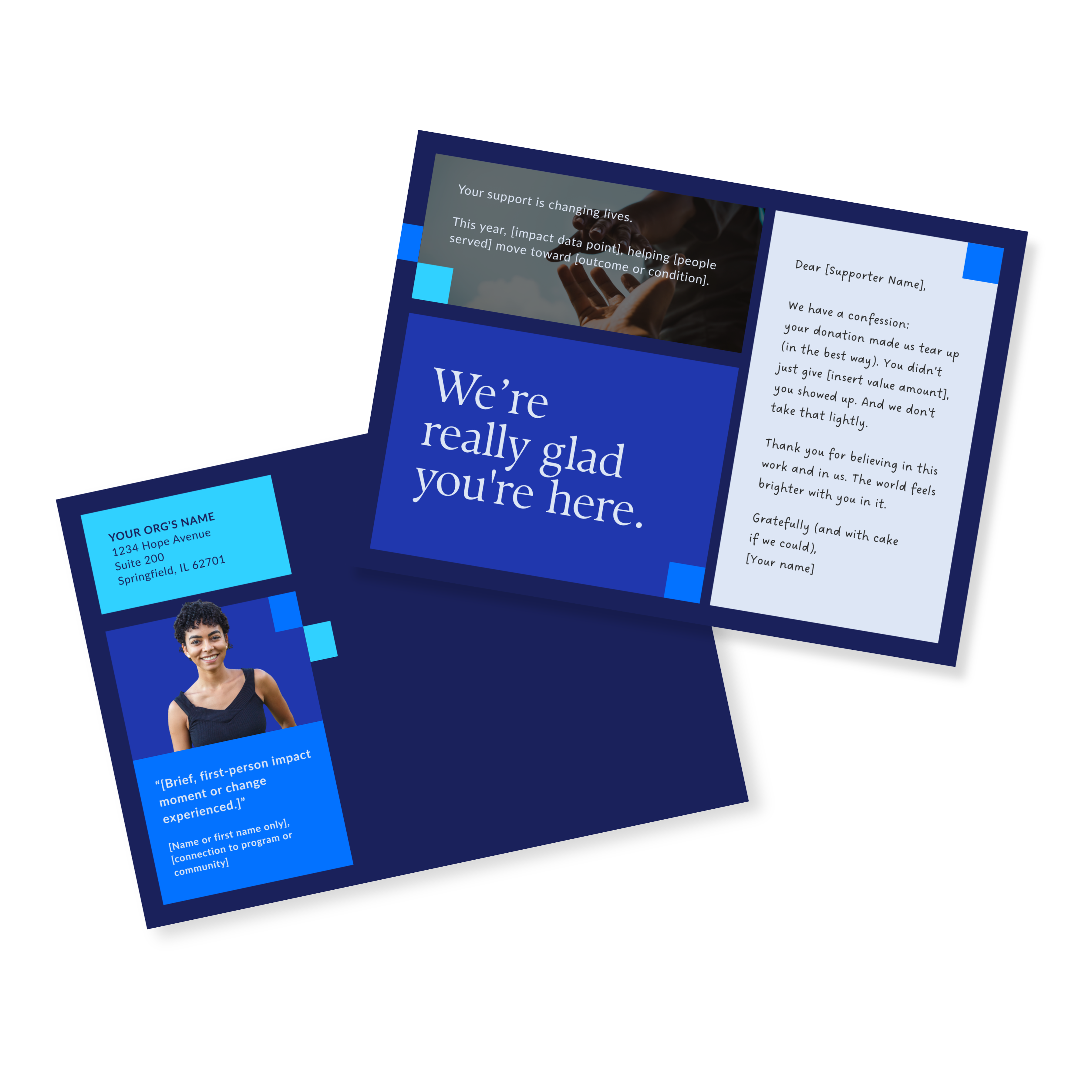
Donor Thank You Postcards Templates
Enter your info and we’ll send the postcards straight to your inbox:
How to Build a Donor Stewardship Plan in 7 Steps
Okay. Here's the build. Steal it, change it, make it yours.
1. Decide what a donor should believe by December
"Increase retention by 8%" is a scoreboard. It doesn't tell you what to put on the page.
So start with the belief: "By the end of this year, a donor who gave to us should believe ______."
Fill in the blank. Write one sentence. That their $250 did something specific? That we're going somewhere and they want to be there when we arrive? It's up to you.
Every touchpoint in your donor stewardship plan gets measured against it. If a touchpoint isn't building that belief, it's just noise in someone's inbox and you're allowed to cut it.
2. Segment, and don't skip the awkward middle
Standard segments look like this:
→ First-time donors. The most fragile group you have. Most people who give once never give a second time, and most of that decision gets made long before their first anniversary.
→ Recurring/monthly donors. Already sold… and wildly under-thanked. Because the money just shows up, and nobody has to do anything.
→ Mid-level donors. Too many for a personal phone call from your ED. Too valuable for the mass email. Almost always the group that gets a segment label and no plan.
→ Major donors. Getting the most attention already, and that's usually correct.
→ Lapsed donors. People who gave and stopped. Pick a cutoff and hold to it. We use 13 months because it catches the annual giver who missed by a few weeks. Then actually put them in the plan instead of letting them evaporate.
That mid-level group deserves a beat. They're the reason "personalized at scale" exists as a phrase.
And, of course, you can't call 400 people. But what you can do is build one genuinely good piece and put a handwritten line on the top of each one. Half the effort of a phone call, three-quarters of the warmth.
3. Count the real cost of every touchpoint
New column in your matrix. Two, actually: hours and dollars.
A thank-you email is 20 minutes and $0. A handwritten card is four minutes and a stamp. A printed impact piece is weeks of work and a print bill. A donor phone call is 15 minutes each, which is fine until you multiply it by 400.
Fill this in before you commit to anything. Most stewardship plans are fantasy documents because nobody ever added up the hours, and the number of hours available was never in the conversation.
If the total is bigger than the capacity you have, you don't have a plan yet. You have a wish list. (Been there. It's a nice list.)
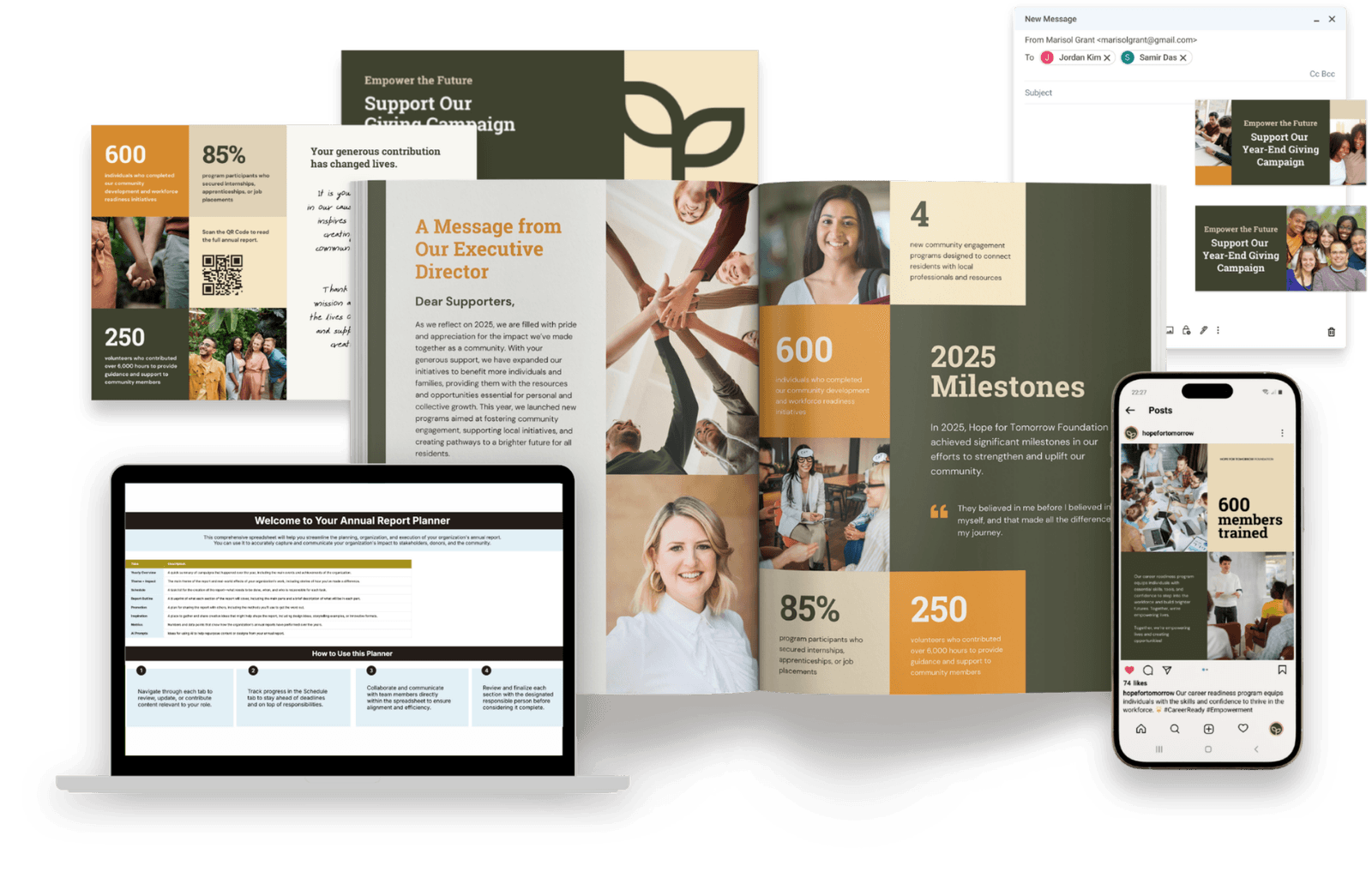
4. Put a name on every line
Not "Development." A person.
Unowned tasks are the ones that get quietly reassigned to whoever feels the most guilt, which is usually you.
5. Build the big assets once, then use them all year
This is the step that saves the whole thing.
Your annual report is not a deliverable you finish and archive. Built well, it's the raw material for the next twelve months of stewardship.
The donor story becomes an email. The outcome chart becomes a social post. The opening letter becomes the spine of your spring appeal. The photography becomes every thank-you card you send.
One serious production cycle, twelve months of touchpoints that already look like each other because they came from the same place.
Do it the other way around and you're building each piece from scratch under deadline, which is how you end up with four pieces that look like four organizations.
6. Give every touchpoint a real date
"Q3" is not a date. "Q3" is where deadlines go to die. So put it in a calendar. Back-schedule the production time you counted in step three.
If the mailing goes out October 15, the design is due September 20, which means copy is due September 5, which means you're asking the program team for their numbers in mid-August. Write all four of those dates down, not just the last one.
7. Measure two things, not twelve
Retention rate by segment, and repeat gift rate for first-time donors.
That's it to start. You can add average gift size and lifetime value later when you have a baseline worth comparing against. Twelve metrics is what you build when you don't know which two matter.
Also worth watching, and almost nobody does: days between gift received and thank-you sent. It moves before retention does, and it's the only number on this list you can fix this week.
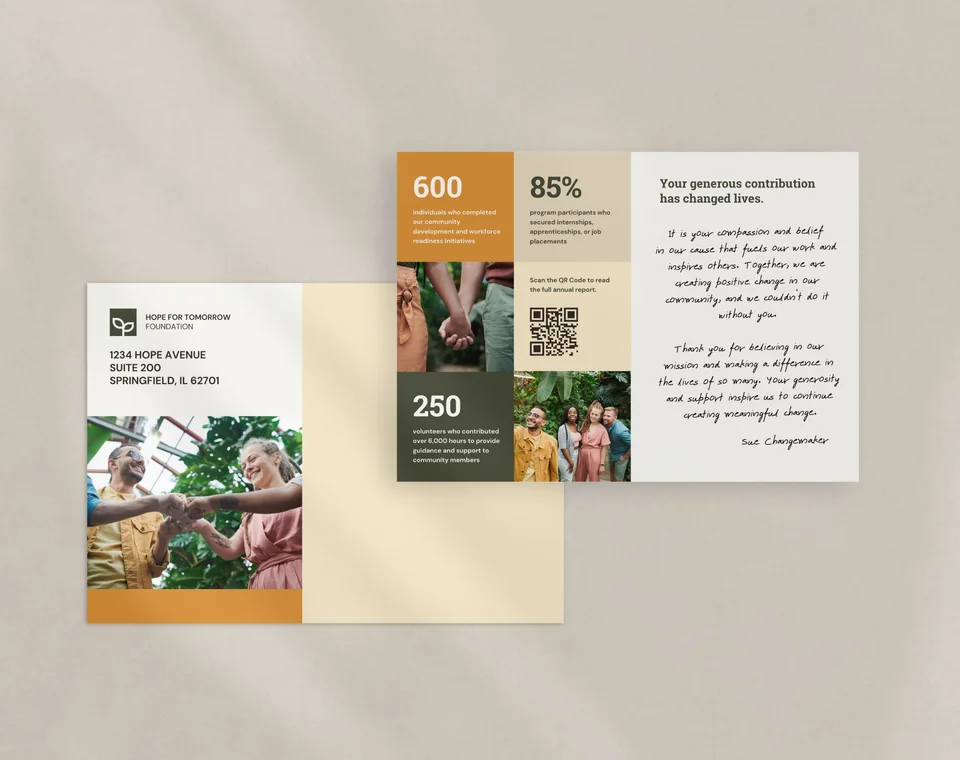
Donor Stewardship Examples by Segment
The plan is a skeleton. Here's what actually goes in the boxes. These are donor stewardship examples you can lift directly, sorted by who they're for.
First-time donors
- A thank-you within 48 hours that isn't the receipt.
The receipt is a transaction record. The thank-you is a piece of writing. Different jobs, and one of them can be automated.
- A "here's what happens next" note at day 30.
Tell them what you're going to send them and how often. Nobody does this and it works absurdly well. - A welcome piece that shows one program in depth.
Not everything you do. One thing, done specifically. A well-designed thank-you card does more here than a 600-word email ever will. - A one-year anniversary note.
"A year ago today you gave for the first time. Here's what that year looked like."
Recurring and monthly donors
- A quarterly note that never asks for anything.
These donors get taken for granted specifically because the money is automatic. - Early access.
Send them the annual report a week before it goes public. Costs nothing, feels like something. - An annual cumulative summary.
"$25 a month became $300 this year, and here's what $300 does." Most monthly donors have genuinely never done that math. - A heads-up before anything changes.
New program, new leadership, new anything. Recurring donors are your most loyal people and they hate finding out from a newsletter.
Mid-level donors
- A personalized-at-scale piece.
One beautifully made impact letter, with a real handwritten line at the top of each. - A small group invitation.
A 30-minute virtual program update with the ED and 12 donors on the call. - A survey that you then respond to.
Ask what they want to hear about. Then send them that. The response is the stewardship, not the survey. - A named-program update.
If they gave toward a specific thing, report on that specific thing. Not the org-wide roundup.
Major donors
- A site visit or a call from someone who isn't fundraising.
A program director. The person doing the actual work. - A custom impact summary.
Their gift, their outcomes, on two pages. - Recognition they've actually agreed to.
Showing donors inside your annual report works beautifully when it's designed with intention and asked about first. - A note from someone whose life changed.
Nothing you write will land like this.
Lapsed donors
- A "we noticed" note before you ask for anything.
No pitch. Just impact from the period they funded. - A win-back piece 6 to 8 weeks later.
Now you can ask. And ask small, not for a renewal at their old level. - A "what changed" update.
If the org has grown or shifted since they left, that's news, and news is a reason to reach out that isn't a request. - A quiet exit option.
Let them tell you they're done. A donor who opts out cleanly is worth more to your data than one you keep mailing into the void for four years.
Almost none of these exist until somebody sits down and makes them. That's the shape of stewardship, and it's why it stalls.
The Version of This That Works When You're a Team of One
Most stewardship guides open with "assemble your stewardship planning team." More than one lists "hire a fundraising consultant" near the top.
Cool. And if you're the entire communications department, plus events, plus the website, plus whatever the ED needed by Friday… that advice is a closed door.
So here's the small version. Four things, done consistently, beat eleven things done twice:
- A thank-you that goes out within 48 hours, every time.
Write it once, well. Make the automated version genuinely good instead of writing a custom one you'll skip when things get busy. - One serious annual piece.
Your annual or impact report, made properly, that everything else pulls from. - Two "no ask" touchpoints a year.
Two emails. Real stories, real outcomes, zero requests. - One personal contact for anyone above your mid-level threshold.
A call or a card. One per year.
That's a real donor stewardship plan, and it fits inside a life.
Everything else on the big list is what you add in year two, once these four are automatic. Adding more before then just gives you more things to feel behind on.
What Actually Holds a Stewardship Plan Together
Stewardship gets wobbly when it's scattered. A card here. A panicked email there. A social post nobody planned. A PDF you cobbled together with two weeks of runway before the gala, using last year's file because starting over wasn't survivable.
It scatters because every piece is being invented from nothing. New copy, new look, new decisions, every single time. And the donor feels that even though they'd never be able to name it.
Decide the story, the numbers, the photography and the look once. Then spend the year using them instead of rebuilding them.
If you want the reusable version handed to you, that's what our Annual Report Design Service is built to do. If you'd rather start from a shell you can fill in yourself, our Annual Report System does the same job for less.
FAQs: Questions People Ask About Donor Stewardship
How often should I contact donors?
Four to six touchpoints a year for general donors, at least half of which ask for nothing. Major donors, more, and more personal. The rhythm matters more than the number. Going silent for six months and reappearing at year-end with an ask is the pattern donors notice most.
How soon should a thank-you go out?
Fast enough that it still feels connected to the gift. We hold to 48 hours. Automated is fine as long as the automated one is actually good.
Can donor stewardship be automated?
The triggers and the timing, yes. The content, no. Automation makes sure the piece goes out. It can't make the piece worth opening.
What's the difference between stewardship and cultivation?
Cultivation is before the gift. Stewardship is after. Both are relationship work, just at different points.
Do I need a CRM to build a donor stewardship plan?
No. A spreadsheet with segment, last gift date, last contact date, and owner will carry you a long way. A CRM saves time once you have volume. It does not create the plan for you, and it definitely doesn't make the materials.
What should a donor stewardship plan accomplish?
One thing: the donor should end the year believing more in your organization than they did at the start. Retention is how you measure it. Belief is the actual product.
Where do I start if I have no plan at all?
Look at what you've already sent. Our Annual Report Checkpoint has 30 questions, split by role, so it isn't one more thing landing on just your desk.
Before You Build the Next Thing
Your donor is going to see maybe six things from you this year. Not sixty. Six.
Six chances to look like an organization worth continuing to fund, and every one of them is doing that job whether you designed it to or not.
So pull those four pieces back off your desk. Look at them the way a first-time donor would, in a kitchen, at 7 am, with about eight seconds of attention.
Then ask whether you'd hand them to your biggest donor in person, with her sitting right there watching you do it.