Every year I talk to comms leads and development directors who are quietly asking themselves the same question: is this worth it?
The hours. The stakeholder wrangling. The design budget. The three rounds of edits from a board member who had “just a few small changes.” Is any of this actually moving the needle?
I get it. Annual reports are expensive in time if nothing else. And if your last one got a few nice replies and then sat in a PDF folder for eleven months, the ROI case is hard to make.
But here’s what I’ve watched happen across 60+ nonprofit projects: when a report is built with intention (designed to communicate something specific to specific people) the return shows up in ways that are real and measurable. Not always in the week it launches. But over the months that follow.
This is what that actually looks like.
First: What “ROI” Means for a Nonprofit Annual Report
I want to name something before we get into specifics.
Nonprofit ROI is not the same as corporate ROI. You’re not running a conversion funnel. The “return” on a well-designed annual report is measured in trust, retained donors, stronger funder relationships, aligned partners, renewed grants, a team that feels proud of what they put into the world, and most importantly more lives changed. Some of that is quantifiable. Some of it isn’t.
Both kinds matter.
The organizations I’ve seen get the most out of their reports are the ones who stopped asking “is this worth the cost?” and started asking “what do we want this to make possible?” That reframe changes everything about how the report gets built.
So when I talk about ROI here, I mean: what does a thoughtful annual report make possible that a mediocre one doesn’t? Let’s get specific.
ROI #1: Donor Retention Starts With a Report That Makes Them Feel Like Part of the Work
Acquiring a new donor costs roughly 7 times more than retaining an existing one. Your annual report is one of the most underutilized donor retention tools you have.
When a donor receives a report that shows them (specifically and personally) what their investment made possible, they don’t just feel good. They feel accountable to the work. They feel like part of it. And people who feel like part of something give again.
The reports that do this well are the ones where donors can see themselves in the story.
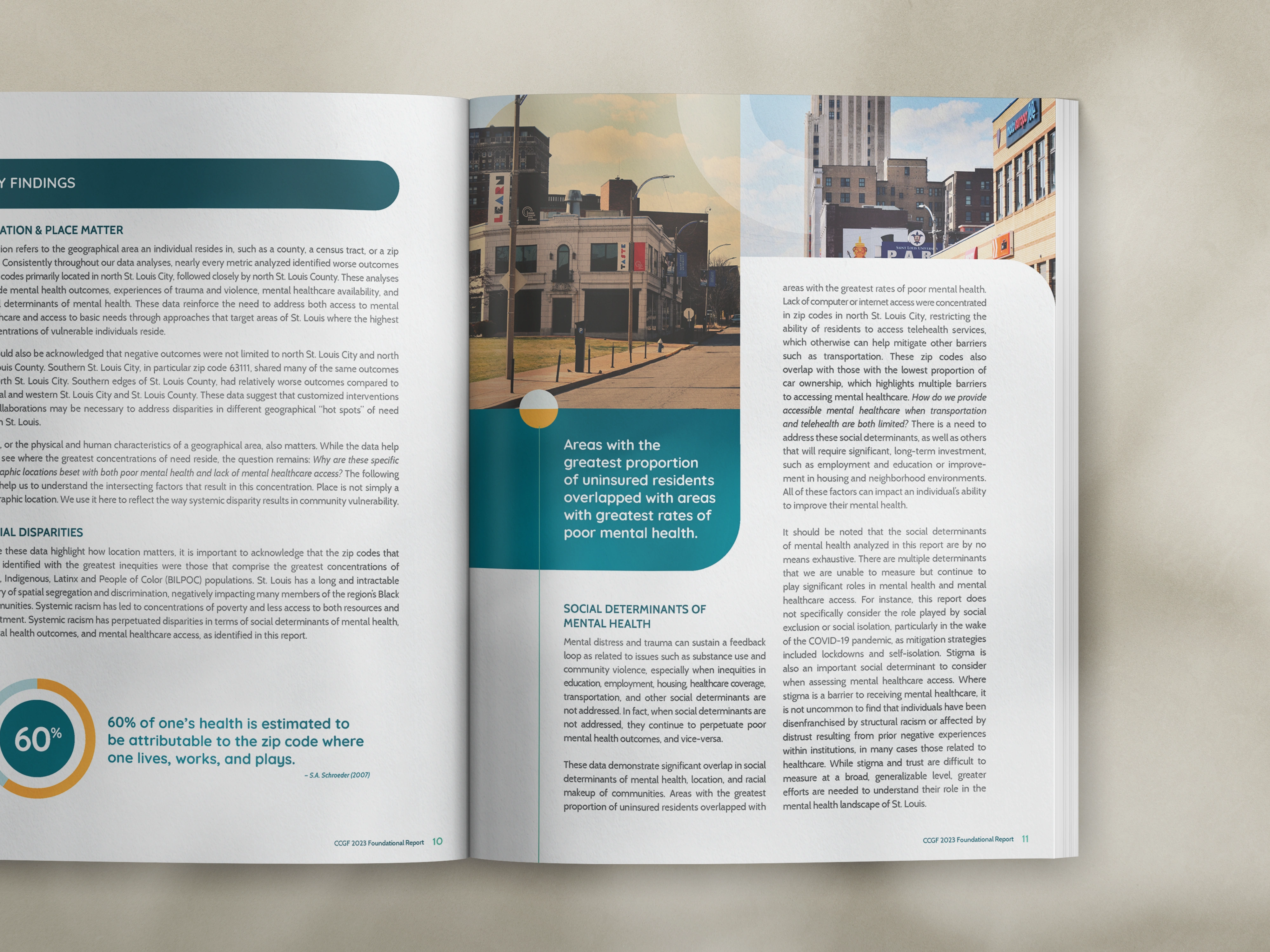
With 10,000 Degrees, we designed their donor recognition to center community first, not names in a list, but a narrative booklet (in addition to their annual report) about what the collective investment made possible. Donors got real estate. Their contribution had context and was spotlighted.
When people are honored instead of catalogued, the relationship changes. Whether that shows up in a renewal rate, a handwritten note, or a conversation at the next gala. That's real return, even when it doesn't fit in a spreadsheet.
That kind of response doesn't happen by accident. It's designed.
A communications leader at a national health advocacy organization shared that on the day they released four pieces of health-protective legislation in Congress, they used the Acton Circle-designed report as a major hook in their advocacy efforts. Another client told us their impact report (the first they'd released in several years) generated so much buzz that a partner organization reached out asking to work with us directly after seeing it.
ROI #2: Funder and Partner Confidence (Before You Even Get on the Call)
Funders look at your annual report before they read your proposal. Corporate partners do it too, maybe more ruthlessly.
I was on a call recently Dan Drucker, a consultant who helps nonprofits build corporate partnerships. He said something I haven't stopped thinking about: "Companies don't want to be associated with an organization that's not well run."
They're not just vetting your pitch. They're vetting your whole operation. And that includes your design.
Corporate teams live in dialed-in materials. When something feels thrown together (even if your mission is incredible) that experience is telling them something you didn't mean to say.
Sometimes the difference between a one-time sponsorship and a multi-year partnership isn't the size of the ask. It's whether they felt confident putting their name next to yours.
Your annual report is one of the first places they look.
If you're not sure your current report is doing that job, the Annual Report Deep Dive is where we look at that together, before you invest in another production cycle.
ROI #3: Board Buy-In (The Internal Currency Nobody Talks About)
Your board members are often your best major donor prospects and your most powerful ambassadors. And yet most of them receive an annual report and think “great” and move on.
A report that’s genuinely well-designed (one that reflects the caliber of the organization they’ve attached their name to) does something different. It makes them proud. And proud board members share things.
I’ve heard it directly from clients more times than I can count: “Our board was so impressed.” That’s not a vanity win. That’s major donor access you didn’t have to manufacture.
With Peninsula Family Service’s milestone report, we designed something board members could put in front of major donors with confidence. The print version became a leave-behind in high-stakes meetings. The digital version got shared at a board level in ways their previous reports never had been.
When the design matches the legacy of the organization, board members feel it.
A marketing leader at Peninsula Family Service put it simply:
"It took very few revisions to reach the final product."
.avif)
Get The Annual Report Checkpoint
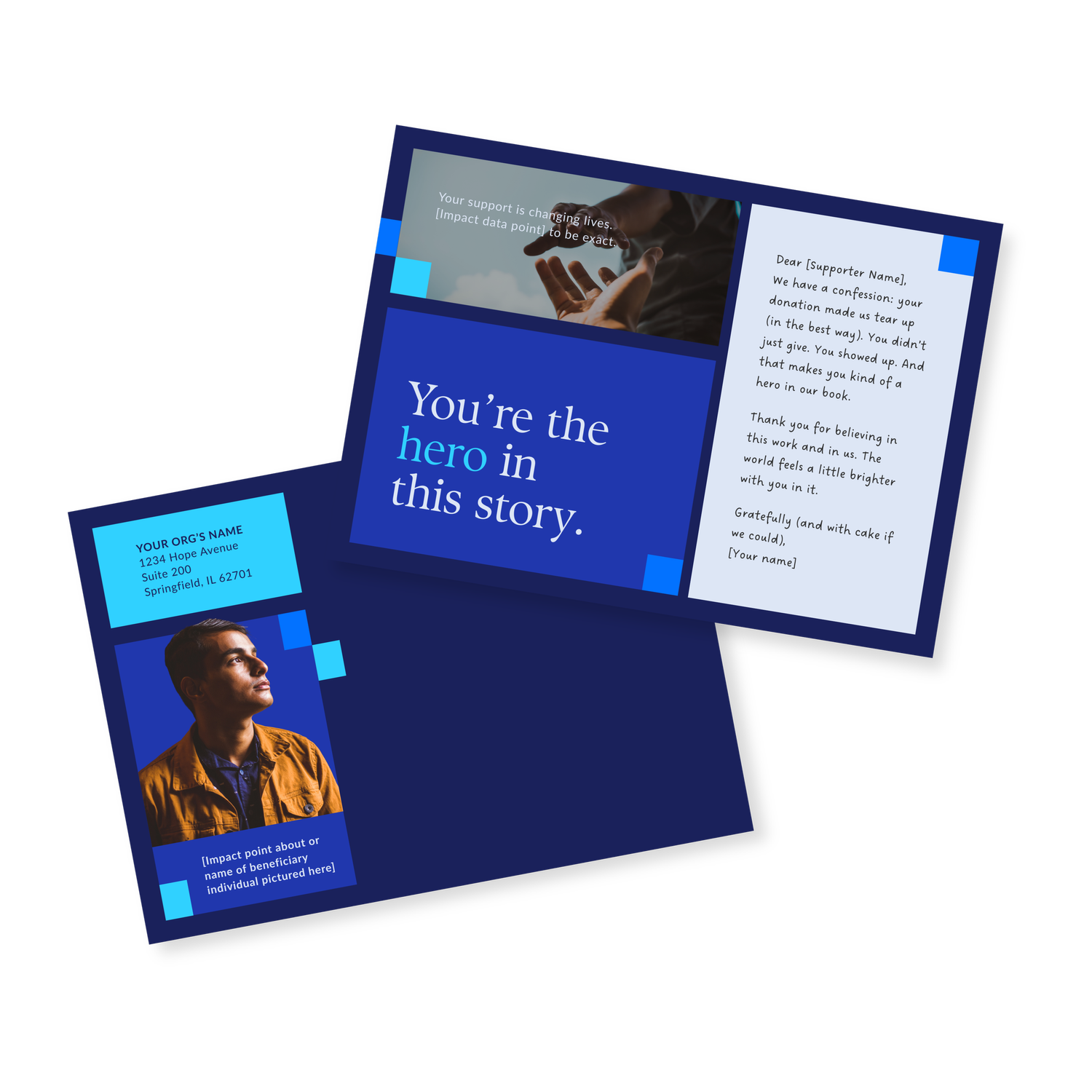
Donor Thank You Postcards Templates
Enter your info and we’ll send the postcards straight to your inbox:
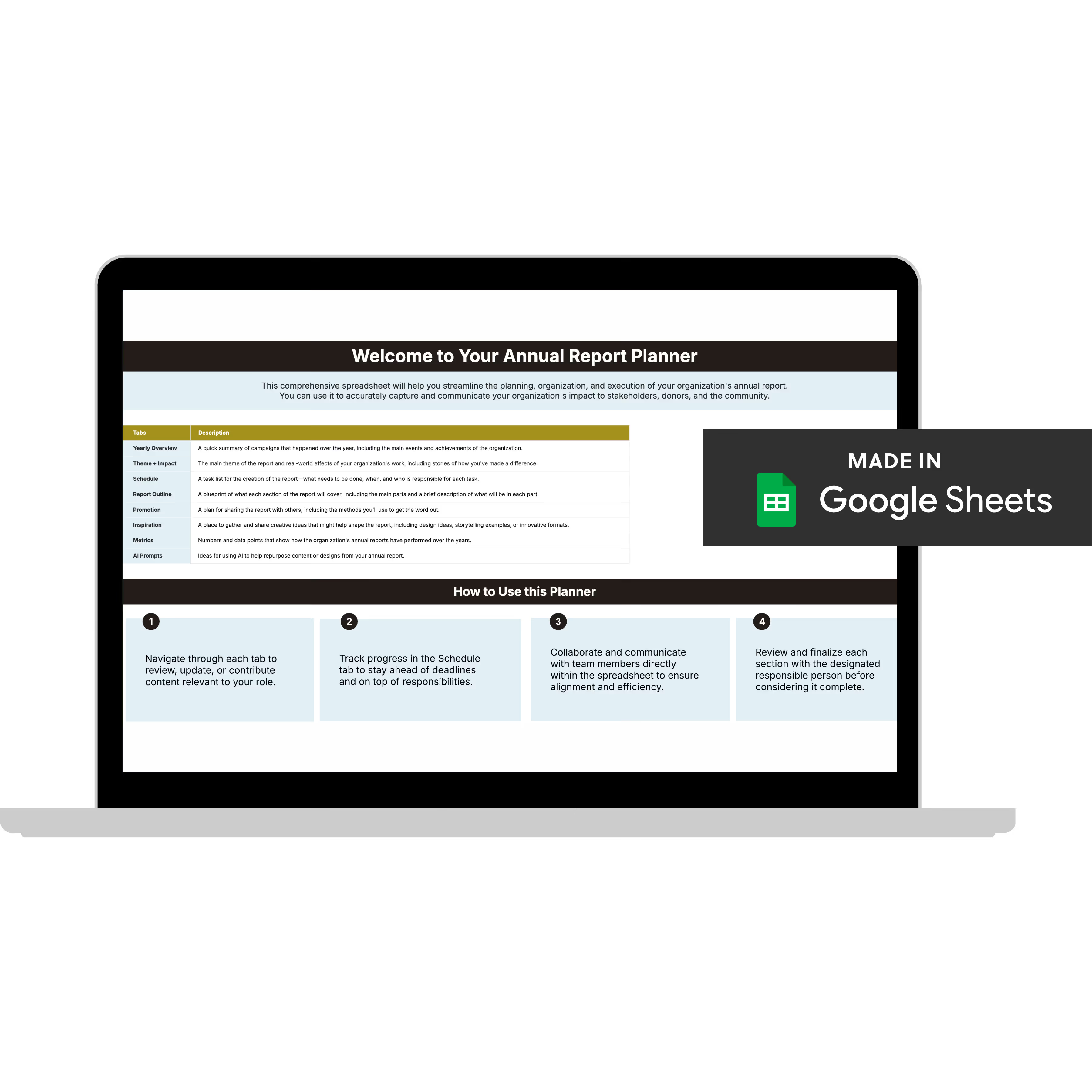
Annual Report Planner
Get a clear content roadmap so your annual report builds belief, earns trust, and actually gets used after launch—plus the same planning approach we use with our 1:1 clients, built in.
ROI #4: Content You Can Use for 12 Months (Not 12 Days)
This is one of the most practical ROI arguments I make to organizations who are on the fence about investing in a quality report.
Everything you created for that report (the stories, the stats, the photography, the data visualizations) is content. Twelve months of content if you use it right.
- Impact stats → year-end appeal email
- Donor quotes → social proof for campaigns
- Program highlights → funder presentation slides
- Leadership letter themes → board meeting talking points
- Photography → website, social, event materials
When the report is designed with this in mind from the start (modular layouts, reusable components, export-ready visuals), your team isn't starting from zero every time they need donor-facing content.
Planet Women's annual report was designed specifically to become a year-round storytelling asset. The content system we built around it gave their team materials they used for months after launch. One production cycle, ongoing return.
That's what designing for repurposing actually looks like in practice.
ROI #5: When Donors Can't Follow the Story, They Fill the Gaps With Assumptions
There's a version of your organization that donors, funders, and partners BELIEVE you are, and a version they actually see when they look at your materials. When those two things are misaligned, you have a positioning gap.
A well-designed annual report closes that gap. It makes the organization you ARE visible to the people who need to see it.
For larger or more complex organizations, this matters even more. When your programs span multiple populations, geographies, or issue areas, the report is often the only place where the whole picture lives. If that picture is hard to follow, people fill in the gaps with assumptions, and those assumptions aren't always generous.
With the American Diabetes Association, we took complex program data spanning multiple initiatives and turned it into something funders and partners could actually understand. The design wasn't decorativ, it was doing organizational communication work.
Clarity IS credibility.
"We Don't Have the Budget" and Other Objections Worth Questioning
"We don't have the budget for a well-designed report."
I hear this one A LOT. And I want to name what's underneath it: organizations are often comparing the cost of a well-designed report to the cost of doing it themselves. What they're not comparing it to is the cost of donor attrition, missed grant opportunities, and a board that's embarrassed to share the thing.
If budget is genuinely the constraint, that's what our Template Kits are built for. They include donor-aware layouts and are designed for annual reports specifically.
"Our donors don't care about design."
With respect, they do. They just can't always articulate it. Design that's hard to follow creates friction. Friction creates doubt. Doubt creates donors who give less or don't renew. They won't tell you that's why. But it's why.
Design talks first. Every time. Before a single word is read, the design has already communicated something about your organization. Make sure it's saying what you intend.
"We only have a few weeks to pull this together."
This is a planning problem, not a design problem, and it's the most fixable one on this list. The organizations that consistently produce strong reports start earlier than feels necessary. That's genuinely the whole secret.
If you're already in the weeds, a template kit can compress the production timeline significantly. If you want to do it differently next year, starting with a checkpoint on your current situation is where I'd begin.
What This Means for Your Next Report
If you read this and thought "we need to do this differently," the Annual Report Deep Dive is the right next step. It's a two-part working session where we look at your content, story, format, and supporter journey together before design begins. You walk away with a clear strategic foundation and a report direction built to deliver the ROI this article is describing.